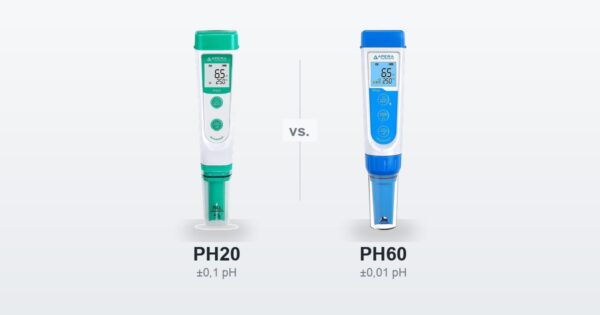
One measures with an accuracy of 0.1 pH, the other 0.01. It sounds like a clear-cut choice—but it isn’t. The decisive question isn’t which device measures more accurately, but whether you can actually use that level of precision.
The difference in one sentence
The Apera PH20 Value pH Pocket Tester is a robust entry-level device with a fixed electrode. The Apera PH60 Premium pH Pocket Tester measures one decimal place more accurately, covers a wider measuring range, and has a replaceable electrode—meaning it can be repaired instead of replaced.
Data in Direct Comparison
| PH20 Value | PH60 Premium | |
|---|---|---|
| pH Range | 0.0 to 14.0 | −2.00 to 16.00 |
| Resolution | 0.1 pH | 0.01 pH |
| Accuracy | ±0.1 pH | ±0.01 pH |
| Electrode | Fixed | Replaceable (PH60-E) |
| Calibration | 1 to 3 points, auto buffer recognition | 1 to 3 points, auto buffer recognition |
| Temperature | 0 to 50°C, ATC | 0 to 50°C, ATC |
| Protection Rating | IP67, waterproof and buoyant | IP67, waterproof and buoyant |
| Power Supply | 4 × AAA, up to 1,000 hours | 4 × AAA, up to 1,000 hours |
| Redox (ORP) | No | Upgradeable via replaceable ORP electrode |
| Included | 4.00 and 7.00 buffers, batteries, carrying case | 4.00, 7.00, and 10.01 buffers, KCl storage solution, batteries, carrying case |
What stands out is what is identical: housing protection, temperature compensation, calibration logic, and battery life. Buying the PH20 doesn’t mean getting a stripped-down device; it means getting the same operating concept with a coarser resolution and a non-replaceable electrode.
What 0.1 vs. 0.01 means in practice
The optimal pH range in coco is roughly between 5.8 and 6.2. That is a four-tenths margin. A device with a 0.1 resolution shows you five steps in this window: 5.8 – 5.9 – 6.0 – 6.1 – 6.2. This is perfectly sufficient to see if you are within the window or drifting out. To find out which window applies to your substrate, check the Guide to Optimal pH Levels.
The second decimal place only becomes valuable when you are tracking changes rather than states: if you want to see if the nutrient solution drifts over the day in a recirculating system, if you are comparing input vs. drain, or if you need to set a batch of fertilizer reproducibly. In those cases, the difference between 6.04 and 6.11 is vital information—rounded to 0.1, both are „6.1“ and you see nothing at all.
An honest note on accuracy
±0.01 pH is the specification for the measurement electronics under ideal conditions. What actually ends up in your beaker also depends on the quality of your buffer solutions, the temperature, the condition of the electrode, and how clean your sample is. A PH60 with old buffer solution measures worse than a freshly calibrated PH20. The display promises precision, but your workflow must deliver it—see the Calibration Instructions.
The real difference: the electrode
The pH electrode is a wear part. With good care, it typically lasts one to two years—Apera gives a six-month warranty on the electrode itself and two years on the device. When it reaches the end of its life, the two devices part ways:
- PH20: Fixed electrode. If it’s dead, the device is dead.
- PH60: Unscrew the electrode, plug in a new one, calibrate, done. The Apera pH Replacement Electrode for PH60 (PH60-E) costs a fraction of the device price.
Calculated over three or four years, the cost equation flips. A daily measurer will buy a new device every few years with the PH20; with the PH60, they just buy an electrode. Someone who checks the drain twice a month will likely see the electrode reach its end of life through drying out rather than use—and for them, the math looks different.
-
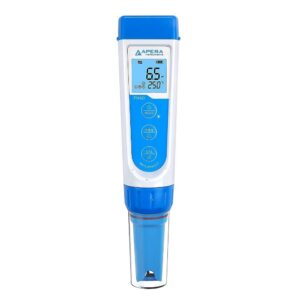
pH-Messgeräte, pH- & EC-Messgeräte
Ursprünglicher Preis war: 124,95 €112,95 €Aktueller Preis ist: 112,95 €.
Enthält 19% MwSt.Kostenlose Lieferung nach Deutschland für dieses Produkt!In den Warenkorb
The extended measuring range—do you need it?
A range from −2.00 to 16.00 pH sounds impressive but is irrelevant for growing: nutrient solutions, irrigation, and drain water move between 4 and 8. The range becomes relevant in cleaning technology, with highly acidic or alkaline concentrates, and in food processing. Don’t buy the PH60 for the measuring range—buy it for the resolution and the replaceable electrode.
And what about ORP?
The PH60 can be converted to redox measurement via a replaceable ORP electrode. This is interesting if you want to monitor water treatment, disinfection, or oxygen conditions in a nutrient solution. However, if you need redox permanently and alongside pH, you are better off with a dedicated device—the Apera ORP60 Premium ORP Pocket Tester—or the Apera PC60-Z Smart Multi-Parameter Tester (with App), which combines pH, EC, TDS, salinity, and temperature in one device and transmits the values to an app.
The decision in three sentences
- ✅ Choose the PH20 if you occasionally check if your irrigation or drain water is in the right window. It is robust, buoyant, self-calibrating, and costs significantly less.
- ✅ Choose the PH60 if you measure regularly, document trends, compare input against drain, or want to keep the device for years without throwing it away at the first sign of electrode damage.
- ✅ Choose the PC60-Z if you measure both pH and EC anyway and don’t want two devices, two calibrations, and two cases.
-
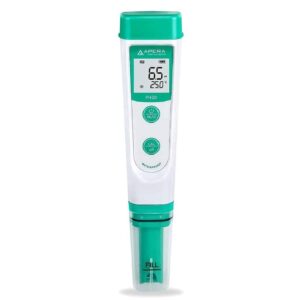
pH-Messgeräte, pH- & EC-Messgeräte
Ursprünglicher Preis war: 83,30 €65,99 €Aktueller Preis ist: 65,99 €.
Enthält 19% MwSt.plus VersandIn den Warenkorb
What both devices need
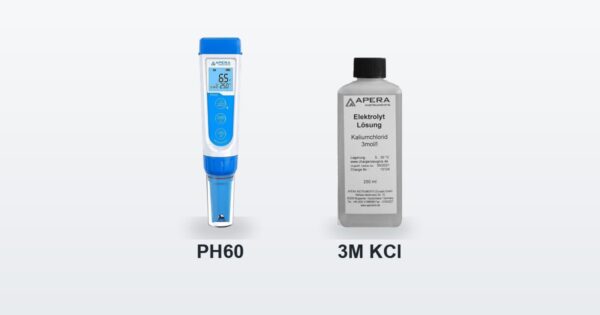
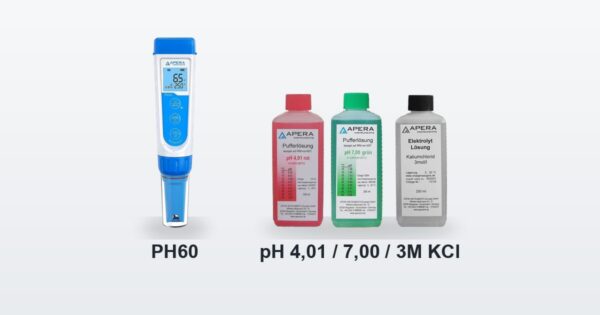
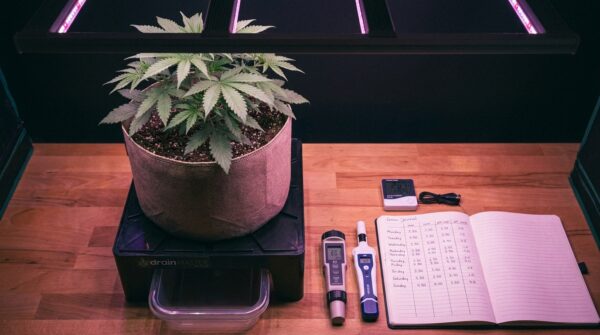
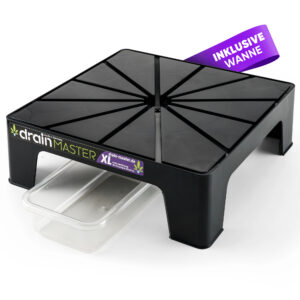
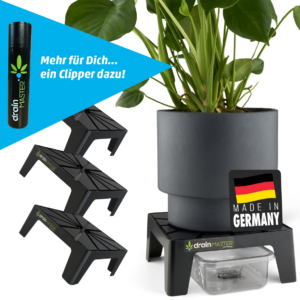
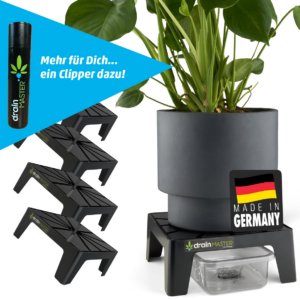
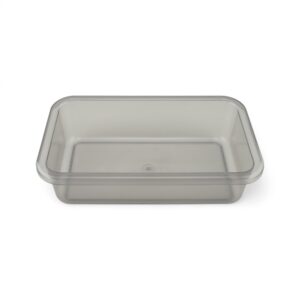
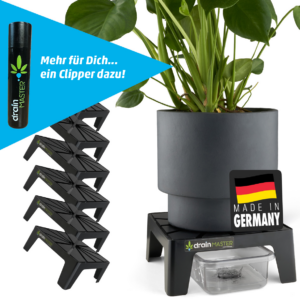
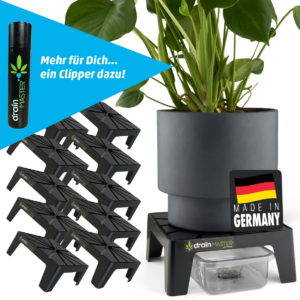
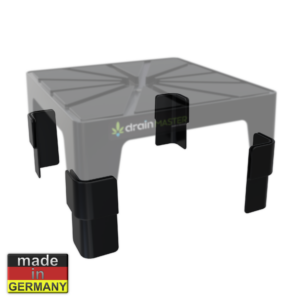
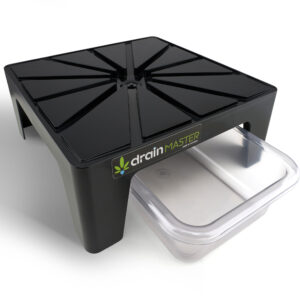
Regardless of your choice: without fresh buffer solution and KCl storage solution, even the more expensive device provides worthless numbers. Both are included in the Apera pH Calibration Solution Set. And without a clean sample, even that remains useless—measuring from the saucer means measuring evaporated water and deposits. That is exactly what the DrainMaster is for: it catches the drain cleanly without you having to lift the pot.
To learn how to derive decisions from measured values, check out the post Fertilizing Cannabis Correctly: How to Read Your Drain Water.