Standing water in the saucer - harmless or risk of waterlogging?
Even if there is a little water in the tray, this is not a problem. The plant will use it up.
Ein Instagram Nutzer
Many plant lovers wonder whether it is harmful if water remains in the saucer of the flower pot after watering – or whether this could even benefit the plant.
The clear answer: permanently standing water in the saucer is not harmless, but promotes waterlogging and root problems.
In botany, waterlogging refers to an accumulation of water in the root area that cannot drain away. Cannabis plants in particular do not tolerate waterlogging and react very sensitively to too much moisture at the roots. In the following, we explain what waterlogging means, what consequences it has and how to avoid it – so that your plants stay healthy.
What is waterlogging and how does it occur?
Waterlogging is the phenomenon when excess water remains in the pot, saucer or planter and the substrate is permanently soaked. Waterlogging always occurs when plants receive more water than they can absorb and this does not drain away quickly enough. In such a case, the roots literally have “wet feet”. The water pools in the lower part of the pot or in the saucer instead of running off or being used up by the plant. Waterlogging occurs particularly easily in pots without a drainage hole – here the water cannot even escape from the pot. But waterlogging can also occur in pots with a hole if the draining water collects in the saucer and the root ball stands in it. An important indicator: If there is water in the saucer after watering, the risk of waterlogging is very high. It is often overlooked that unused water collects at the bottom. Experts therefore advise checking and emptying the saucer at the latest shortly after watering. For example, Pflanzen-Kölle recommends checking the saucer about 30 minutes after watering and always pouring away excess water to prevent root rot. If water is left standing for longer, it will be absorbed by the substrate and keep the soil at the bottom of the pot permanently wet – this is exactly what needs to be avoided.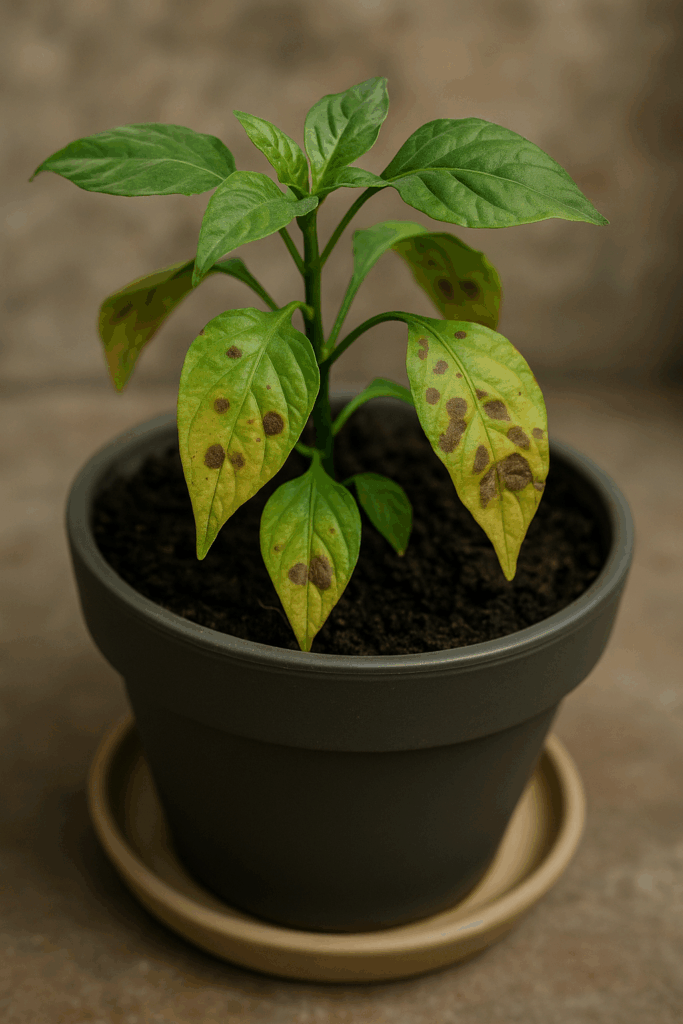
Recognizing signs of waterlogging
Waterlogging often goes unnoticed at first, but can cause serious damage to plants. The following signs indicate that your plant is suffering from waterlogging:
- Constantly moist substrate: The soil does not dry out at all and still feels wet even days after watering.
- Water in the saucer: There is visible water under the pot or in the planter, a clear indication of excess water that is not draining away.
- Droopy, yellowed leaves: Despite sufficient watering, the leaves hang limply and turn yellow. This may be due to a lack of nutrients because soaked roots can no longer absorb nutrients.
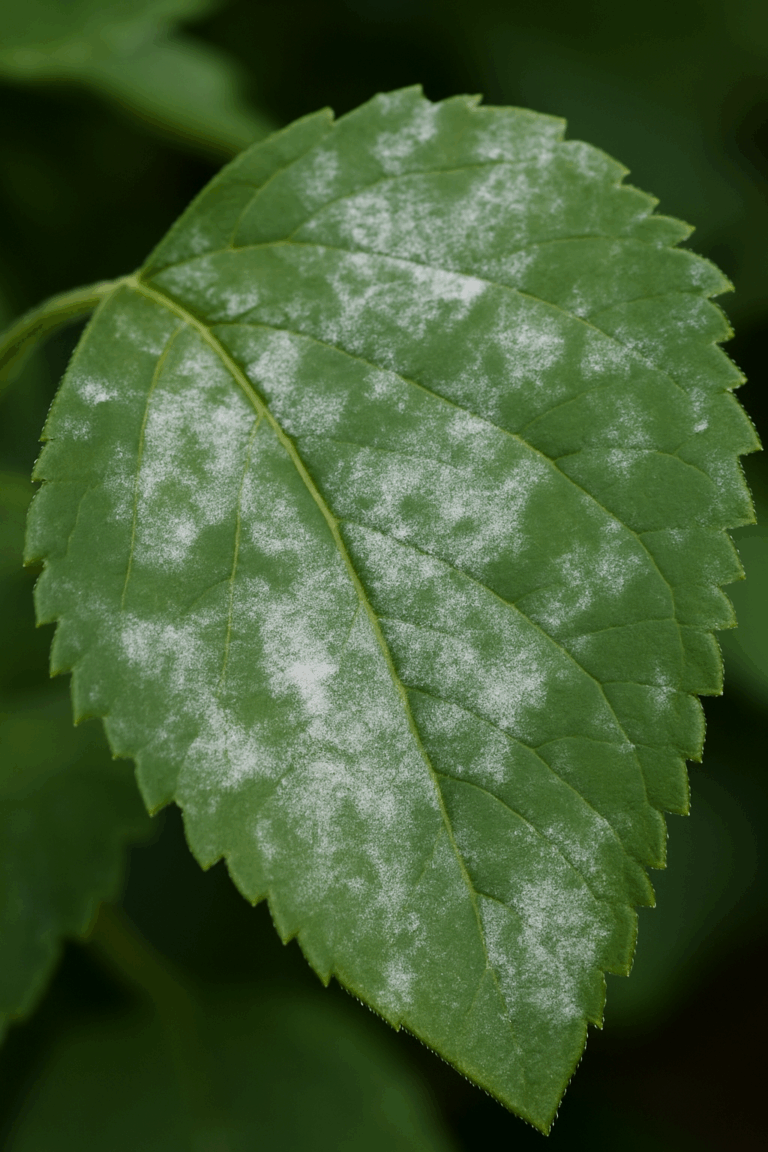
- Musty smell or mold: The soil smells musty and white mold may appear on the soil surface – an indication of rotting processes caused by too much moisture.
Danger of mold: Waterlogging promotes mold growth on the soil surface and weakens the plant. Such deposits occur when excess water remains in the potting soil and there is hardly any aeration. In addition to mold, other pathogens and pests (such as fungus gnats) can also thrive in a permanently damp environment and cause additional damage to the roots.
Why is stagnant water so dangerous for the roots?
In normal, aerated soil, there are also air pores between the moist particles – roots need oxygen to breathe. However, if there is water in the pot, it displaces the air and the roots literally suffocate. The standing water blocks the uptake of oxygen and nutrients via the roots, which is vital for the plant. As a result, the plant shows signs of deficiency, even though it has actually been watered and perhaps even fertilized sufficiently. The symptoms (drooping, yellow leaves, stunted growth) are often mistaken for a lack of nutrients – but the cause is actually over-absorbed roots.
If the waterlogging lasts longer, the situation worsens: harmful fungi and bacteria can multiply rapidly in the airless, wet environment. Root rot develops quickly – the roots begin to turn brown, become slimy and die off. Permanently waterlogged soil is virtually a “paradise” for decay pathogens such as fungi. In addition, useful soil organisms die off, which further deteriorates the soil quality.
In short: Stagnant water leads to a vicious circle of oxygen deficiency, rotting and nutrient deficiency, which makes the plant seriously ill. As the saying goes, a waterlogged plant is “watered to death”.
Gardeners and experts therefore repeatedly emphasize how risky permanently wet feet are for almost all potted plants. One guide puts it like this: More houseplants die from waterlogging (because the water stands in the saucer for too long) than from dryness – you should never forget that a flower pot is not an aquarium and plant roots should never stand in water for too long(Pflanzen-Kölle Ratgeber). Even species that like a lot of moisture need air at the roots. The tropical Alocasia, for example, likes a constantly moist substrate, but cannot tolerate wetness in the long term(Palmenmann – Alocasia Pflege). Permanently moist soil should therefore be avoided.
Especially for cannabis plants: Avoid overwatering
Cannabis is particularly sensitive to waterlogging. The following principle applies to cannabis cultivation: the soil should be evenly moist, but never dripping wet. A frequently cited beginner’s mistake is to water cannabis too often and too much. The result is overwatered plants – and these react with the same problems: limp leaves, discoloration, growth arrest. Overwatering suffocates cannabis roots and prevents them from absorbing nutrients and oxygen(Watering cannabis: How to remedy overwatering and underwatering). If the root zone remains too wet for too long, there is a risk of root rot, fungal infestation and ultimately the loss of the plant. Cannabis growers know the rule well: the plant needs water, but avoid “wet feet” at all costs!
A practical example from a hemp guidebook illustrates this: It advises to always keep the soil moist (not soaking wet), because “if the roots are in water, the plant rots”(Planting hemp: tips and mistakes when growing). It is also said that there should be no more water in the saucer half an hour after watering – if there is, you have watered too much and there is a risk of waterlogging(Planting hemp: tips and mistakes when growing). These recommendations underline how important it is, especially with cannabis, to consistently drain excess water. Many experienced growers only use saucers to collect the drainage water and then dispose of it immediately. Some also work with fabric pots or clay shards in the bottom of the pot to minimize waterlogging right from the start.
Of course, there are special cases: In hydroponics or special irrigation systems (e.g. deep water culture), the roots are in water, but this is continuously supplied with oxygen (by pumps, aeration stones, etc.). Stagnant, oxygen-poor water, on the other hand, is deadly for cannabis roots. This is why you should not leave the stagnant drainage water in the saucer “for later” after watering in the hope that the plant will soak it up – without aeration it will do more harm than good.
How to avoid waterlogging: tips for healthy watering
The good news is: waterlogging can be prevented by correct watering behavior and a few simple measures. Here are the most important tips for avoiding stagnant water and root rot in potted plants:
- Ensure drainage: Always use pots with drainage holes in the bottom. Without a hole, water cannot drain away and waterlogging is inevitable(MDR Garten – Drainage in pots).
- Use a drainage layer: Add a layer of gravel, expanded clay or coarse sand to the bottom of the pot so that excess water can drain away more quickly and the drainage holes do not become blocked. This protects against water stagnation in the root area.
- Choose a high-quality substrate: Loose, permeable soil (possibly loosened with perlite) ensures that water is well distributed and excess moisture is released. Compacted, cheap soil tends to become waterlogged.
- Water correctly: Only water when the top layer of soil has dried out (finger test approx. 3 cm deep). Water thoroughly until some water runs off the bottom – but not excessively. The golden rule: keep the soil evenly moist, but never dripping wet.
- Remove excess water: Let the pot drain after watering. No more water should be left in the saucer for 15-30 minutes at the latest – pour it off!(Pflanzen-Kölle, hemp seed store). This will prevent the roots from standing in water for longer.
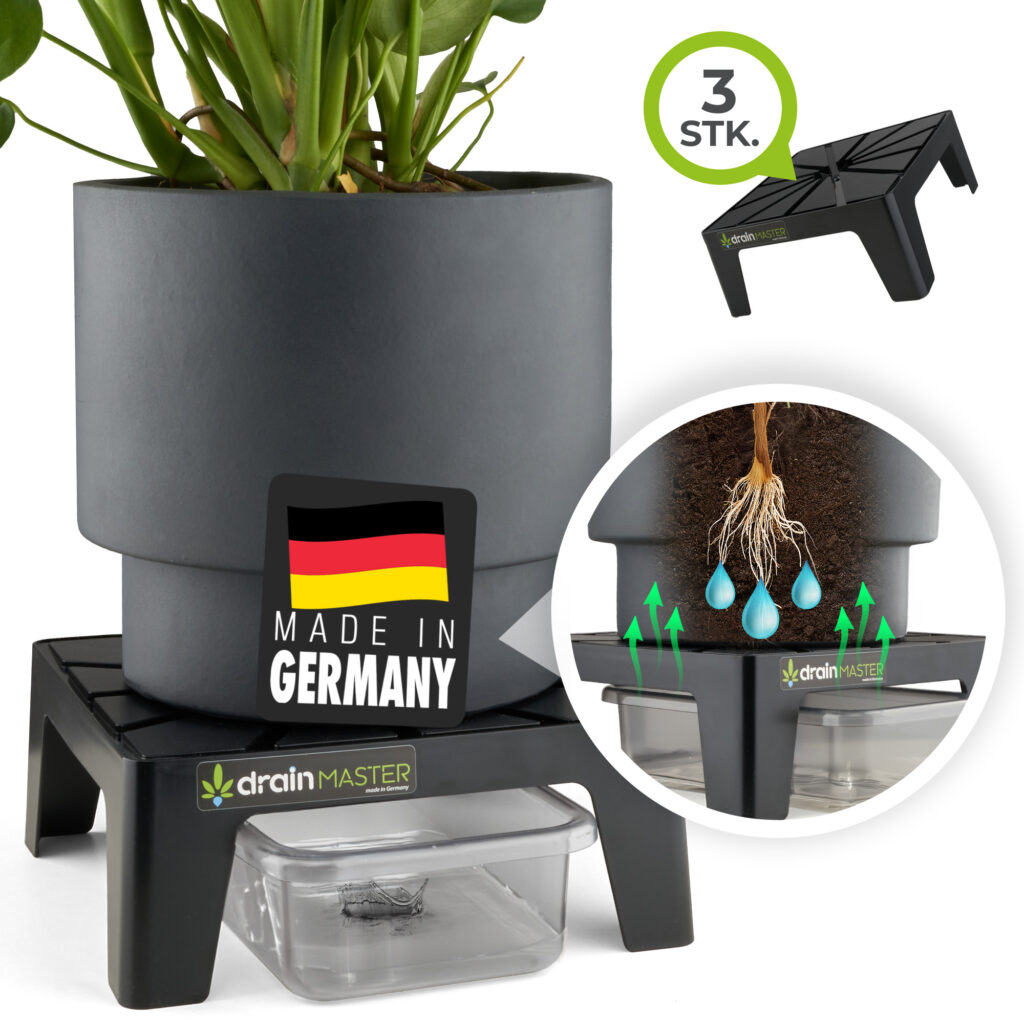
- Saucer with spacers: If your plant produces a lot of drainage water, you can use a saucer with elevations or a pot with feet. This way, the pot is not standing directly in the water. However, the following still applies: pour away the draining water promptly.
Conclusion: Stagnant water in the saucer is harmful in the long term, as it almost always leads to waterlogging. The plant is practically “drowned” – its roots suffer from a lack of oxygen and begin to rot. Particularly with sensitive plants such as cannabis, care should be taken to ensure that no residual water remains in the saucer after watering. If in doubt, it is better to water a little less and check more often. You can effectively prevent waterlogging with good pot drainage, the right watering rhythm and by consistently pouring off excess water. This allows your potted plants to grow healthily without “wet feet” causing them problems.
Why are so many plant lovers so enthusiastic about DrainMaster?
5 reasons why more and more plant lovers are turning to DrainMaster - for healthy plants and clean rooms.
Why can DrainMaster do more than a simple saucer? Because it’s not just about water, but about a healthy plant from top to bottom.
1. no waterlogging. No root rot.
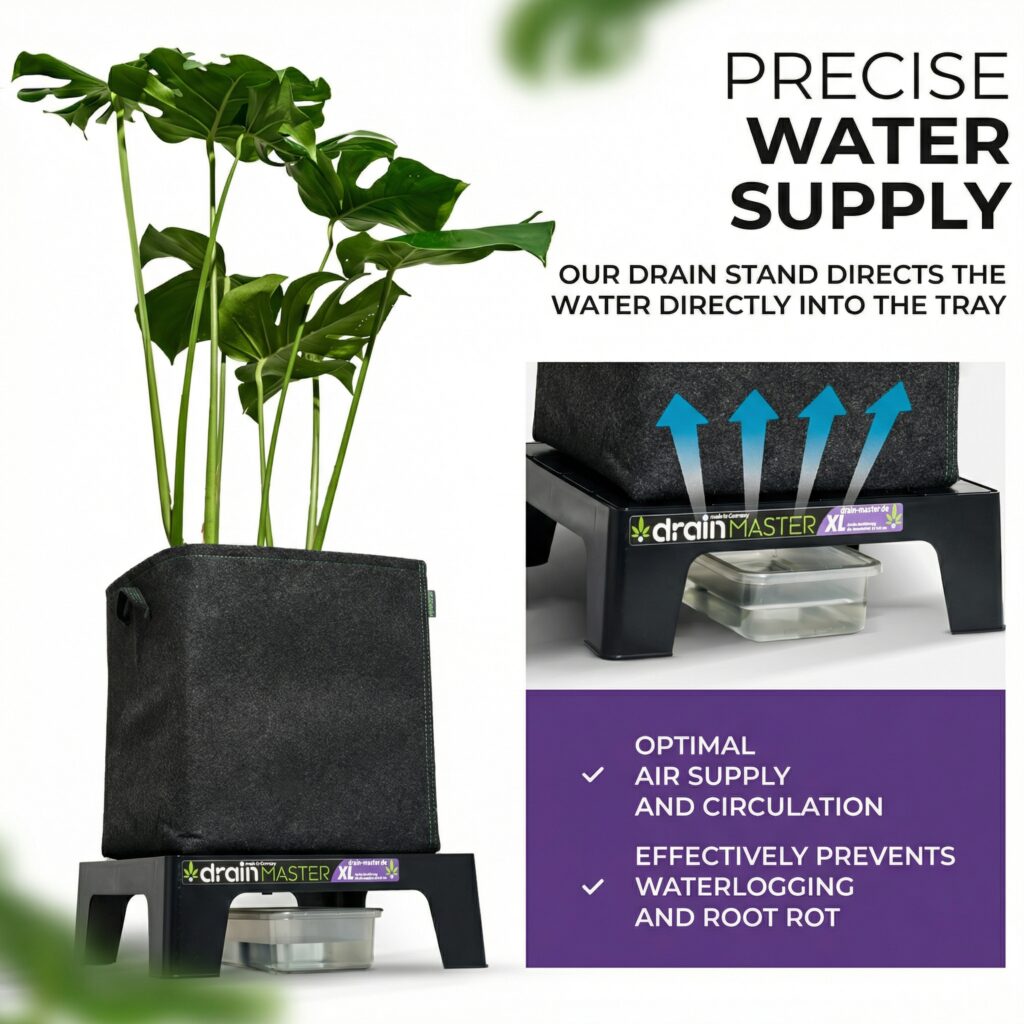
Anyone who waters too much risks waterlogging – every plant lover knows that. DrainMaster lifts the pot and creates an air gap to the soil. This allows water to drain away and gives the roots air. Your plant will thank you for it.
Whether in soil, coconut, rock wool or substrate mixtures.
2. more than a coaster
Just a coaster? Not even close.
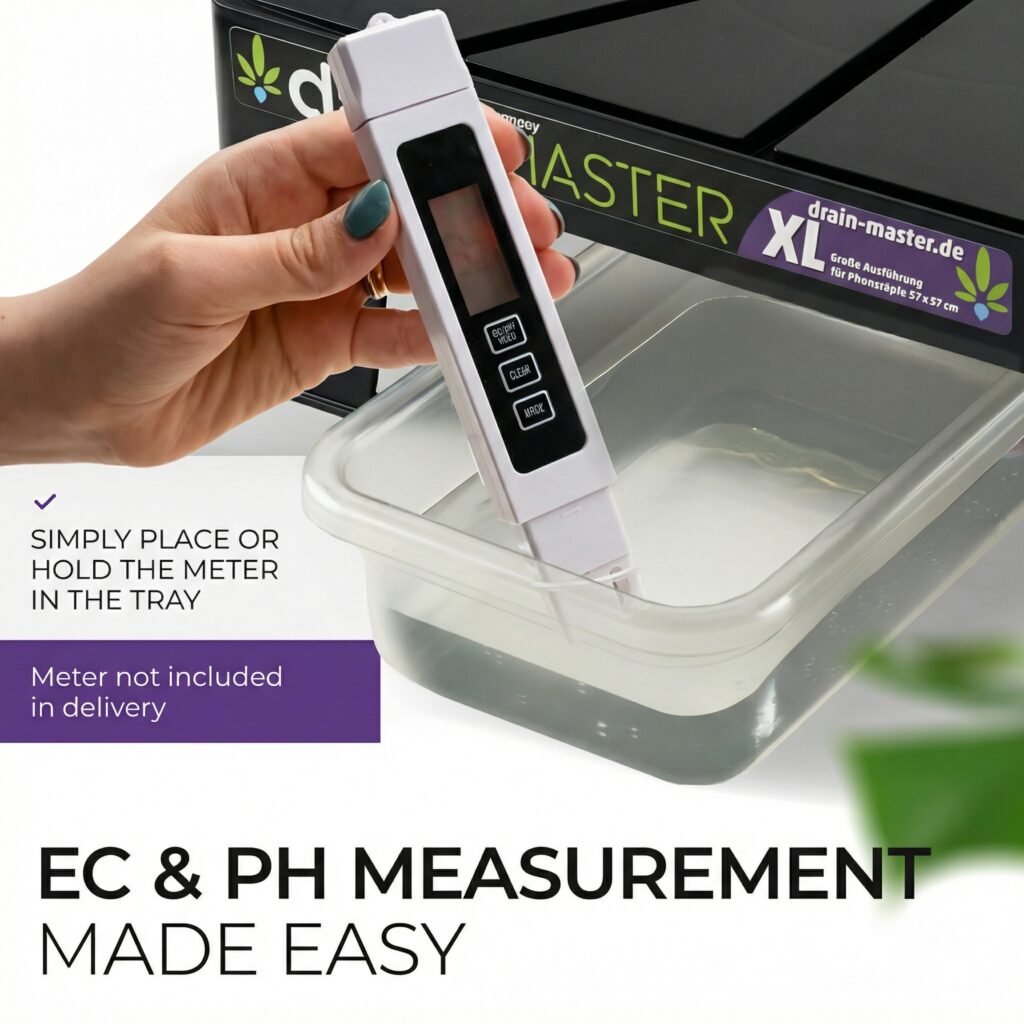
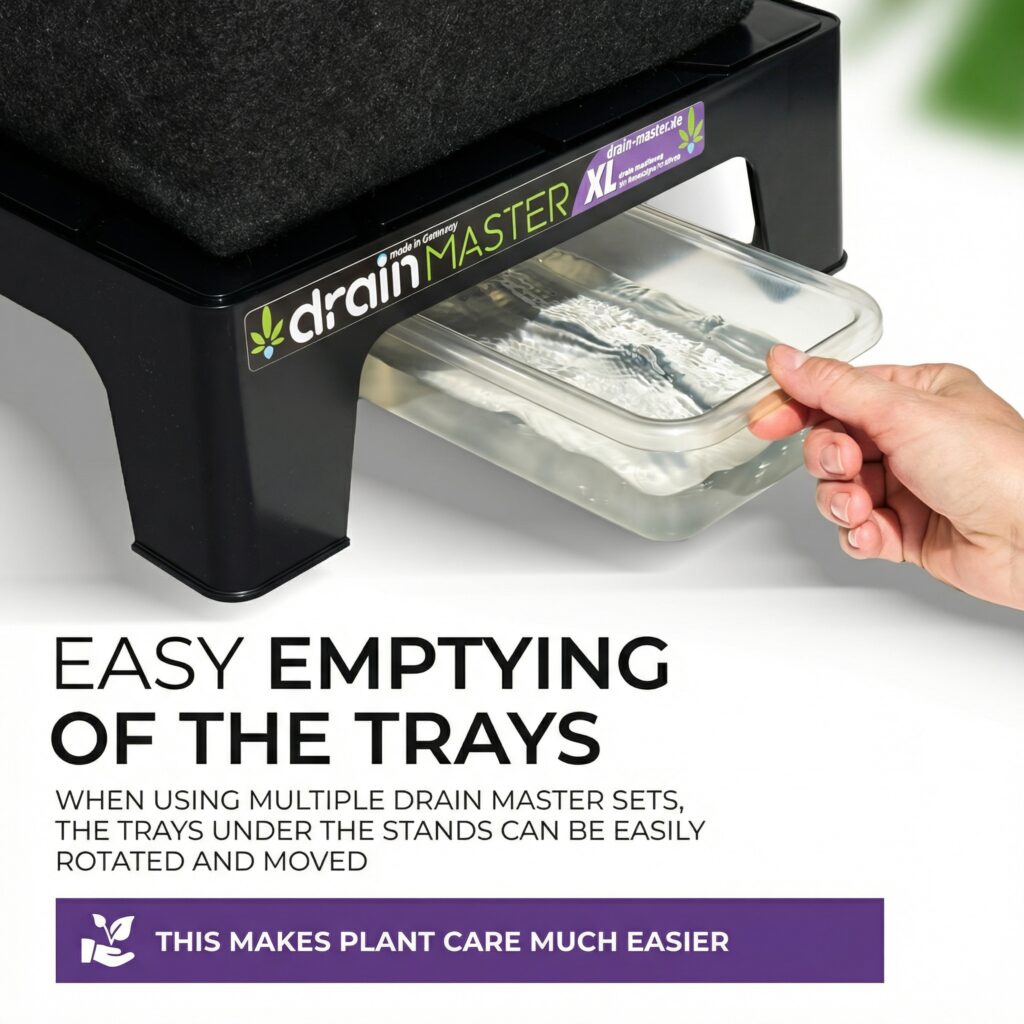
A DrainMaster set consists of two perfectly coordinated parts: a sturdy drainage platform and the matching tray underneath. The pot is raised on the DrainMaster – at a distance from the draining water. This allows you to check the water level, remove excess water or even pump it out easily. The tray can be easily rotated and removed under the DrainMaster – even with plants standing close together.
And conventional coasters?
The pot is usually placed directly in the draining water. This prevents air circulation, promotes waterlogging and therefore often also root rot or mold. This is not a good idea, especially with fabric pots or delicate roots.
3. cleanliness & comfort
Watering plants in the shower? Sure, you can do that. But do you really want to do it every time? With DrainMaster, you water exactly where the plant is – no dragging, no dripping, no mess. This is a real game changer, especially if you have several plants or heavy pots, which can quickly become really unwieldy as they grow and can be a real pain. Also a real gain for people with limited mobility.
4. looks better than you think
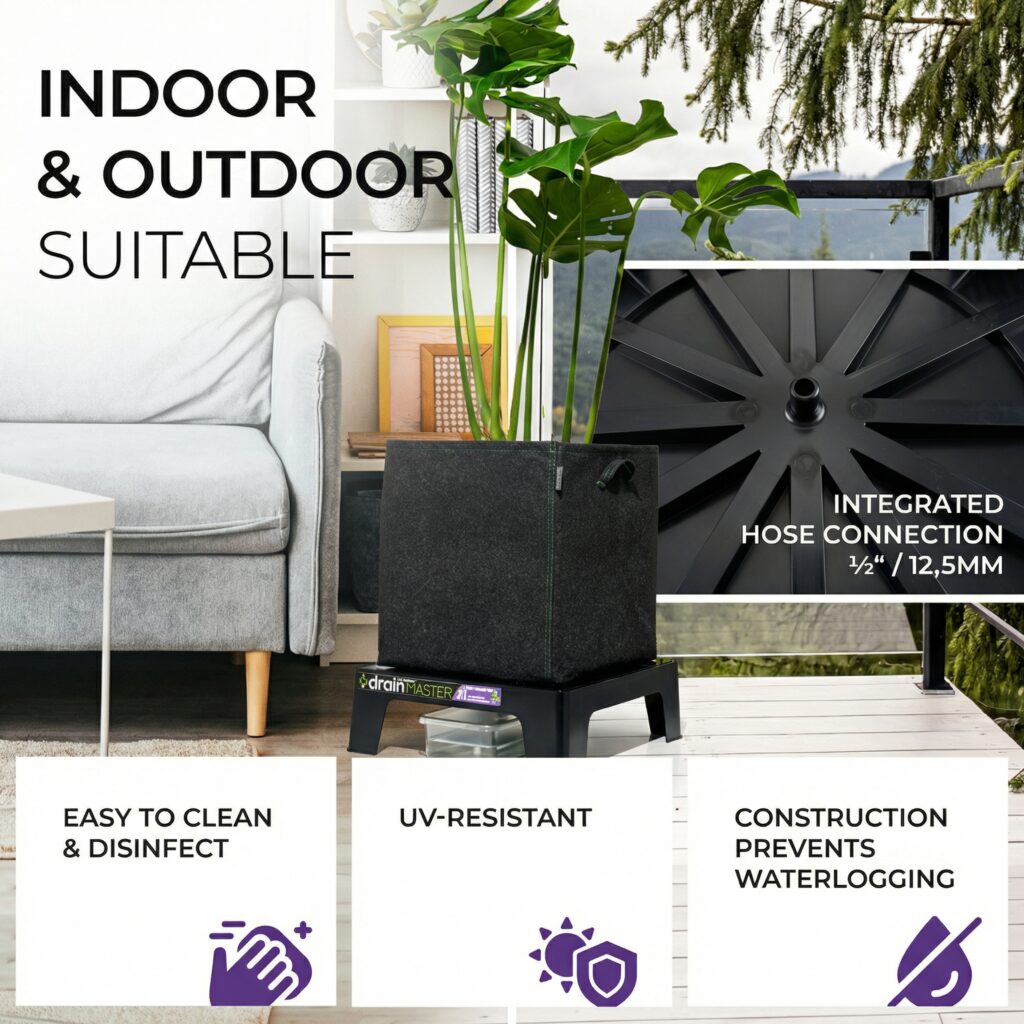
Some say it looks like a pedestal. That’s right – and that’s a good thing. The plant is elevated and receives light, air and attention. And indeed: in many cases, the DrainMaster is not even noticeable in everyday life. Especially when a larger plant is placed next to the sofa or in a quiet corner, the focus is on the greenery anyway – not on what it is standing on. Many users report that the DrainMaster looks simple and unobtrusive with the matching pot. If you don’t want to see the sticker, simply turn it to the back. And if you don’t need the tray, simply use the DrainMaster on its own. This is how care becomes fun again – with a little helper that is hardly noticeable but does a lot.
5. more pleasure in care
DrainMaster is not an obligation, but an invitation. An invitation to make caring for your plants easier and better. You gain control over watering behavior, can avoid overwatering and do something good for your plants in the long term. The DrainMaster is a real help, especially for people who feel unsure about caring for their plants or don’t have classic “green fingers”: you can see directly what your plant needs – and where it may have been watered too much.
Once you’ve tried it, you won’t want to do without it again.
What do customers say?
Put together your DrainMaster set:
✅ Clean watering, no waterlogging
✅ Ideal for fabric pots, potted plants & more
✅ Improves root health & air circulation
✅ No need to lift pots – simply remove the drip tray
✅ Super stable: Up to 50 kg per platform
✅ Space-saving & reusable
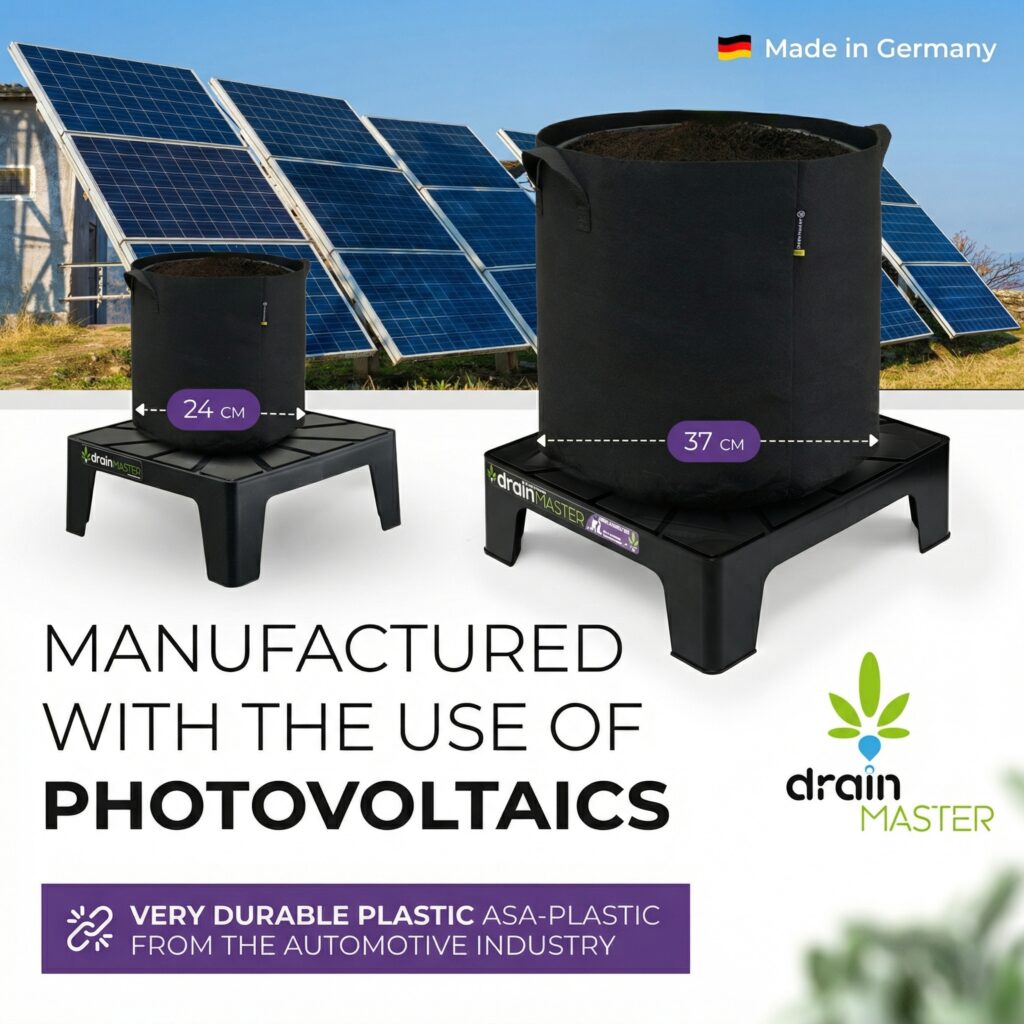
✅ Made in Germany from durable material (ASA)
✅ Includes matching trays – ready to use
🎁 Bonus:
✔️ Free shipping from € 24.50
✔️ 30-day money-back guarantee
✔️ Personal support for questions about the application
✔️ Compatible with hose connection – can be automated on request
How many plants do you have?
DrainMaster color
Tub paint
Height adjustment
Learn more →💡 Perfect for SCROG or more space under the pot. Stackable.
Stand feet
Price per DrainMaster. For multiple sets, accessories will be adjusted accordingly.