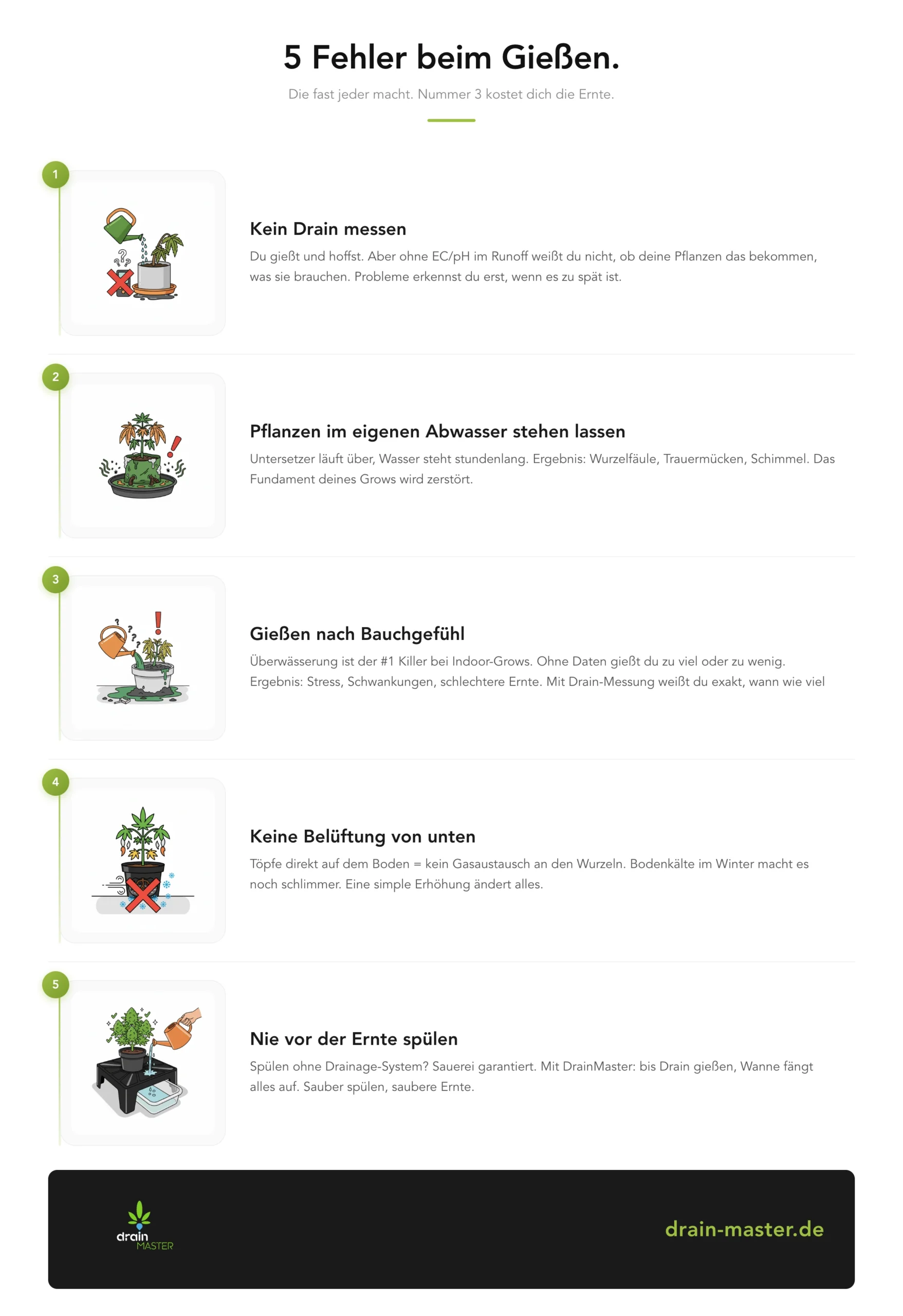
That almost every potted plant gardener makes. Number 3 kills your plants.
Watering plants correctly is probably the most underestimated skill in plant care. Whether it’s a Monstera in the living room, an olive tree on the terrace, or tomatoes on the balcony – the most common cause of damaged plants is not pests or diseases, but incorrect watering. Too much, too little, too seldom, too often. Yet good watering is not a gut feeling, but a simple, repeatable process. Once understood, it keeps your plants healthy long-term – and protects parquet, decking, and windowsills from water stains.
Why Watering Kills More Plants Than Any Pest
Overwatering is the number 1 killer of indoor and potted plants. Roots need not only water but also oxygen. If they are constantly wet, they suffocate – and rot. The fatal thing is: a plant with rotten roots shows the same symptoms as one with water deficiency – drooping, wilting leaves. The reflex of many plant owners: water even more. A vicious circle that ends in the trash.
The Role of Drainage
Drainage means: excess water can flow out of the pot. This sounds trivial but is constantly sabotaged in practice – by cachepots without drainage holes, by shallow saucers that overflow, and by expanded clay layers that are even counterproductive physically. If you want to water plants correctly, you must take drainage seriously as a separate issue, not as a side note.
The 5 Most Common Watering Mistakes – And How to Fix Them
These five mistakes appear in almost every household. Those who know them are immediately ahead of their neighbors and colleagues with brown houseplants.
Mistake 1: Watering by Calendar
Monday, Wednesday, Friday – regardless of whether the pot is still wet. Plants don’t have weekly schedules. Whether your Monstera, fig tree, or chili plant needs water depends on temperature, humidity, substrate, and growth phase. The only reliable method: finger test into the top layer of substrate or check pot weight. If it feels light – water. If it feels heavy – wait.
Mistake 2: Leaving the Plant in its Own Wastewater
The saucer fills up, the water is drawn back into the root ball, the bottom layer of soil remains permanently wet. This is exactly how root rot and fungus gnats develop. The solution is simple: elevate pots so that drainage water drains completely, and do not leave excess water standing for hours.
Mistake 3: Watering by Gut Feeling
Gut feeling is the enemy. Water by observation: pot weight, finger test, leaf turgor. And look at what comes out the bottom. If nothing comes out, you’ve watered too little or the root ball is hydrophobic. If a flood comes out, you’ve watered too much. Both are data points the plant gives you – and most people ignore them.
Mistake 4: No Ventilation from Below
Pots placed directly on parquet, tiles, or decking block gas exchange at the roots. In addition, there’s ground cold in winter and heat buildup in summer. And moisture collects under the pot, which eventually discolors wood or stone. A simple elevation solves this for both the plant and the floor.
Mistake 5: Ignoring Drainage
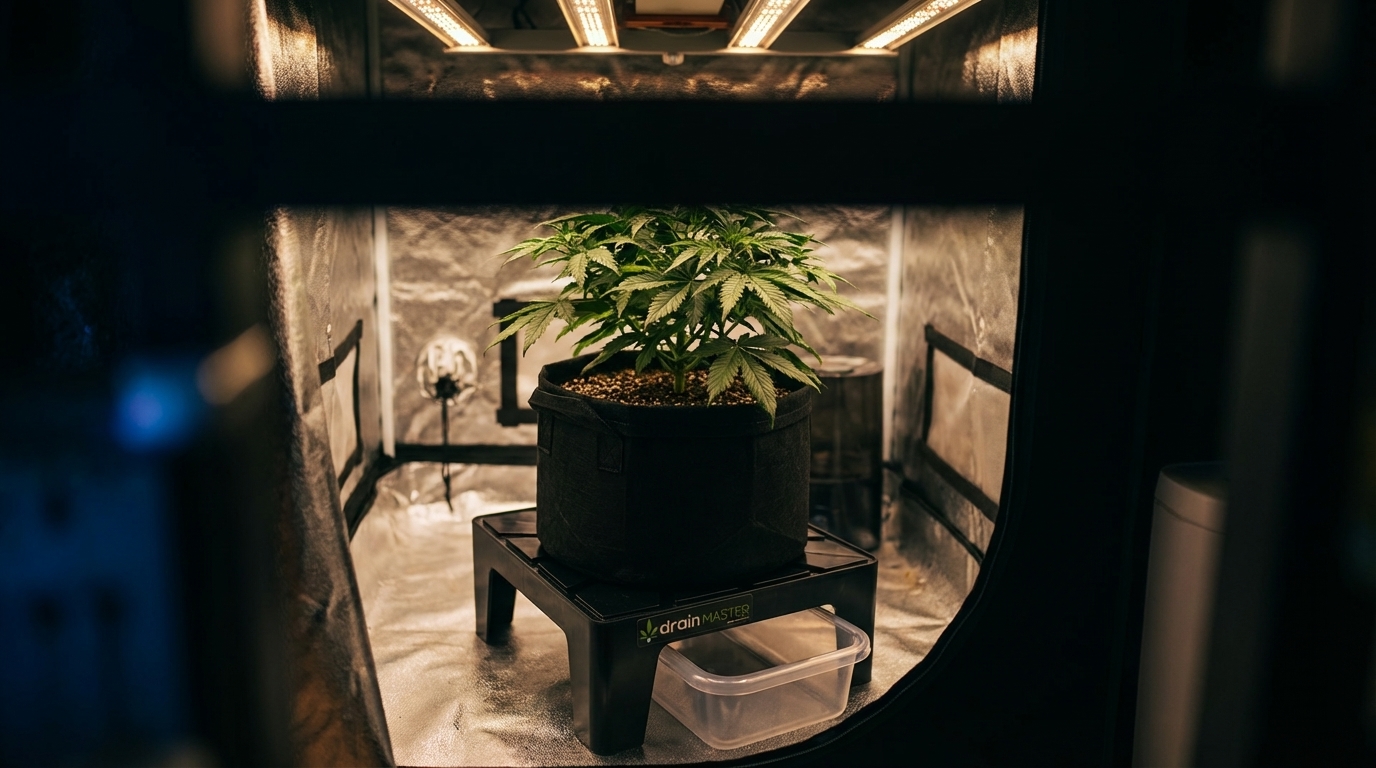
Expanded clay layers at the bottom of the pot are classic – and according to soil physics, they do little, sometimes even the opposite. What really helps: holes in the pot bottom, an elevated pot, and a drip tray underneath to collect the drainage water. This way, the plant never stands in water, the floor stays clean, and you can later decide whether to use the water for re-watering or dispose of it.
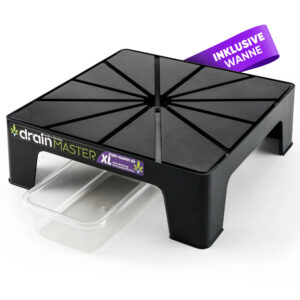
From Chaos to System Solution: Clean, Repeatable, Reliable
Anyone with more than three plants quickly realizes that manually handling saucers and cachepots doesn’t scale. Especially on the terrace, where large pots with olive trees, citrus, or figs stand, watering becomes a messy battle. A system is worthwhile here.
DrainMaster as a Mini Drainage Table for Every Pot
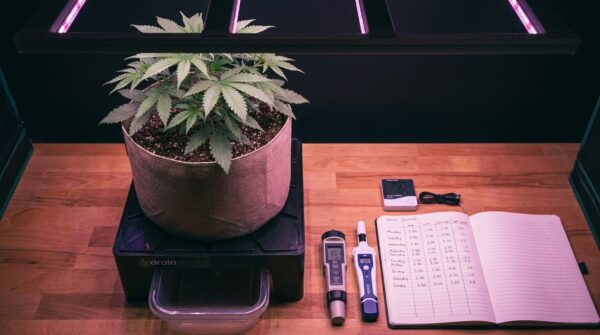
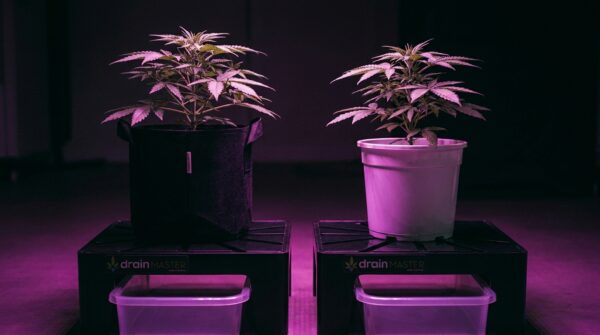
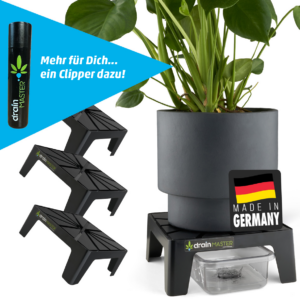
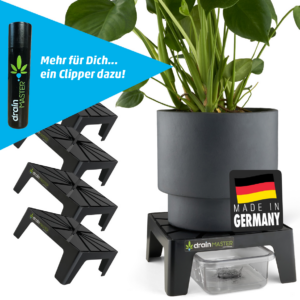
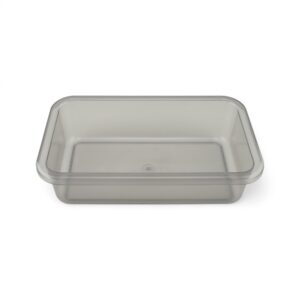
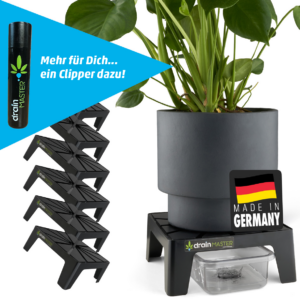
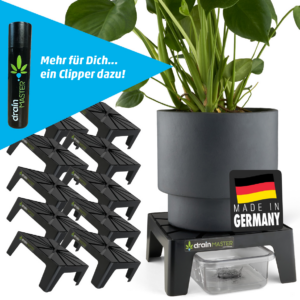
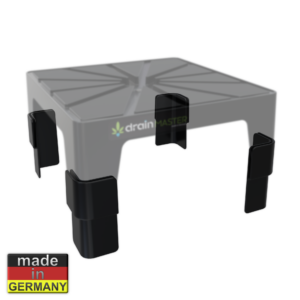
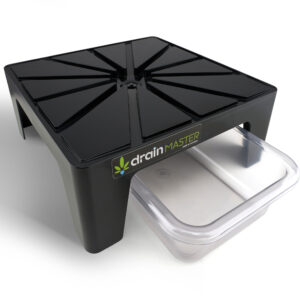
The DrainMaster is a mini drainage table made of ASA plastic – the same material used in automotive exteriors against UV and weather. The ribbed structure of the platform guides water precisely into a 1.5 L drip tray underneath. The pot stands elevated, the roots get air from below, and the water never stands in the root ball. The XL version carries up to 100 kg – enough for a mature olive tree pot with wet substrate. It is manufactured in Germany with electricity from its own PV system and green electricity.
For Which Plants Is This Particularly Beneficial?
- Large potted plants: Olive trees, figs, citrus, oleander – heavy, sensitive to waterlogging, permanently outdoors.
- Indoor plants on parquet: Monstera, Ficus, Strelitzia – water stains on real wood are difficult to remove.
- Balcony vegetables: Tomatoes, chili, bell peppers – need a lot of water, reward a clean watering rhythm with a better harvest.
DrainMaster XL for Potted Plants
DrainMaster – Sustainability Meets Design