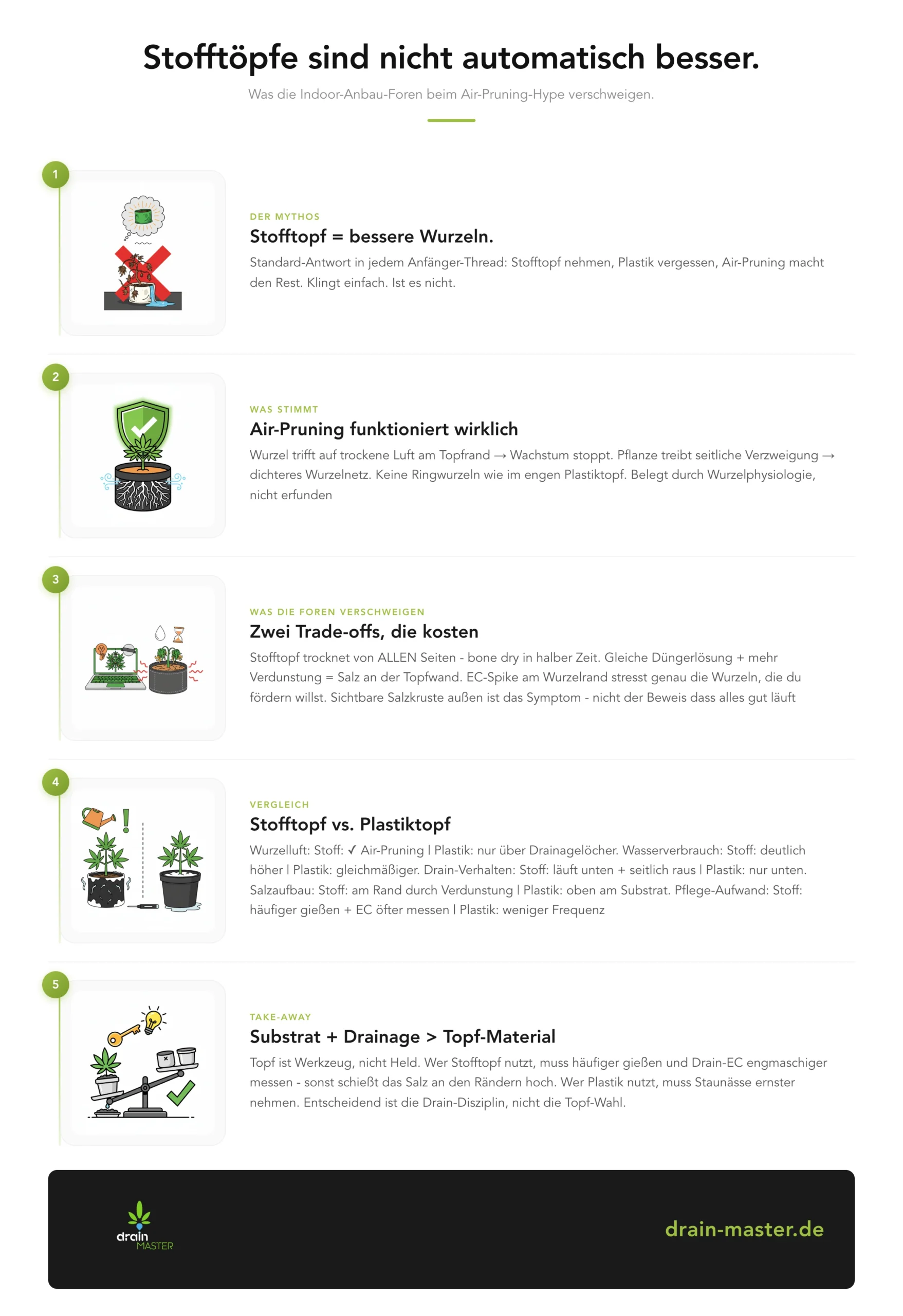
What indoor growing forums hide during the air pruning hype.
The Fabric pot disadvantages are often underestimated, yet they can make the difference between a record harvest and a disaster. While marketing slogans rave about perfect roots through “air pruning,” they often hide the flip side of the coin: a massive increase in management effort that can become a trap, especially for less experienced growers. If you want to use the advantages, you have to know the disadvantages and actively counteract them. This article puts the facts on the table, without sugarcoating and straight from the field.
The air pruning compromise: Why better roots come at a price
The core promise of fabric pots is so-called air pruning. It sounds revolutionary, but it’s a double-edged sword. To understand the challenges, we need to take a quick look at how the mechanism works and where exactly the problems arise in practice.
The theory: How air pruning ensures a dense root network
In a conventional plastic pot, a root tip grows until it hits the impermeable wall. It can’t go any further and starts growing in a circle. The result is the dreaded root circling, which massively hinders nutrient uptake. A fabric pot, on the other hand, is breathable. If a root tip hits the dry air at the pot wall, it dies off. This “air cut” signals the plant to form a new lateral root just before the dead tip. This process repeats countless times and leads to an extremely dense, fibrous root ball that uses the entire substrate volume efficiently. Theoretically, this is the key to explosive growth.
The practice: Rapid drying and the salt dilemma
In practice, high air permeability means one thing above all: massive evaporation. Unlike in a plastic pot, the substrate doesn’t just dry out on the surface, but across the entire wall surface of the pot. The consequence is that you’re forced to water cannabis much more frequently. That alone would just be a logistical problem, but it carries a much larger chemical dilemma: water evaporates, but the dissolved nutrient salts remain. They crystallize and accumulate right on the outside of the root ball – exactly where the desired air pruning takes place. This creates uncontrolled EC spikes (electrical conductivity) and can burn the fine root tips, which negates the actual advantage of the pot. A central point of fabric pot disadvantages is therefore this constant battle against the salinization of the root zone.
Precision work required: Fabric pot disadvantages in management
Working with fabric pots means trading the forgiving inertia of a plastic pot for a highly reactive system that requires constant attention and precise control. Errors in water and nutrient management, which might only lead to minor problems in a plastic pot, can quickly have catastrophic consequences here.
The Art of Watering: More Frequent, Slower, More Controlled
Properly watering cannabis becomes the ultimate discipline. A common mistake is watering too quickly. The water looks for the path of least resistance and runs right back out the dry sides of the fabric pot, while the core of the root ball remains dry. These dry pockets (hydrophobic spots) are hard to re-moisten and lead to an uneven nutrient supply. The plant then often shows symptoms of underwatering cannabis, even though the tent floor is wet. The leaves hang limp, and the grower is confused. A detailed guide to the causes of drooping leaves helps to interpret these signs correctly.
The solution requires patience:
- Water slowly and in stages: Apply the nutrient solution slowly and circularly to the surface, wait a moment, and repeat the process until the substrate is fully saturated and a slight drain emerges at the bottom.
- Weight control instead of a watering schedule: The most reliable method is lifting the pot. Only water when it feels noticeably light. A fixed watering schedule inevitably leads to overwatering cannabis or drought stress.
- Bottom watering: A very effective method is watering from below. Place the pot in a saucer with nutrient solution for 15-30 minutes so that the substrate can soak itself up from the bottom.
The substrate as a crucial buffer
Standard potting soil is often unsuitable for fabric pots. It’s too dense, tends to compact, and worsens the problem of dry pockets. The substrate must be able to cushion the disadvantages of rapid drying. The secret lies in the structure: an airy mix is a must. A proven recipe is a high-quality grow soil enriched with 15-20% perlite or pumice to ensure drainage and aeration. For growers working with mineral fertilizers and aiming for maximum control, a mix of 70% coco coir and 30% perlite has become the gold standard. This mix stores a lot of water but remains extremely airy, helping to avoid root rot. However, it doesn’t forgive any mistakes in pH and EC control, which further increases complexity. You can learn more about the dangers of root rot and how to prevent it in our guide on how to identify and prevent root rot in plants.
Other fabric pot disadvantages in practice
Besides the major challenges with water and nutrients, there are a number of smaller but annoying everyday aspects that count toward fabric pot disadvantages.
- Repotting is hardly possible: The fine roots grow directly into the fabric of the pot. Clean, stress-free repotting is therefore practically impossible. You have to put the plant in its final pot from the start.
- Cleaning and hygiene: Salt rings, algae, and ingrown root remains make cleaning a tedious task. Often, a thorough wash in the washing machine is necessary to prepare them for the next run.
- Pests and algae: The permanently damp outer walls are not only unsightly but also form an ideal breeding ground for algae. Worse still, they create perfect conditions for fungus gnats to lay eggs. Anyone who has ever had to deal with these pests knows how stubborn they can be. An effective plan to fight fungus gnats becomes mandatory reading.
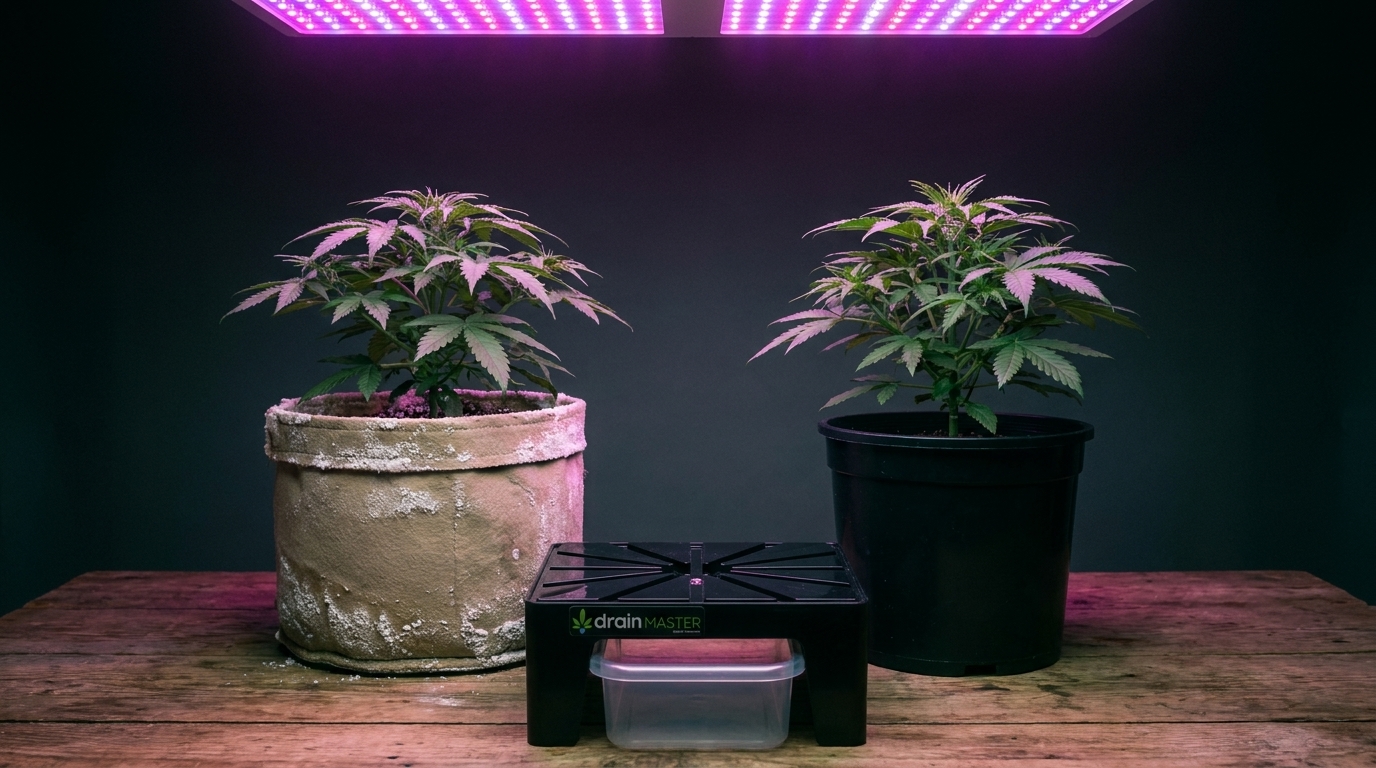
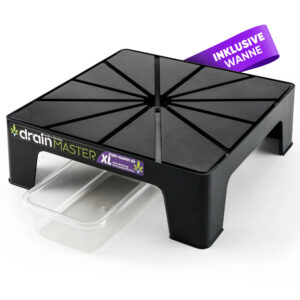
- Waterlogging in the saucer: The biggest enemy of any cannabis root is cannabis waterlogging. Although the pot itself drains great, it often sits in a puddle of drain water in the saucer after watering. The fabric sucks this water back up, the lower part of the pot stays permanently wet, and aeration is blocked.
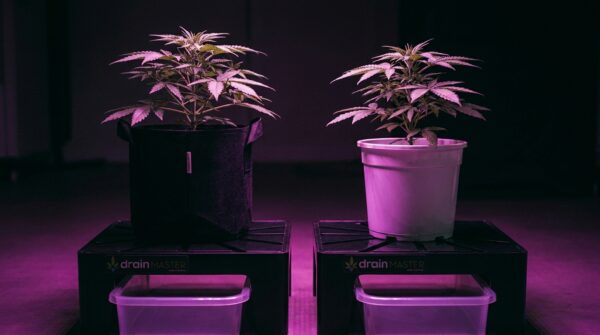
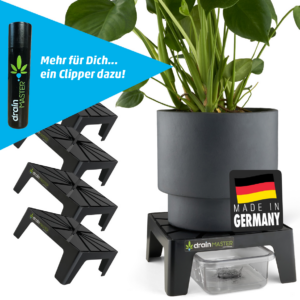
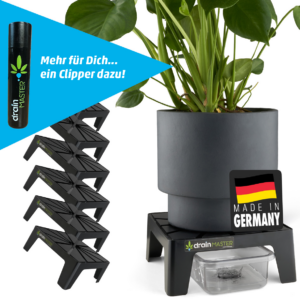
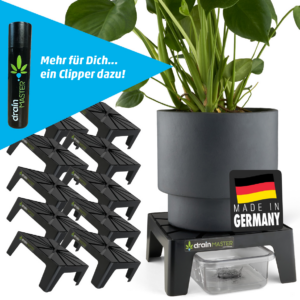
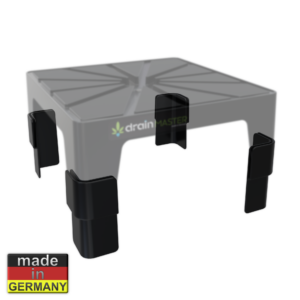
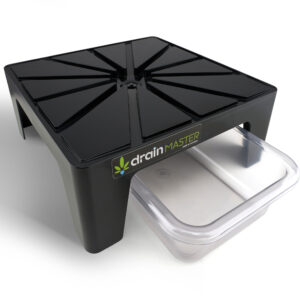
In summary: Fabric pots are a tool for advanced growers. The undeniable benefits for root health are bought with significantly higher effort in watering and nutrient control. The biggest fabric pot disadvantages lie in rapid drying and the associated risk of salt accumulation. However, if you’re willing to adjust your watering behavior, optimize your substrate, and meticulously monitor the values in the drain, you can achieve outstanding results with them. Fortunately, the problem of uncontrolled runoff and wet tent floors can be elegantly solved. Placing your pots on a DrainMaster plant saucer with drainage function lifts them out of dangerous waterlogging and neatly catches the excess drain. This makes monitoring easier and ensures dry feet, which the plants will thank you for with healthy growth.