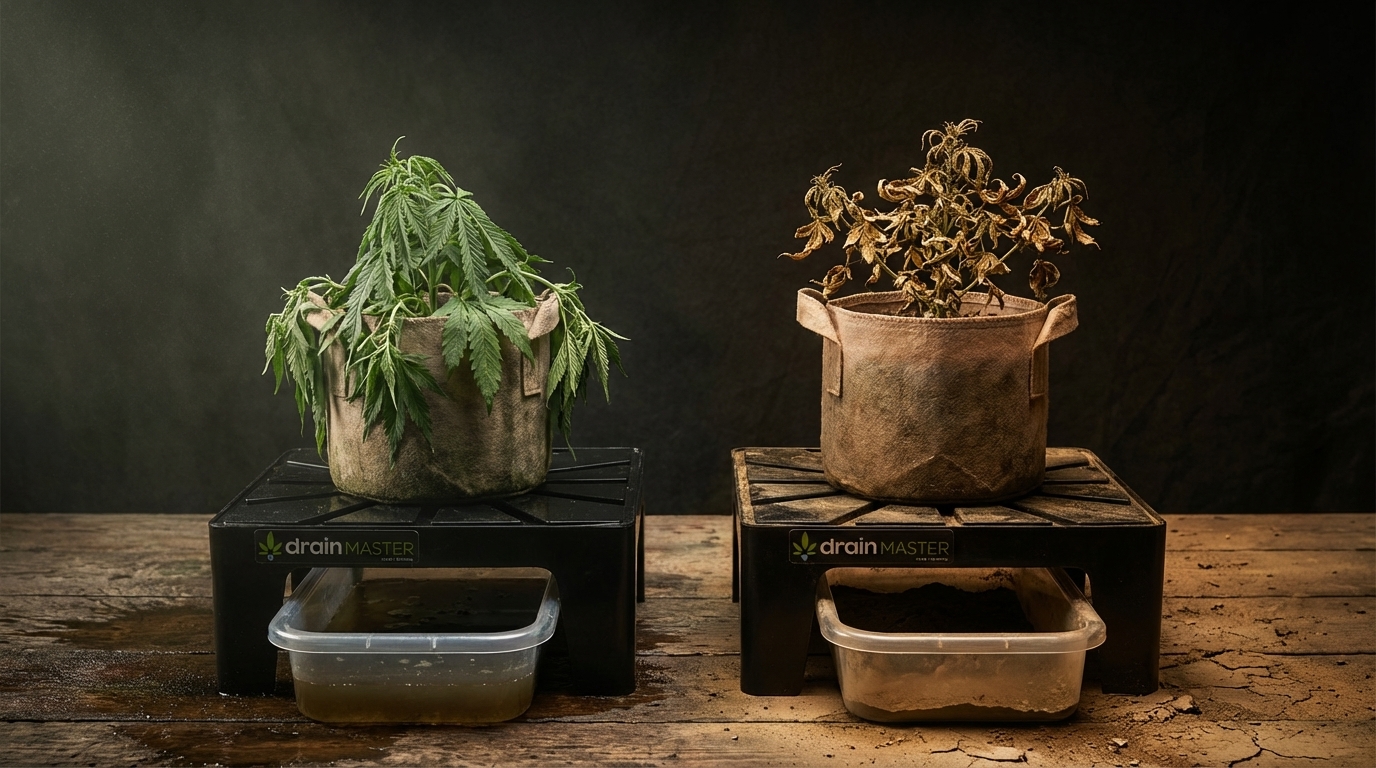
Both look the same. Here is how you recognize the difference.
Cannabis drooping leaves are the classic alarm signal that immediately catches every grower’s attention. It’s your plant’s silent cry for help, signaling that something is fundamentally wrong in the root zone. Instead of panicking, what’s needed now is a systematic and calm troubleshooting approach. In most cases, the cause lies in one of four areas: water, nutrients, pH level, or the substrate itself. Let’s tackle the problem like a pro and narrow down the cause step by step.
The first check: Overwatered or underwatered?
By far the most common cause of wilting plants is a watering error. Both too much and too little water lead to similar symptoms, but the details will tell you exactly where the problem lies.
Visual diagnosis: Reading stems and leaves correctly.
Take a close look at your plant. With overwatering, the leaves are plump and feel heavy. They often curl downward like an eagle’s claw, while the petiole and main stem remain stiff. The plant overall appears “waterlogged” and limp. In contrast, underwatering shows through a completely lifeless plant. Everything hangs limply, the leaves feel thin, dry, and papery. There’s no pressure left in the tissue – the plant is simply thirsty.
The physical test: Pot weight and finger test.
Never rely on your eyes alone. The two most reliable methods for checking moisture are physical. Method one is pot weight: Lift the pot. A waterlogged pot is unmistakably heavy, while a dry pot feels feather-light. Make this a routine to develop a feel for the weight. Method two is the classic finger test: Stick your finger about 2-3 centimeters deep into the substrate. If it still feels moist there, wait before watering. If it’s dry, the plant needs water. These simple tests prevent most mistakes when watering cannabis.
The quick test for a definitive answer.
If you’re still unsure after the first two tests, there’s one final, foolproof test. Give the plant a moderate amount of water. If it was underwatered, it will visibly recover within 30 to 60 minutes. The leaves and stems will perk up again. If absolutely nothing happens and the leaves remain limp and heavy, you have confirmation: The problem is cannabis overwatering, and the roots are already suffocating in water.
When it’s not the water: Nutrient and pH problems in the substrate
Sometimes the leaves look like they’re overwatered, but the substrate is neither too wet nor too dry. In this case, the problem runs deeper – in the nutrient chemistry of the root zone.
Nutrient burn (EC level too high): Drooping leaves with burned tips.
Over-fertilization leads to excessive salt concentration in the substrate, measured as EC level (electrical conductivity). This high salt content damages the roots through osmosis and blocks their ability to absorb water. The result is cannabis drooping leaves, which often resemble the symptoms of overwatering. However, the crucial distinguishing feature is the leaf tips: With nutrient burn, they become dry, brown, and look “burned.” So if you see drooping leaves combined with burned tips, an EC level that’s too high is the most likely culprit.
Nutrient lockout (incorrect pH level): The plant “starves” despite fertilizer.
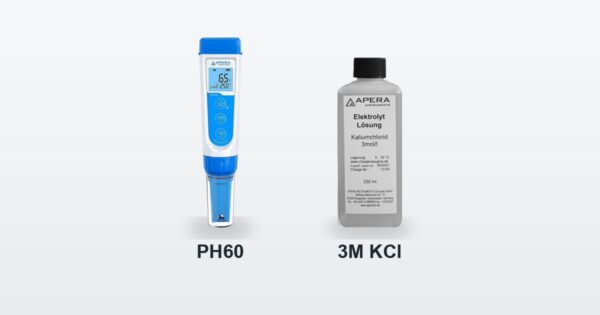
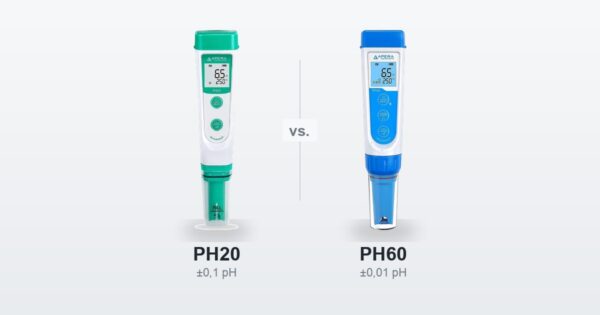
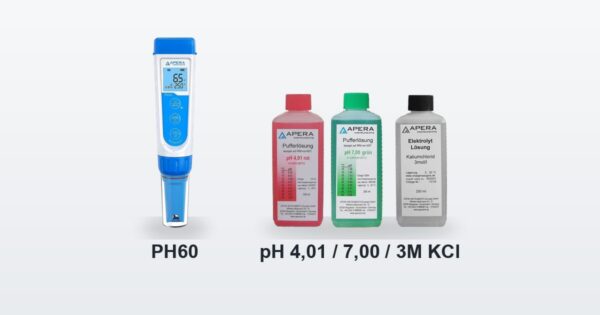
The pH level is the master regulator for nutrient uptake. If it’s outside the optimal range (for soil approximately 6.0-7.0, for coco/hydro 5.5-6.5), the plant can no longer absorb certain nutrients, even if they’re present in the substrate. This “nutrient lockout” leads to deficiency symptoms, discolored leaves, and a generally weak, wilted plant. Checking the pH level is therefore not optional, but mandatory. To measure and adjust the pH level precisely, a reliable meter like the Apera PH20 pH pocket meter is essential. Without accurate readings, you’re fumbling in the dark. More about the science behind this can be found on the Wikipedia page on pH.
The root of the problem: Waterlogging, root rot, and cannabis drooping leaves
Persistent problems with drooping leaves almost always have their cause in the foundation of the grow: the substrate and root health.
Waterlogging and compacted soil as the main cause.
Cannabis waterlogging is the greatest enemy of healthy roots. When water cannot drain from the bottom of the pot, an oxygen-poor zone develops. Compacted garden soil without loosening additives is often the culprit here. An airy substrate mix with about 20-30% perlite or coco fibers is crucial for good drainage and aeration. Fabric pots are an excellent choice here, as they promote “air pruning” of the roots and make waterlogging practically impossible.
Recognizing and addressing root rot.
When overwatering becomes chronic, root rot (Pythium) develops. This is a serious condition where the roots die and become brown and mushy. The symptoms on the surface are progressive yellow leaves (starting from the bottom), a musty, rotten smell from the pot, and often an infestation of fungus gnats, whose larvae feed on the rotting roots. If you notice these signs, quick action is required. Repotting into fresh, dry substrate can be the last resort. To avoid this situation from the start, it’s important to know how to recognize and stop root rot in cannabis before it escalates.
The right watering strategy: Measure, flush, and prevent permanently
Successful watering is not an art, but a craft. With the right technique and the right data, you avoid 90% of all problems that lead to cannabis drooping leaves.
The golden rule: Water less frequently, but always with runoff.
Forget rigid watering schedules. Only water your plant when it really needs it (light pot, dry surface). But when you water, do it right. Slowly add enough water until about 15-20% of the total amount runs out the bottom of the pot as runoff. This ensures that the entire substrate is moistened and simultaneously flushes out excess nutrient salts, preventing nutrient burn. Many growers make crucial mistakes here. You can learn what these are in our guide about the most common cannabis watering mistakes and their simple solutions.
Runoff as a data source: Measure instead of guess.
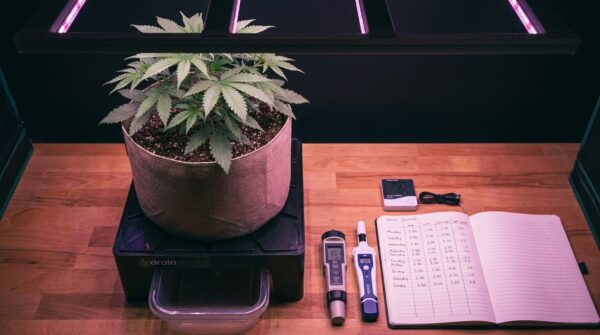
Runoff is not just waste. It’s your most important source of information about conditions in the root zone. Collect the runoff and measure its EC and pH levels. Is the EC level of the runoff much higher than that of your nutrient solution? Then you have salt accumulation and need to flush with pH-adjusted water. Has the pH level of the runoff deviated significantly from the target value? Then you need to adjust the pH level of your nutrient solution accordingly to slowly correct the value in the substrate. This approach gives you full control.
Precise control with the DrainMaster.
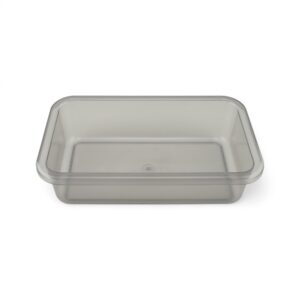
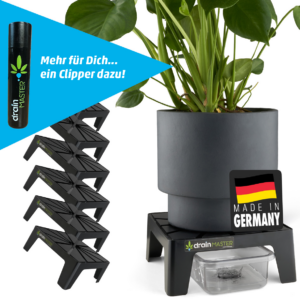
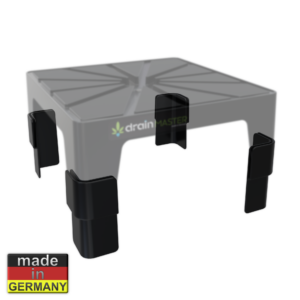
The constant handling of saucers, collecting and measuring runoff can be tedious and messy. This is exactly where the DrainMaster Drip Stand for optimal watering comes in. It cleanly catches and drains the runoff, making EC and pH measurement a clean matter of seconds. This way, professional control of the root environment becomes child’s play, and problems like cannabis drooping leaves are finally a thing of the past.