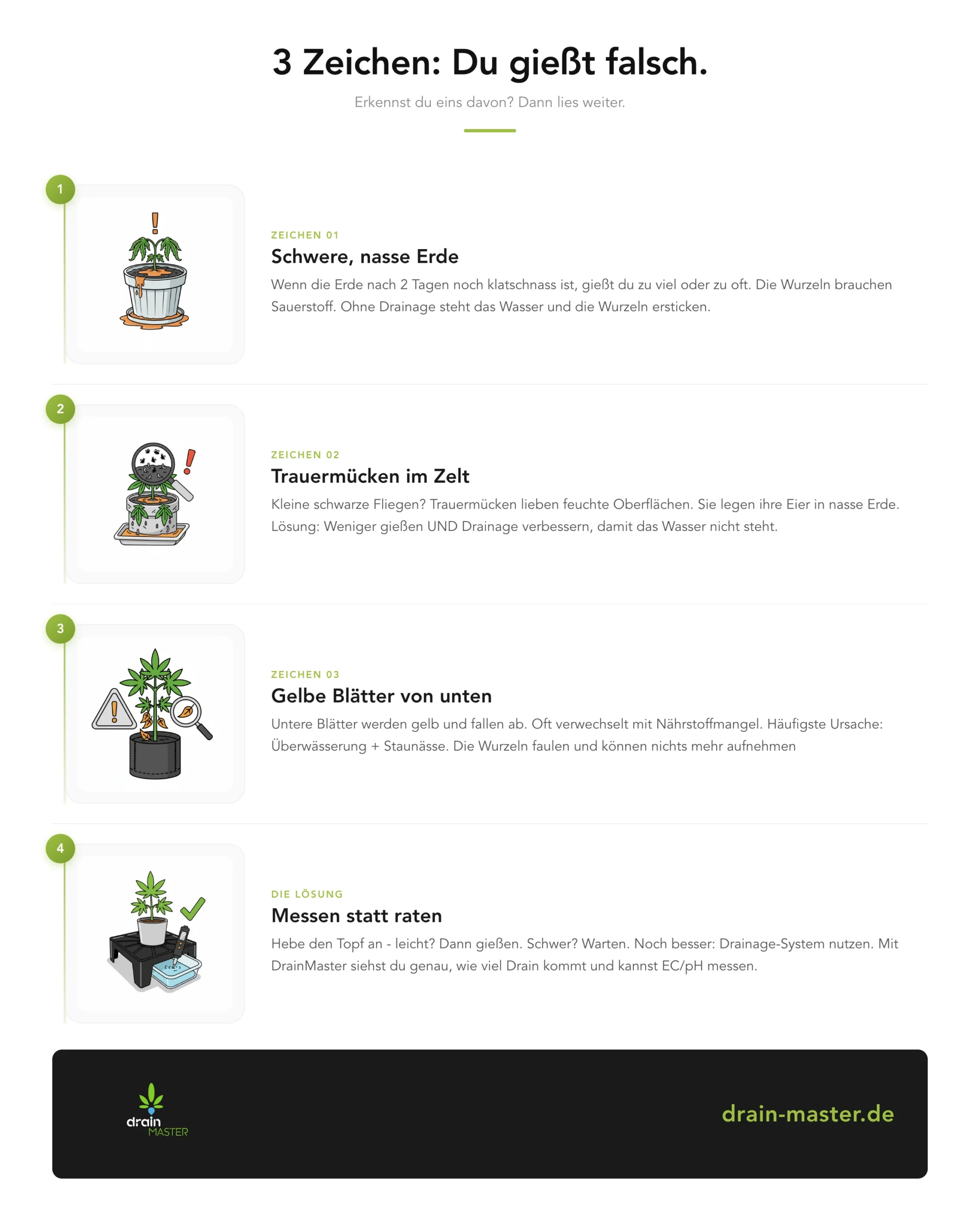
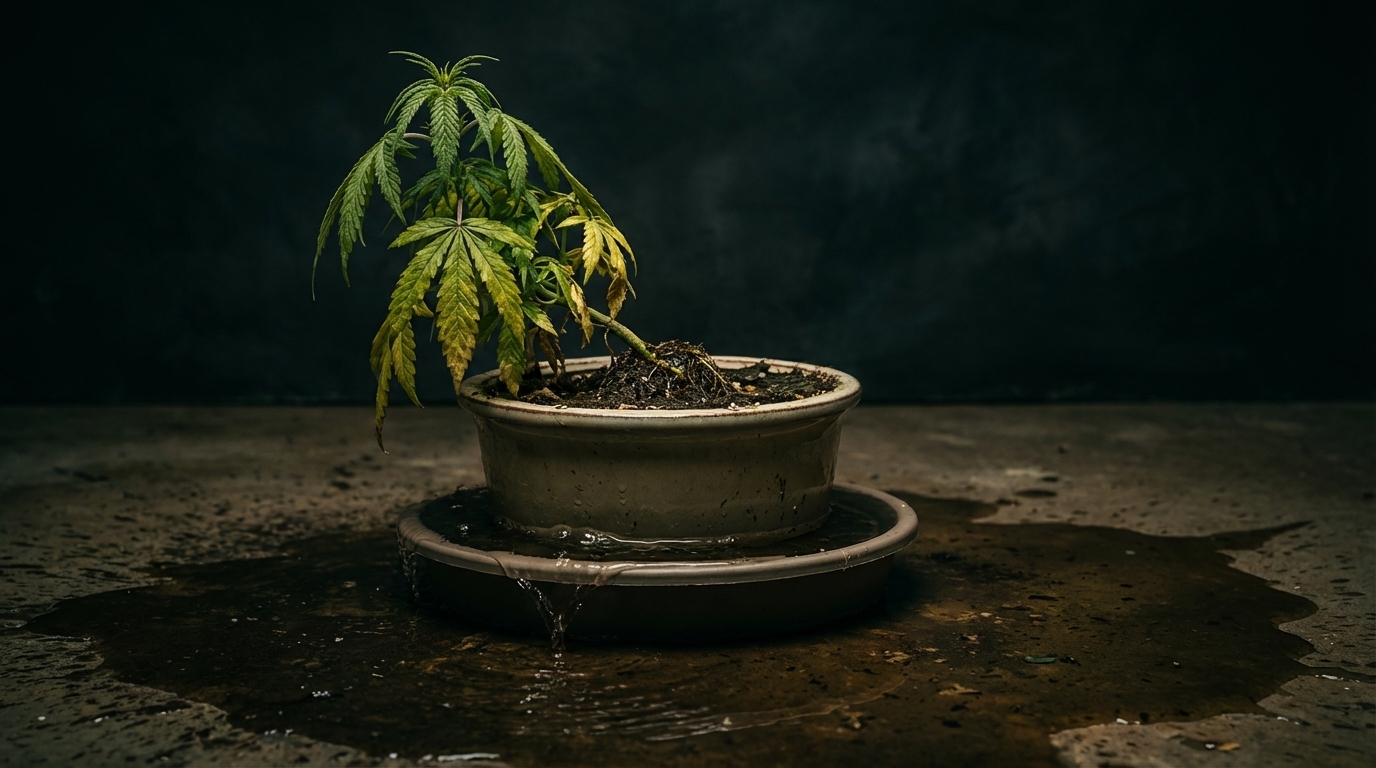
Do you recognize any of these? Then keep reading.
3 Unmistakable Signs: How Your Plant Shows You That You’re Watering Wrong
The most common watering cannabis mistakes are often hard to interpret, but your plant communicates more clearly than you think. Before we dive into the causes, let’s look at the three most important warning signs that immediately show you something is wrong with your watering. These symptoms are your plant’s first line of defense and a cry for help you shouldn’t ignore. If you recognize these signs early, you can avoid serious damage like root rot.
Sign 1: Constantly Heavy, Wet Soil
Lift your pot. Does it still feel heavy and wet after two or three days? That’s a clear warning sign. The roots of a cannabis plant need not only water but also oxygen to breathe and process nutrients. In permanently waterlogged soil, the roots slowly suffocate. A typical symptom of this type of watering cannabis mistake is drooping but firm leaves that curl downward. Many confuse this with underwatering, but the difference is crucial: with dryness, the leaves are wilted and limp; with overwatering, they are firm and curved downward. The article Cannabis Drooping Leaves: Overwatered or Underwatered? helps you distinguish these signs precisely.
Sign 2: Unwanted Guests – Fungus Gnats in the Tent
If small black flies are buzzing around in your grow tent, you’re dealing with fungus gnats. These insects are more than just a nuisance; they are an unmistakable indication that the top layer of your substrate is constantly too moist. The gnats lay their eggs in the wet soil, and the larvae that hatch feed on organic material and, what’s much worse, on the fine root hairs of your cannabis plant. An infestation is therefore not just an aesthetic problem but a direct attack on the root system and a clear sign of suboptimal watering behavior.
Sign 3: Yellow Leaves Starting from the Bottom
This is the classic textbook example of advanced overwatering and often the precursor to root rot. When the lower, oldest leaves of your plant start turning yellow and falling off while the rest of the plant looks unhealthy, the problem usually lies in the root zone. Due to the permanent lack of water and missing oxygen, the roots begin to rot and can no longer fulfill their function: the uptake of water and nutrients. The plant literally “drowns” and can no longer absorb essential nutrients like nitrogen. Many beginners mistakenly diagnose a nutrient deficiency here and worsen the problem by adding more fertilizer. This is one of the most fatal watering cannabis mistakes that can ruin a harvest.
The Real Causes: Why Watering Cannabis Mistakes Are More Than Just Too Much Water
The symptoms mentioned above are just the tip of the iceberg. The real problems lie deeper – in the method and understanding of the plant’s needs. It’s not just about watering less, but about watering smarter.
The Cardinal Error: Watering on a Fixed Schedule
The biggest beginner mistake is watering on a rigid calendar, such as “every Monday, Wednesday, and Friday.” Your plant’s water needs are not constant. They change dynamically and depend on many factors: the growth phase (a flowering plant drinks more than a seedling), light intensity, temperature and humidity in the tent, and pot size. The golden rule is: water according to the plant’s needs, not according to your schedule. Learn to assess the weight of the pot and the dryness of the soil.
Waterlogging: The Silent Killer in the Pot
Waterlogging is the mortal enemy of every cannabis root. When water stands at the bottom of the pot and cannot drain, an oxygen-poor environment is created that provides ideal conditions for the development of root rot. The roots die off, nutrient uptake is blocked, and the plant perishes. The most common causes of this form of watering cannabis mistake are pots without sufficient drainage holes or leaving water standing in the saucer. Incorrect watering technique, where water is poured too quickly, can also cause water to run past the sides of the dry root ball and collect at the bottom without properly moistening the substrate.
The Pro Solution: From Guessing to Targeted Measuring
Successful growers don’t guess, they measure. To take control and permanently eliminate watering cannabis mistakes, you need reliable methods and the right tools. Stop guessing and start working data-driven.
The Weight Method: Learn the Feel for Your Pots
The simplest and most effective method to determine the right watering time is lifting the pot. Do this once right after watering, when the pot is maximally saturated, and once when the soil is completely dry (before the plant wilts). This weight difference is your best indicator. With a little practice, you’ll quickly develop an infallible sense of when your plant really needs water. This method is far more reliable than just testing the surface with your finger.
Data Instead of Drama: Using Drainage as a Control Tool
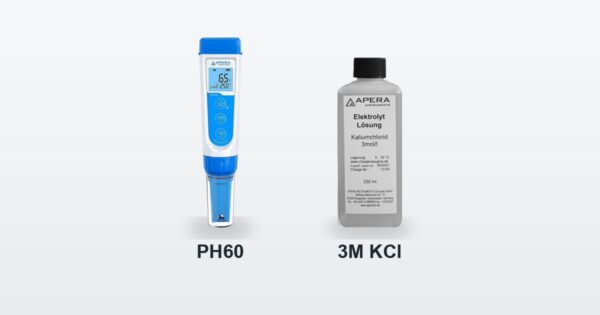
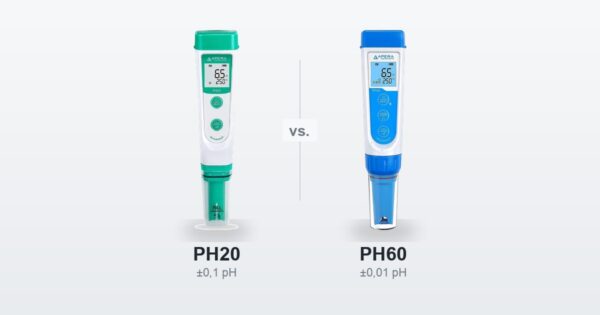
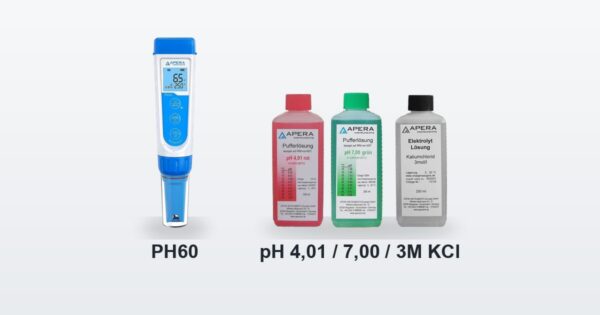
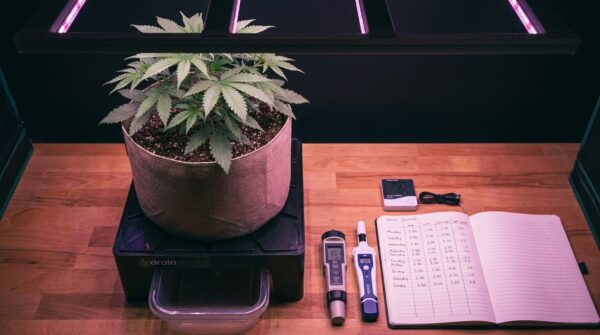
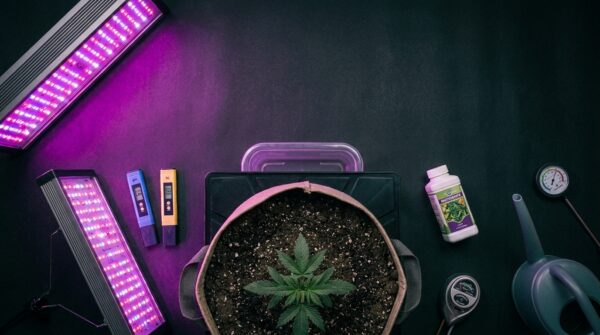
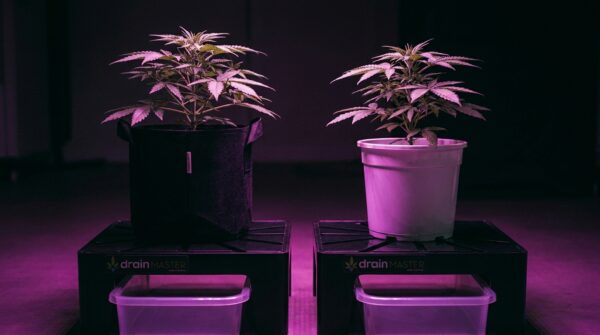
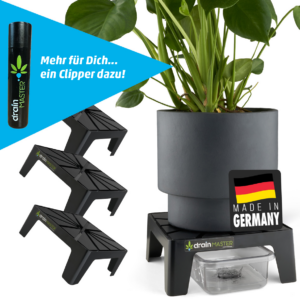
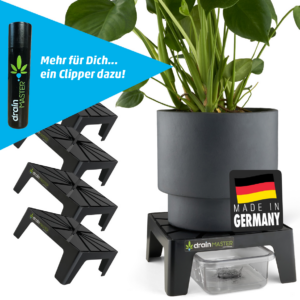
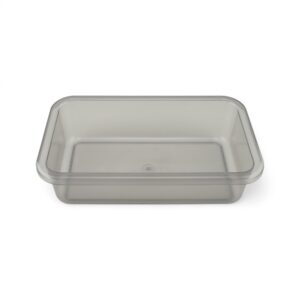
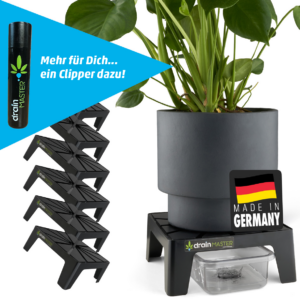
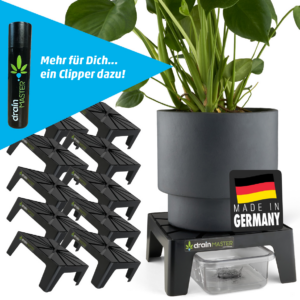
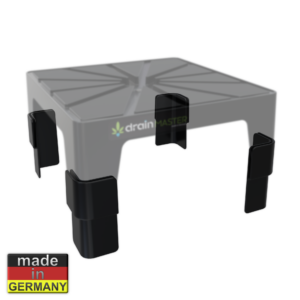
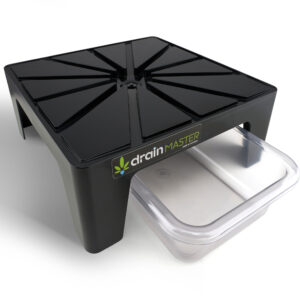
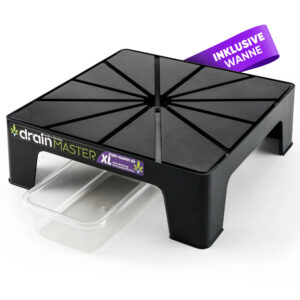
Professional cannabis watering means controlling the drain (the runoff water). The goal is to have about 10-20% of the water volume exit through the pot holes as drain with each watering. This has two crucial advantages: it ensures that the entire substrate is evenly moistened, and it flushes old, excess nutrient salts from the root zone. But the real pro step is analyzing this drain. Here you measure the pH and EC values to understand exactly what’s happening in your root zone. If the drain EC is too high, it indicates salt accumulation. If the pH value is wrong, it can lead to nutrient lockout. To determine these values precisely, a reliable pH meter is essential. But how do you collect the drain cleanly and measure it without making a mess? This is exactly what the DrainMaster Drip Stand was developed for. It elevates the pot, drains the runoff cleanly, and makes taking samples for pH and EC measurements easy. This way, you transform watering from a potential source of error into a precise control tool for maximum yields.