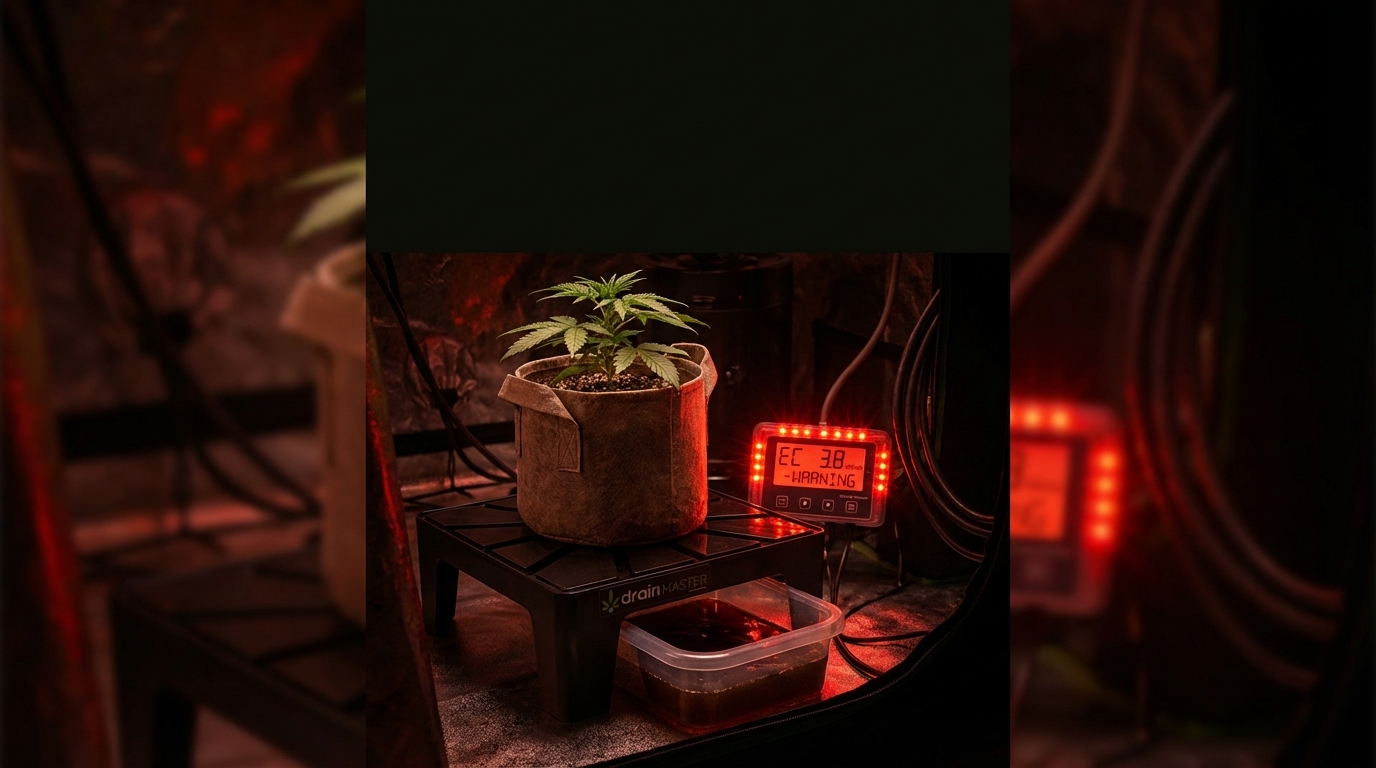
Normal or Panic? How to properly read your runoff.
Drain EC too high – causes, symptoms, and the right solution
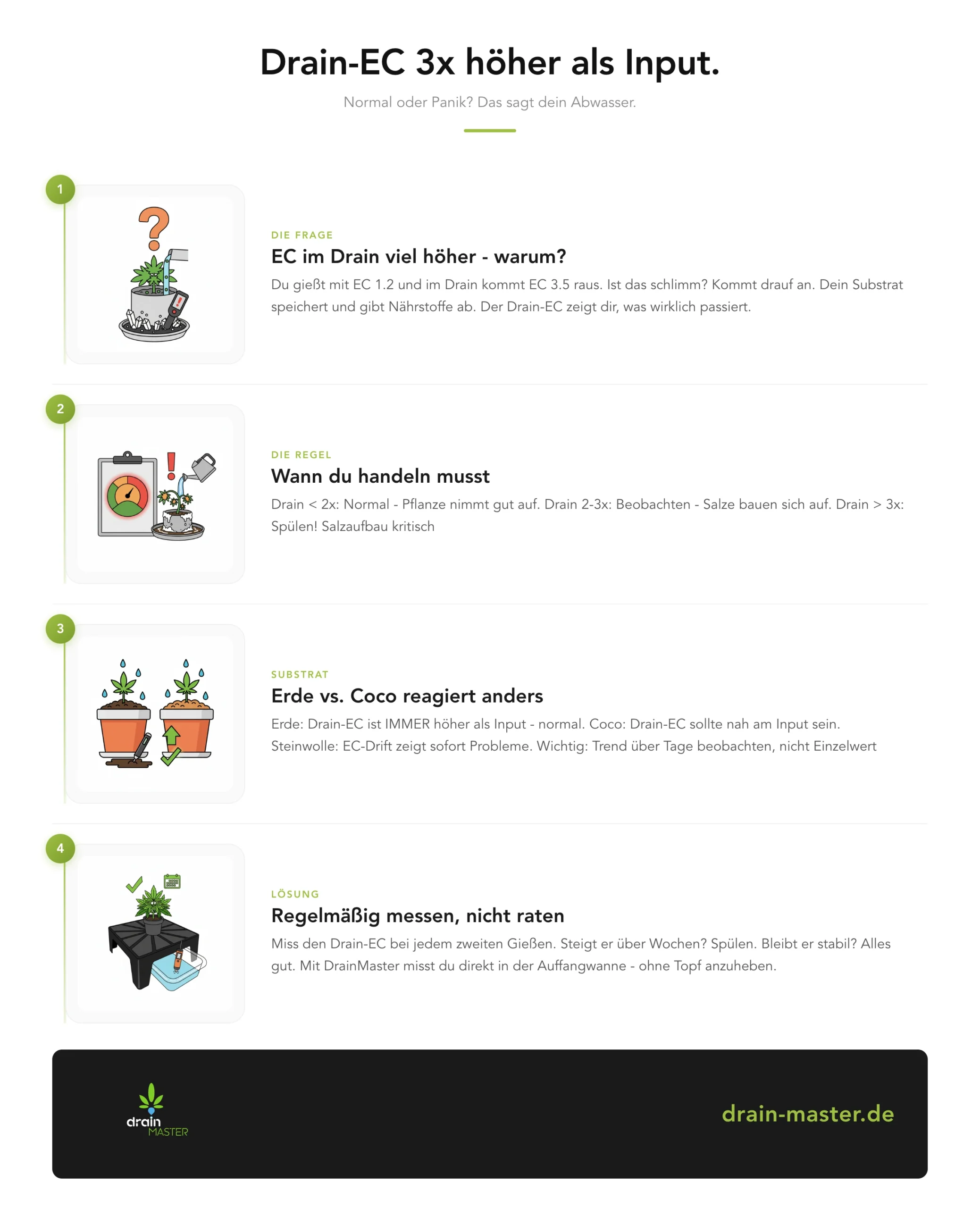
Having a drain EC that is too high is one of the most common problems that can make even experienced growers break a sweat, as it’s a clear warning signal coming directly from your plant’s root zone. This value, also known as runoff EC, indicates that a dangerous amount of nutrient salts has accumulated in the substrate. This salt buildup can lead to nutrient lockouts, root damage, and ultimately massive crop losses. But don’t panic: if you understand what the value is telling you and how to react, you’ll quickly get the situation under control and can avoid it in the future.
Understanding drain EC: Why the difference between input and output is crucial
The key to success lies in understanding the dynamics between what you put into the pot (input EC) and what comes back out at the bottom (drain EC). It’s not just about a single measurement, but about the difference between these two numbers.
The basic principle: Why drain EC is almost always higher
Your plants behave like athletes on a hot day: they drink far more water than they absorb nutrients (salts). While the water evaporates and is consumed by the plant, the unabsorbed nutrient salts remain in the substrate. This process is completely normal and inevitably leads to an increase in salt concentration in the root area. The drain EC is therefore your direct window into the root zone – it shows you exactly how strong this accumulation is.
Rules of thumb: Interpreting EC difference correctly by substrate
How high the drain EC can be compared to the input EC depends heavily on your growing medium. Every substrate has a different buffering effect, which determines how quickly salts accumulate and become a problem. A good guideline is the difference between the drain and input EC (ΔEC).
- Soil: Soil is very forgiving because it has a high buffering capacity and can bind nutrients. A difference of up to +0.5 mS/cm is often still in the safe zone here. If the value rises above that, you should pay attention.
- Coco: Coconut substrate has a significantly lower buffering effect. Here, monitoring is more important. A difference of up to +0.3 mS/cm is ideal. Anything above that indicates the beginning of salt buildup in the substrate and requires an adjustment of your watering habits.
- Rockwool/Hydro: In hydroponic systems, there is virtually no buffering effect. The roots react immediately to changes. The EC difference here should be as low as possible, ideally below +0.2 mS/cm.
A clear example: When a value of 2.4 is really a problem
Imagine you are watering your plant in coco with a nutrient solution that has an input EC of 1.2 mS/cm. When measuring runoff, you find a drain EC of 2.4 mS/cm. The difference here is +1.2 mS/cm. This is far above the tolerance limit of +0.3 for coco and is an absolute alarm signal. The nutrient concentration in the root zone is twice as high as in your nutrient solution. This means extreme stress for the roots and the risk of reverse osmosis, where the roots release water into the substrate instead of absorbing it.
Code Red: Symptoms and typical causes of salt buildup
If your drain EC is too high, your plant will show you sooner or later. It’s crucial to recognize these warning signs early before permanent damage occurs. A high EC value and an unbalanced pH value for cannabis are the main causes of many problems.
Plant warning signs: From burnt tips to lockout
Salt buildup in the substrate manifests through a series of typical symptoms that are often misinterpreted as nutrient deficiencies:
- Burnt leaf tips and edges: This is the classic first sign. The tips and edges of the leaves turn yellow, then brown and dry, as if they were burnt.
- Clawing: The leaves curl downwards at the tips, indicating nitrogen toxicity, which often goes hand in hand with general over-fertilization.
- Dark green, leathery leaves: Another sign of too much nitrogen. The leaves feel rigid and unhealthy.
- Sudden growth stop: The plant stops growing because the roots are damaged by the high salt concentration and can no longer absorb nutrients or water.
- Wilting despite moist substrate: This is a clear sign of root damage. The plant wilts even though the pot is heavy and the substrate is wet.
Paradoxically, over-fertilization can also lead to symptoms that look like a nutrient deficiency in cannabis. This is called nutrient lockout, where the high salt concentration and the often associated incorrect pH value block the absorption of certain nutrients.
Common grower mistakes: How salt buildup happens
Usually, a drain EC that is too high is the result of well-intentioned but incorrect growing methods:
- Over-fertilization: The “more is better” mentality is the most common mistake. Many growers follow feeding schedules blindly without observing the plant’s reaction.
- Incorrect watering habits: Watering too infrequently or with too little water leads to salt accumulation. A runoff of 10-20% with every watering is essential to flush out old salts.
- High evaporation: In warm or dry grow environments, more water evaporates from the substrate, causing salts to concentrate faster.
- Ignoring the base EC: The EC value of your starting water (tap water) must be included in the total calculation. A base EC of 0.6 means you should add less fertilizer from the start.
Step-by-step guide: How to lower drain EC quickly and safely
If the measurement confirms that the drain EC is too high, you must act. But proceed systematically to avoid stressing the plant further.
Immediate measure: Adjust watering habits before you flush
Before you resort to the radical flushing method, try adjusting your watering strategy. Often, this is enough to slowly lower the EC value. Increase the frequency of your feedings, but give a smaller amount of water per watering. The most important thing is to consistently generate a runoff of 10-20% with every single watering. This continuous, gentle flushing process gradually washes excess salts out of the substrate without shocking the roots.
The last resort: Correctly flushing the substrate
If the EC value in the drain is extremely high (e.g., over +1.0 difference) and the plant is already showing clear symptoms, flushing is the emergency solution. If done incorrectly, however, it can do more harm than good. Here’s how to do it right: find out more here about salt buildup in cannabis and how to flush correctly. Flush the substrate with two to three times the pot volume of pH-regulated water. The EC value of this water should be very low, ideally below 0.4 mS/cm. Measure the drain EC during flushing. Stop when the drain EC value approaches the EC value of your flush water. Important: After flushing, most nutrients are removed from the substrate. The next watering should therefore be done with a lightly dosed nutrient solution (approx. half strength) to replenish the plant.
Correcting the fertilizer strategy for the future
After the acute problem is solved, you must fix the cause. Generally lower the EC value of your nutrient solution. Start with a lower value and observe your plants’ reaction closely. Only increase it if the plants show signs of hunger. Less is often more.
From reaction to prevention: Keeping the EC trend under smart control
The best way to manage a drain EC that is too high is to not let it happen in the first place. This requires a proactive approach and regular monitoring.
Proactive monitoring: Why the trend is more important than a single measurement
A single measurement with a high value is no reason to panic. It could be an anomaly. What’s really crucial is the trend over 3-5 waterings. If the drain EC value rises continuously, you know that salts are building up and you need to take counter-measures long before the plant is damaged. This approach is also recommended by experts, such as those at the University of Massachusetts Amherst for hydroponic systems, and can be applied to all substrates.
Your tool for effortless control: The DrainMaster
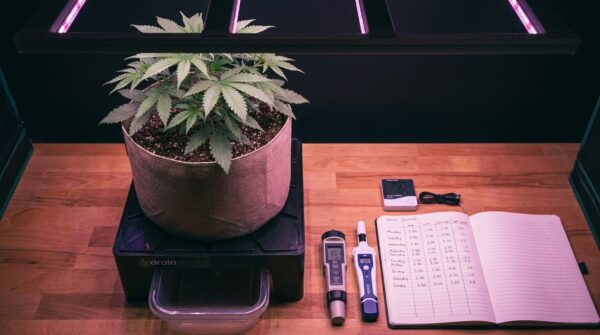
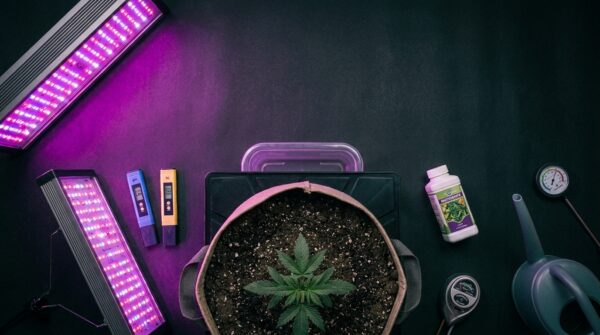
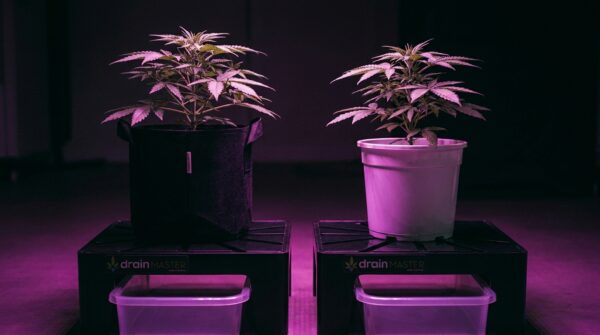
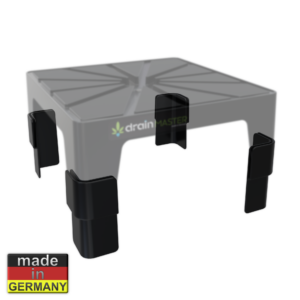
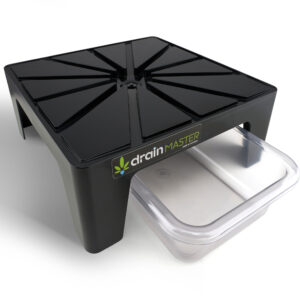
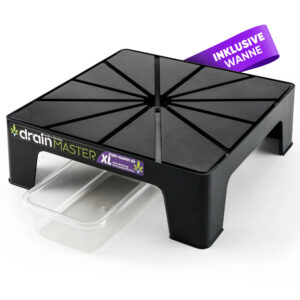
Regular measuring can be tedious, especially if you have to lift heavy pots to catch the runoff. This is exactly where a smart solution comes in. With a system like the DrainMaster incl. Tub monitoring becomes child’s play. You can simply place your measuring device, for example the precise Apera EC60 Premium, in the drip tray and read the value stress-free. With the associated free DrainMaster Plus app, you can easily log your measurements (EC, pH, drain volume). This allows you to visualize the trend over time and immediately recognize if the drain EC is getting too high – so you can act before it becomes a real problem.