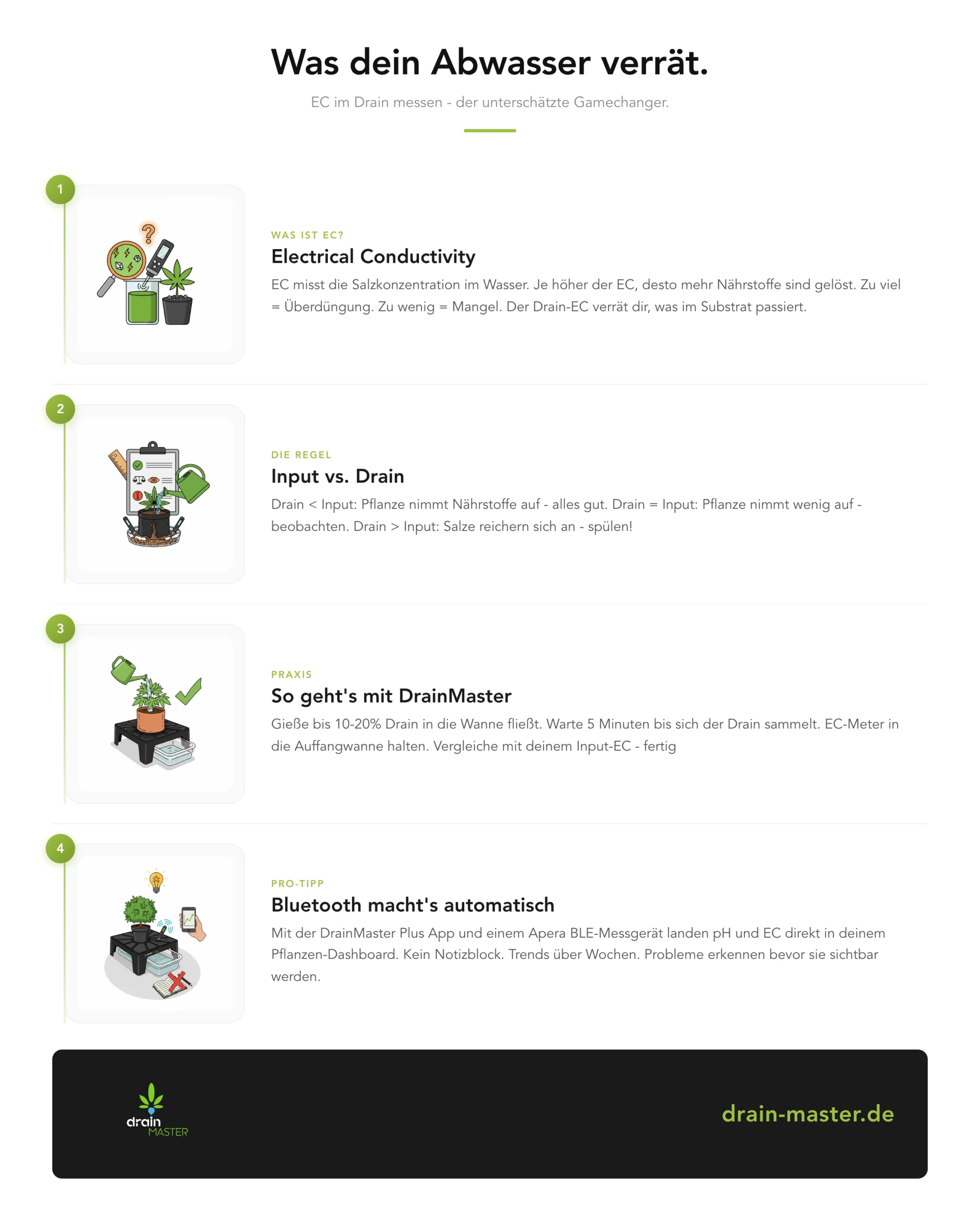
Measuring EC in drain – the underestimated game changer.
Why the EC Value in Drain is the True Game Changer
Measuring drain EC value is the most direct way for any ambitious grower to understand what’s really happening in their plants’ root zone. Many growers focus only on the EC value of their nutrient solution, but that’s only half the story. It’s like only paying attention to what you eat, but ignoring what your body actually absorbs and excretes. Only the analysis of drainage water, also called runoff, gives you the crucial insight.
What the EC Value Really Tells You
The EC value (Electrical Conductivity) is a measure of the electrical conductivity of a liquid. For us growers, this simply translates to the total concentration of dissolved nutrient salts in our water. The more fertilizer in the water, the higher the EC value. While the EC value of your irrigation water (input) tells you what you’re offering your plants, the EC value of the drain (output) reveals what they leave behind. This value is the key, because it shows the actual nutrient concentration directly in the substrate and helps detect a dreaded substrate salt buildup early on.
The Golden Rule: Understanding Input vs. Drain
The relationship between the EC value of your input and your drain is essential. There are three basic scenarios that tell you exactly what to do:
- Drain EC > Input EC: Your drain value is higher than your nutrient solution. This is a clear warning signal. Your plant is not consuming all the nutrients you’re giving it. The unused salts accumulate in the substrate, which can lead to salt buildup and nutrient lockout. The plant may show symptoms that look like cannabis nutrient deficiency, even though enough nutrients are present. Time to take action!
- Drain EC < Input EC: Your drain value is lower. Congratulations, your plant is hungry! It’s taking up more nutrients than you’re currently providing. You can slowly and gradually increase the concentration of your nutrient solution to unlock its full potential.
- Drain EC ≈ Input EC: The value is nearly identical (a difference of +/- 0.1-0.2 is normal). This is the sweet spot. You’re feeding your plant exactly the amount of nutrients it currently needs. The nutrient supply is perfectly matched to demand.
Precise Measurement: A Step-by-Step Guide to Measuring Drain EC Value
Theory is good, but practice decides. A correct measurement result depends on proper preparation and execution. There are no shortcuts here if you want to achieve professional results.
Preparation is Everything: Check Measuring Device and Water
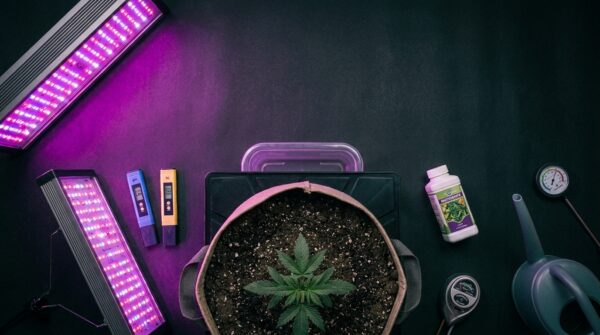
Your most important tool is a reliable EC meter. But the best device is useless if it’s not properly calibrated. Before each important measurement series, you should calibrate it with an appropriate EC calibration solution. Only then can you trust the readings. Also, always start by measuring the EC value of your pure source water. This baseline value (often between 0.2 and 0.8 mS/cm for tap water) must be considered when dosing fertilizer, as it already contains minerals.
The Measurement Process – From Watering to Results
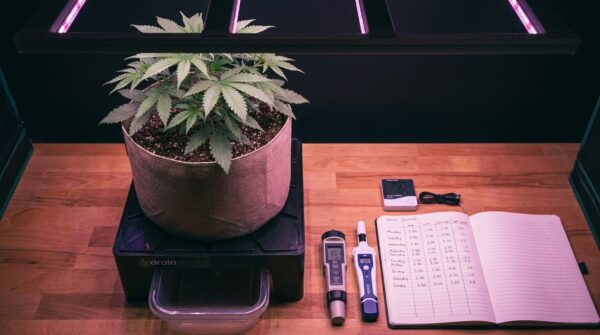
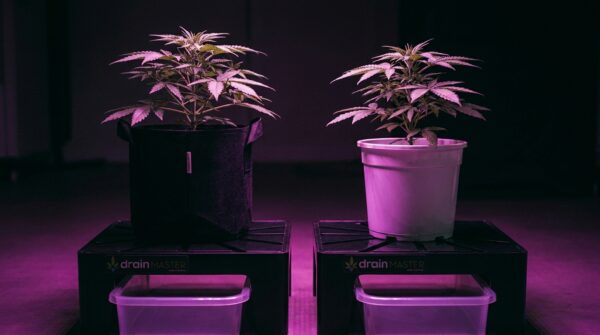
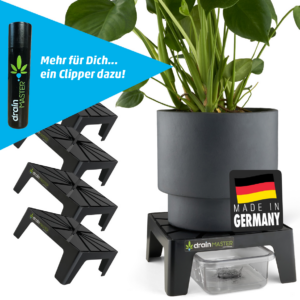
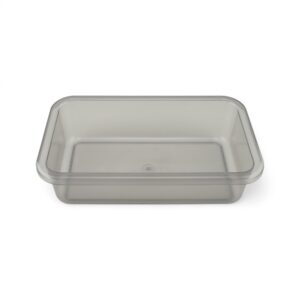
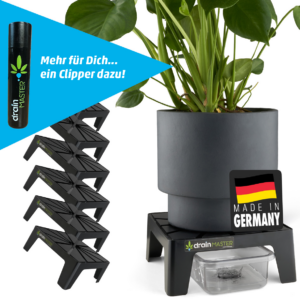
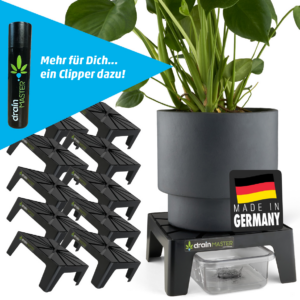
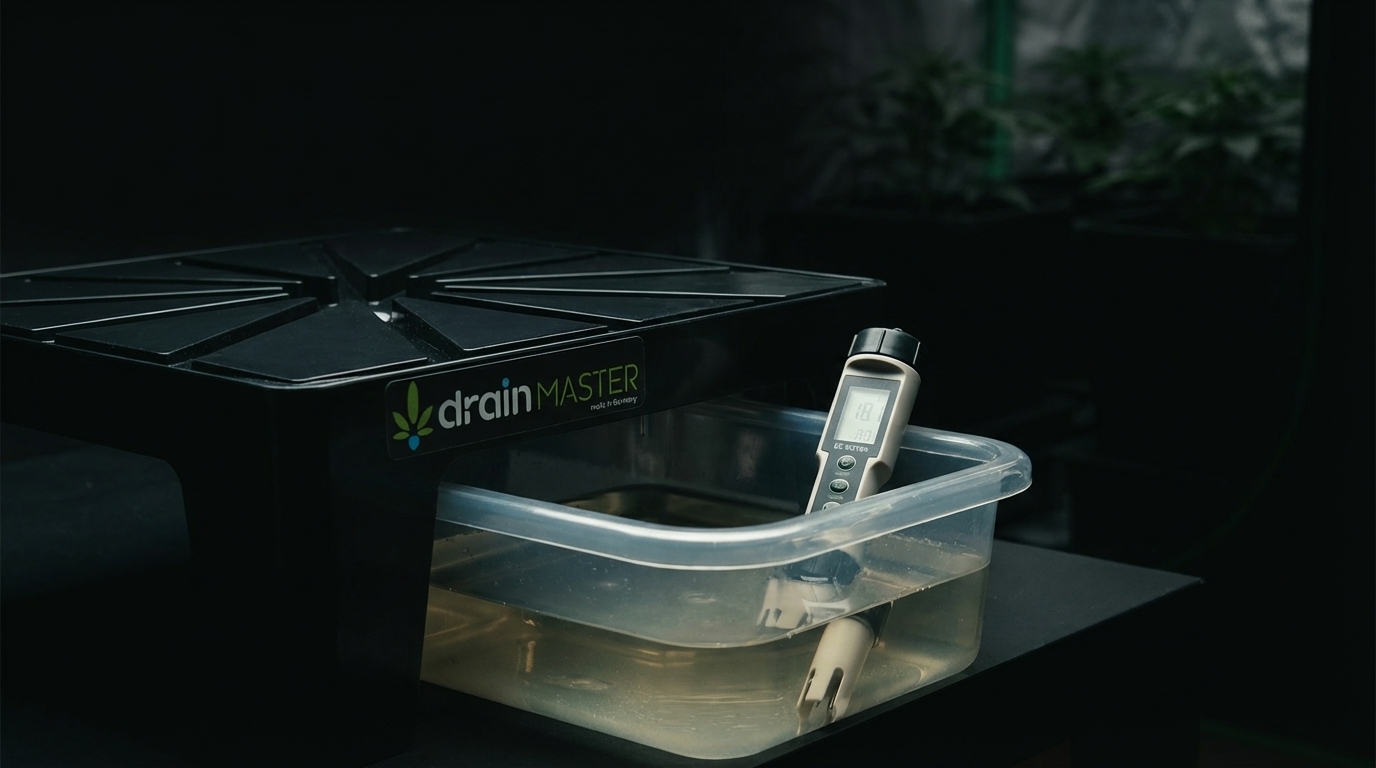
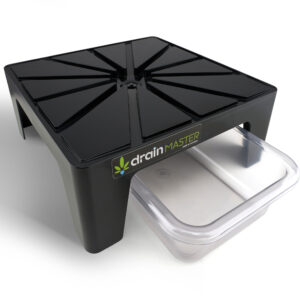
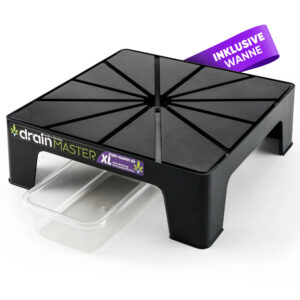
The actual measuring is straightforward if you do it right. Stick to the “drain-to-waste” method. Water your plants slowly and evenly until about 15-20% of the total amount runs out of the bottom of the pot as drain. This ensures that old salts are flushed out and the substrate is completely moistened. Don’t catch the first drops; instead, collect a sample from the middle of the runoff. With a DrainMaster, this process is done cleanly and in seconds: the drain flows through the groove structure directly into the transparent 1.5 L drip tray under the pot – no need to lift the pot. Place your EC meter directly in the tray and read the input against the drain. Always measure the cannabis pH value of the collected drain as well. The temperature of the liquid affects the measurement, so it should be done promptly.
Here is a table with proven reference values for cannabis EC value:
| Phase | Substrate: Soil | Substrate: Coco/Hydro | pH Value (Soil) | pH Value (Coco/Hydro) |
|---|---|---|---|---|
| Seedlings/Clones | 0.2 – 0.8 mS/cm | 0.4 – 0.8 mS/cm | 6.0 – 6.5 | 5.5 – 6.1 |
| Vegetative Phase | 0.8 – 1.4 mS/cm | 0.8 – 1.6 mS/cm | 6.0 – 7.0 | 5.8 – 6.2 |
| Early Flowering | 1.4 – 1.6 mS/cm | 1.6 – 1.8 mS/cm | 6.0 – 7.0 | 5.9 – 6.2 |
| Main/Late Flowering | 1.6 – 1.8 mS/cm | 1.8 – 2.2 mS/cm | 6.0 – 7.0 | 6.0 – 6.3 |
| Flushing Phase | < 0.4 mS/cm | < 0.4 mS/cm | 6,0 – 6,5 | 6,0 – 6,5 |
Important: These are reference values. Genetics, light, and climate influence your plant’s needs.
Avoid Common Mistakes and Optimize Your Grow
Measuring drain EC value is a skill you learn. Every grower makes mistakes at the beginning. Here are the most common pitfalls and how to skillfully avoid them to take your grow to the next level.
The Most Common Pitfalls in EC Measurement
The biggest mistake is working with uncalibrated devices. False values lead to false decisions and, in the worst case, to crop loss. Another classic is overreacting. If you see a slightly deviating value, don’t panic and change your entire nutrient solution. Observe the plant and adjust values only in small steps. Particularly critical is the misinterpretation of deficiency symptoms. Yellow leaves don’t automatically mean more fertilizer is needed. Often a too-high EC value in the substrate (nutrient lockout) is the cause, as the basics of plant nutrition also describe. In this case, more fertilizer would only worsen the problem. Measuring runoff is about making informed decisions.
Practical Tips for Professional Results
If you find that your drain EC is too high, the solution is usually to flush the substrate. Here you’ll find a detailed guide on what to do when drain EC is too high. Generally: Always adjust the EC value of your nutrient solution only in steps of 0.1 to 0.2 and give the plant a few days to respond. Also consider the differences in substrates. Soil has a natural buffering effect and is more forgiving than inert substrates like coco or hydro systems. With the latter, precise control of runoff EC value is essential for success.
From Notebook to Smart Dashboard: Measuring in a System
Successful gardening is based on data and consistency. Individual measurements are only a snapshot. Only regular documentation of your values allows you to recognize trends and act proactively, instead of just reacting.
Consistency Beats Intensity
It’s far more valuable to consistently measure drain EC value and log it once a week than to do an ultra-detailed analysis once a month. Keep a simple logbook where you note date, input EC/pH, drain EC/pH, and plant observations. This way you’ll see how nutrient uptake develops over time and can anticipate problems before they show as visible symptoms on the plant. The goal is to control the grow, not be controlled by it.
The Leap to Automation with DrainMaster
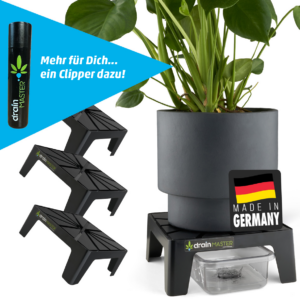
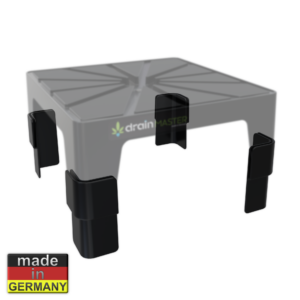
Regular data collection can be tedious. Lifting heavy pots, the cumbersome task of catching the drain – all of that costs time and nerves. This is exactly where smart systems come in. Instead of manual handling, you can measure pH and EC values stress-free. The DrainMaster – a mini drainage table made of ASA plastic, just like in the automotive industry, made in Germany – catches the runoff cleanly in a transparent 1.5 L tray. You simply place your measuring device directly in the tray. In combination with the free DrainMaster Plus app and Bluetooth measuring devices, the values are automatically recorded, displayed in clear graphs, and help you perfect your nutrient strategy over weeks. This turns precise EC drain value measurement from a necessary evil into a powerful tool for maximum yields and healthy plants.