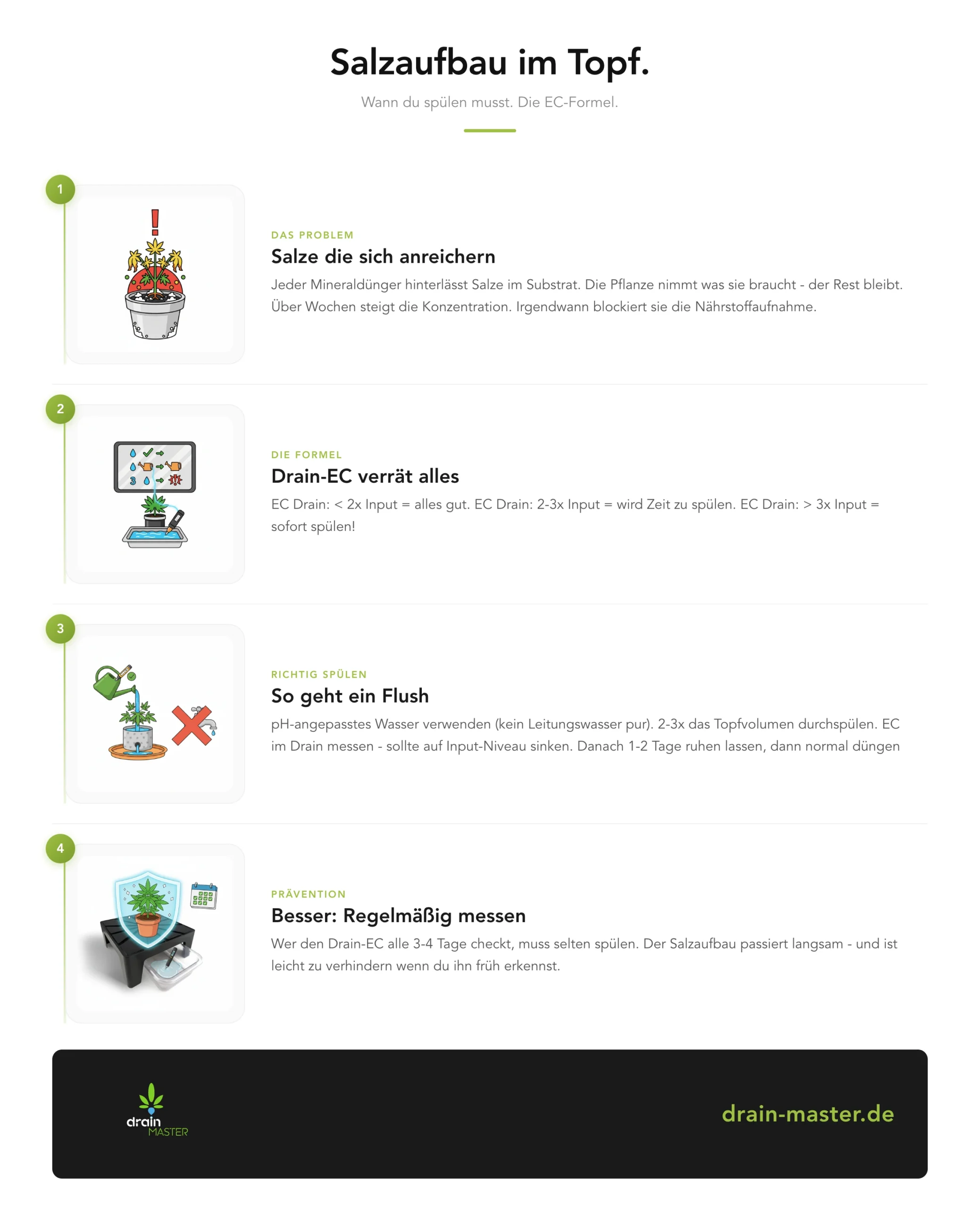
When you need to flush. The EC formula.
Salt buildup in cannabis is one of the most common – yet easiest to avoid – mistakes that can ruin your hard-earned harvest. You give your ladies everything they need, feed by the book, but suddenly they stop growing, the leaves get brown tips and look unhealthy. What’s going on? Often, the answer isn’t a deficiency, but an excess that leads to a blockage. This invisible enemy slowly builds up in your substrate and causes your plants to starve despite plenty of nutrients being available. But don’t worry – once you understand the system behind it, you can control it easily.
Why too much fertilizer blocks your plants
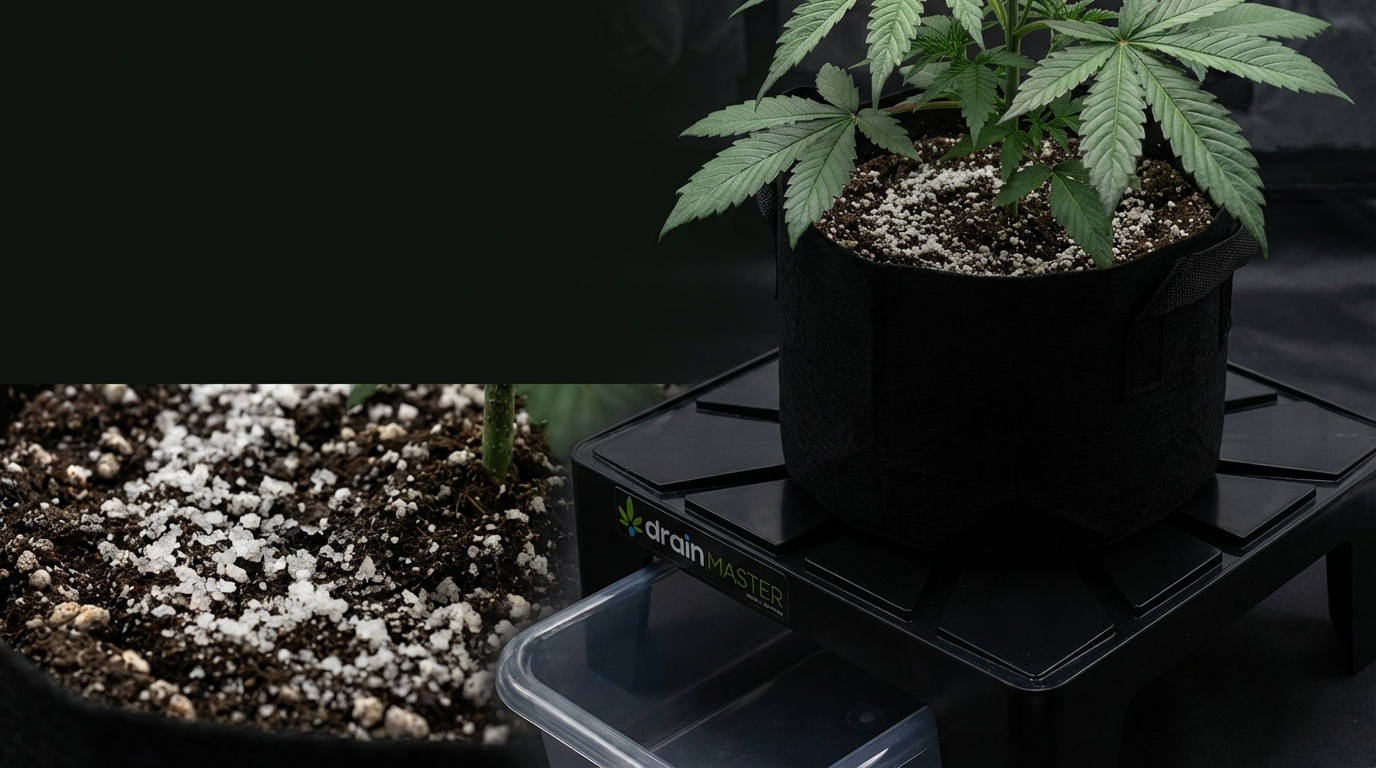
Every time you water your plants with mineral fertilizer, you’re giving them a solution of salts. That’s essentially what nutrients like nitrogen, phosphorus, and potassium are in liquid form. Your plant takes what it needs at the moment, but it rarely manages to absorb 100% of the nutrients offered. The rest stays in the substrate. If you keep watering with fresh nutrient solution without flushing out that excess, exactly what the name suggests happens: salt buildup in cannabis. The concentration of salts in the substrate keeps rising.
The consequences are serious and often show up in a way many growers misinterpret:
- Nutrient burn: The classic symptom. Leaf tips and edges turn yellow, then brown, and look burnt. This is the first clear sign that the salt concentration is too high and the plant is taking in more than it can process.
- Stunted growth: Your plants grow more slowly or stop completely. The high salt concentration in the root zone disrupts osmotic pressure, making it extremely difficult for the roots to absorb water at all. The plant fights to survive instead of putting energy into new growth.
- Nutrient lockout: This is the final boss. Even though there are more than enough nutrients in the substrate, the plant can no longer absorb them. The salts – and the often fluctuating pH they cause – block the roots. You see deficiency symptoms like yellow leaves even though you’re feeding heavily. Many respond with even more fertilizer and make the problem dramatically worse.
EC and pH: Your early-warning system in the substrate
To stay one step ahead of the problem, you need reliable data. Gut feeling is fine, but measurements are better. Your two most important helpers are EC and pH. They’re your window into your plants’ root zone.
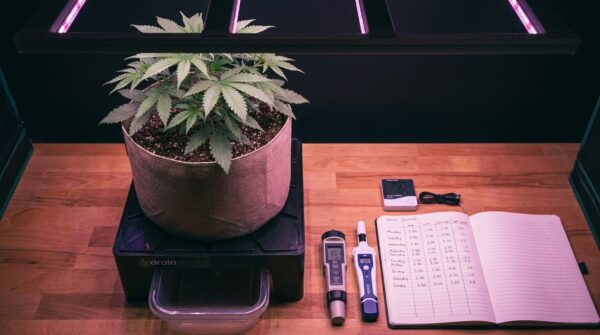
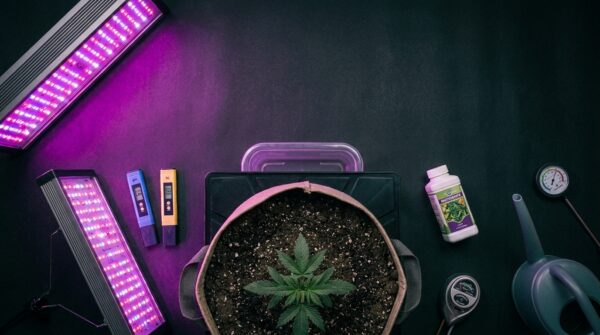
The EC value (electrical conductivity) measures how well your water conducts electricity. Put simply, it tells you how high the concentration of dissolved salts – i.e., nutrients – is. A high EC means lots of nutrients; a low EC means few. To monitor salt buildup in cannabis, you need to measure not only the EC of your nutrient solution (input), but especially the EC of your drainage water (runoff) – the water that flows out of the bottom of the pot. Comparing these two values is invaluable. To determine the cannabis EC value correctly, a good meter like the Apera EC60 conductivity pocket meter is essential.
As an experienced grower, I use a simple formula that always works:
Difference = (EC value drain) – (EC value input)
- Soil, difference up to approx. 0.3-0.5 mS/cm: Everything is fine. Soil buffers strongly, a slightly higher drain is normal.
- Coco, difference up to approx. 0.8 mS/cm: Still okay. Coco buffers less, so a somewhat higher drain is acceptable.
- Rockwool and hydro: Drain should be very close to input, any significant drift is already a warning sign.
- Significantly higher: Salt buildup. First increase fertigation frequency, flush only as a last resort.
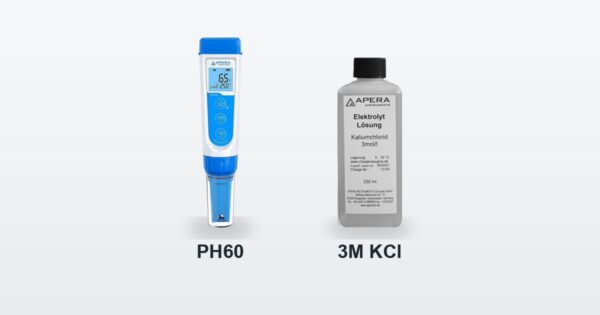
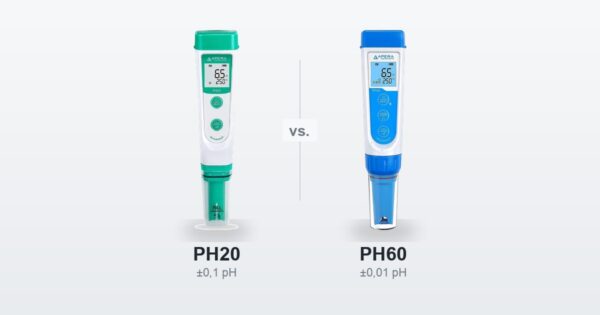
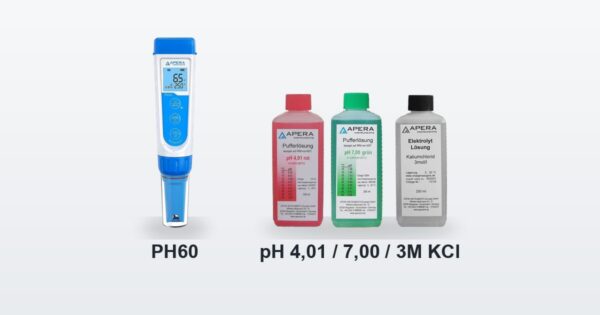
Just as important is the pH value for cannabis. It determines which nutrients the plant can actually absorb. If the pH value is outside the optimal range (for soil approx. 6.0-7.0, for coco/hydro 5.5-6.5), certain nutrients are blocked from the roots, even if they are present. High salt buildup can also negatively affect the pH value in the substrate.
The step-by-step plan: First fertigation, then flush in emergencies
When drain EC gets out of control, the reset button isn’t immediately a flush. The proven sequence according to Coco For Cannabis is: First increase fertigation frequency, meaning water more often in smaller amounts and consistently produce 10-20% drain. If drain EC still remains significantly above the substrate-normal range, flushing comes into play as a last option. If your drain EC is too high, you need to take action.
How to flush properly, step by step:
- Prepare the water: Use clean water without fertilizer. Reverse osmosis water or distilled water works best. If you use tap water, let it stand for 24 hours so chlorine can off-gas. Important: Adjust the pH value of the water to the optimal value for your medium (e.g., 6.2 for soil).
- Flush slowly and thoroughly: Slowly run a large amount of water through your substrate. A good rule of thumb is two to three times the pot volume. For a 10 L pot, that would be 20–30 L of water.
- Check the drain: Measure the EC of the drainage water repeatedly as you go. Your goal is to bring the drain EC as close as possible to the EC of your source water.
- Let it rest: After flushing, the substrate is completely soaked. Give your plant 1–2 days to dry out and recover. Don’t water during this time.
- Resume feeding carefully: Start the next feeding with a reduced dose – about 50% of the normal concentration – and slowly increase it again.
Prevention instead of flushing: How to stop salt buildup in cannabis from the start
An emergency flush is stressful for you and your plant. The best strategy is to avoid salt buildup in cannabis in the first place. Proactive control is the key to success. Instead of waiting until you see problems, make measuring part of your routine.
The most important preventive measure is correct watering technique. Many growers make the mistake of watering only enough so that nothing runs out of the bottom. That’s a direct route to salt buildup. Instead, make the 10–20% drain rule your standard. That means you water enough each time so that about 10–20% of the water runs out of the bottom as drain. This slight but steady runoff carries excess salts out of the substrate before they can accumulate. To go deeper on the topic, you should learn how to water cannabis properly.
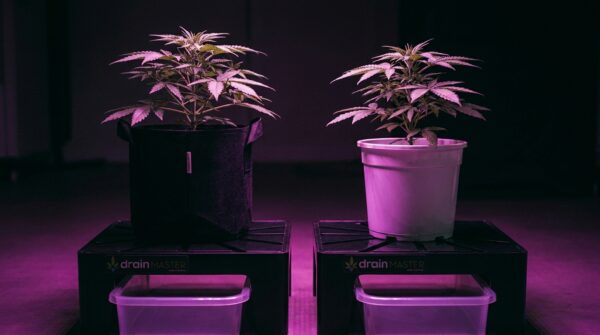
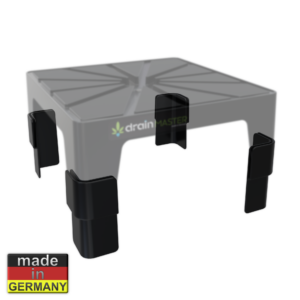
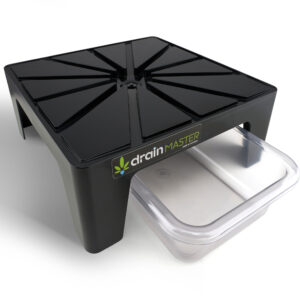
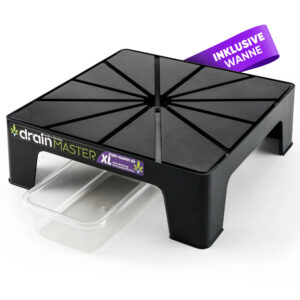
Of course, constantly dealing with saucers, catching runoff, and measuring drain is tedious and often messy. A solution was developed for exactly this problem. A system like the DrainMaster irrigation system makes measuring runoff clean, easy, and efficient. You can water your plants right where they are, the drain is collected neatly, and you can effortlessly take a sample for your EC measurement. This turns the most important control measure against salt buildup in cannabis from a nuisance into a quick step. If you keep your values under control, you’ll need to flush less often – and you’ll harvest healthier plants and better results in the end.