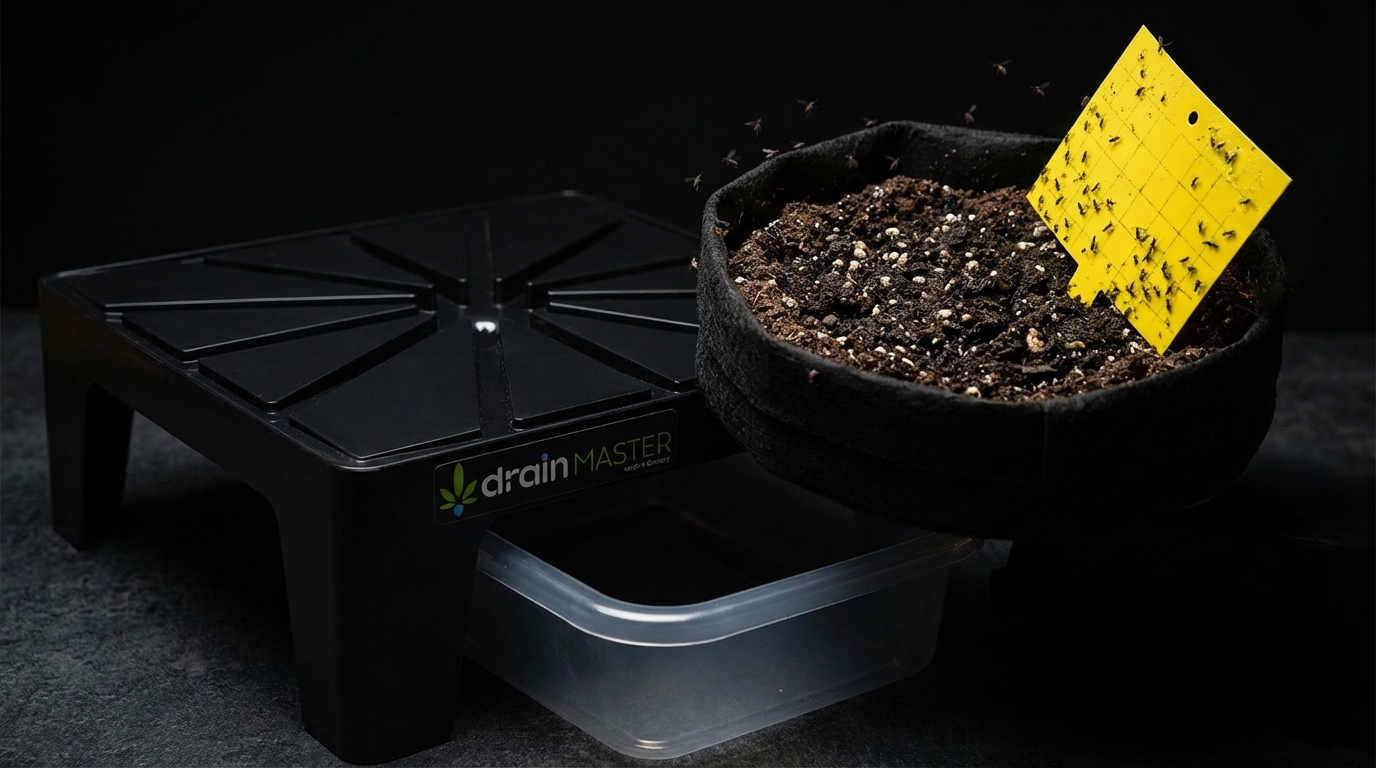
Forever. Don’t just fight the symptoms.
Combating fungus gnats is one of the first lessons many growers learn, often the hard way. These small black flies, annoyingly buzzing around your pots, are more than just a nuisance. They are a clear warning sign that something is fundamentally wrong with your substrate. If you ignore them, you risk not only stressed plants and lower yields, but in the worst case, the total loss of your harvest, especially with young seedlings. This article shows you how to tackle the problem at its root and not just treat the symptoms.
Recognizing and Understanding Fungus Gnats: Why Your Plants Are Affected
Identifying the Small Black Flies
Adult fungus gnats, scientifically belonging to the family Sciaridae, are easy to recognize. They are small, 2-3 mm black flies with long antennae that sluggishly fly around the base of your plants or crawl over the soil surface. Many growers make the mistake of only seeing these adult insects as the problem. But the real danger lurks invisibly in the substrate: the larvae. A single female lays up to 200 eggs in the moist, upper layer of soil. After a few days, glassy-white larvae with black heads hatch from them, greedily feeding on organic material. Once algae and fungi are consumed, they turn to the juiciest target: the fine root hairs of your cannabis plants. This root feeding severely weakens the plant, impairs nutrient uptake, and opens the door to secondary infections like root rot.
The Cause: A Paradise for Larvae
Fungus gnats don’t appear out of nowhere. You unknowingly create a five-star resort for them. The main cause is almost always an overly moist environment in the root zone. Four factors are crucial here:
- Permanently moist soil surface: Watering cannabis too frequently in small sips keeps the top few centimeters of soil constantly moist – the perfect breeding ground.
- Standing water: Water that remains in the saucer after watering causes waterlogging in cannabis cultivation and saturates the substrate from below.
- Compacted substrate: A poor substrate mix without sufficient aeration (e.g., from perlite) tends to compact, retains too much water, and offers little oxygen.
- Lack of ventilation: If the pots are placed directly on the floor, no air can reach the drainage holes, which slows down the drying of the substrate.
At their core, fungus gnats are a symptom of a deeper watering problem. They signal that you need to rethink your watering technique and substrate management.
Immediate Measures: How to Combat Fungus Gnats Acutely
If you have an infestation, you need to proceed on two levels: decimating the flying adults to stop further egg-laying, and destroying the harmful larvae in the substrate.
Catch and Exclude Adult Flies
The simplest method to reduce the adult population is yellow sticky traps. These sticky traps are placed directly into the soil. The gnats are attracted by the yellow color and get stuck. While this doesn’t solve the root cause, it gives you a good overview of the severity of the infestation and catches a large portion of the parent generation.
More effective is a physical barrier. Cover the entire soil surface of your pots with a 2-3 cm thick layer of quartz sand, diatomaceous earth, or perlite. This layer dries out extremely quickly and is unsuitable for egg-laying females. Existing larvae can still pupate, but newly hatched gnats can barely get through the layer, and no new ones can reach the moist soil from outside to lay eggs.
Targeted Destruction of Larvae in the Substrate
Here we resort to biological warfare. By far the most effective and plant-friendly method is the use of BTI (Bacillus thuringiensis israelensis). This bacterium, contained in products like “Neudomück Stechmücken-Frei,” is simply added to the watering can. The larvae eat the bacterium, which releases a specific toxin that destroys them from the inside out. Repeated application every 7-10 days over a period of at least three weeks is important to catch all subsequent generations. BTI is completely harmless to humans, pets, and your plants.
Another powerful weapon is beneficial nematodes, specifically Steinernema feltiae. These microscopic roundworms are also applied with the watering water. They actively search for fungus gnat larvae, penetrate them, and multiply there, leading to the rapid death of the larva. For successful application, the soil must be kept consistently moist (but not wet) and have a soil temperature between 12°C and 28°C. The consistent use of beneficial insects is an excellent method to sustainably and biologically control the problem.
The long-term strategy for combating fungus gnats, however, lies not in the repeated application of remedies, but in optimizing your growing conditions.
Prevention is Key: Controlling Your Growing Parameters
A healthy, stress-free plant with a strong root system is the best defense against any pest. The following parameters are crucial to deprive fungus gnats of their livelihood.
Watering and Drainage: The Core of the Problem
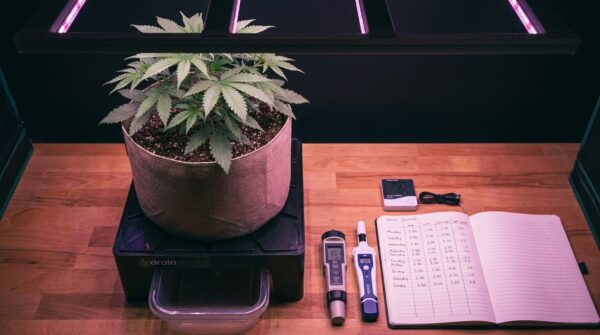
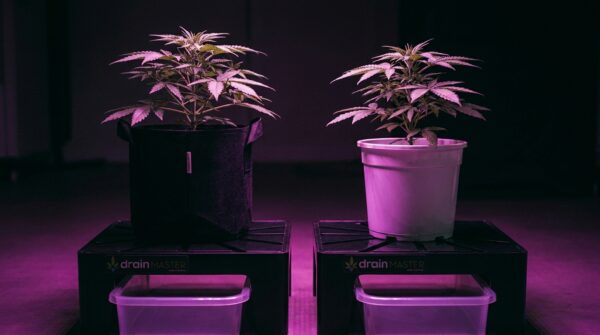
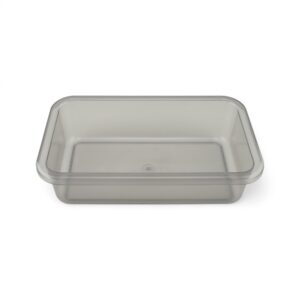
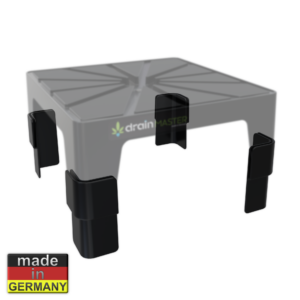
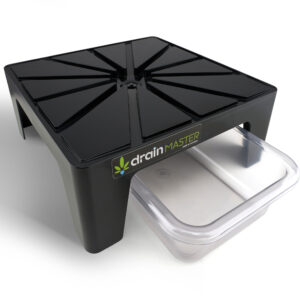
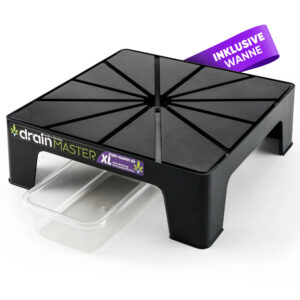
The most common cause of fungus gnats is incorrect watering. The golden rule is: establish a consistent “wet-dry cycle.” That means you water thoroughly until a light drain (about 10% of the watering amount) runs out of the bottom of the pot, then wait until the top 3–5 cm of the substrate has completely dried out before watering again. Letting the surface dry out destroys eggs and young larvae. It’s essential that you learn to recognize overwatering as the cause, because it’s the main trigger. Good drainage is crucial. Make sure your pot has enough holes and always avoid standing water in the saucer. Tools like the DrainMaster Drip Stand are worth their weight in gold here: they raise the pot on a conical pedestal, channel runoff via a grooved structure into a central 1.5 L drip tray, and ensure optimal gas exchange at the bottom of the pot – ideal conditions for keeping fungus gnats at bay. This prevents waterlogging, which not only attracts fungus gnats but also leads to much worse problems.
Substrate and Root Rot
A loose, airy substrate is unattractive to fungus gnats. One of the best preventive measures is to improve your soil mix. By learning how to improve substrate with perlite, you create a structure that stores water well but quickly releases excess moisture and provides plenty of oxygen to the roots. The conditions that promote fungus gnats are the same ones that also favor root rot. Therefore, it is crucial to take measures to avoid secondary damage like root rot, as this can ultimately kill your plant. A healthy root ball is your best insurance.
Nutrient Management (pH & EC)
Don’t forget that a plant stressed by pests needs optimal care. An incorrect pH value blocks nutrient uptake and further weakens the plant. Keep the pH value of your nutrient solution for soil consistently in the range of 6.2 to 6.8. The EC value (nutrient concentration) also plays a role. In the growth phase, it should be between 0.8 – 1.4 mS/cm, and in flowering, between 1.2 – 2.0 mS/cm. Stable values without large fluctuations ensure a robust plant that can better defend itself against infestation.
Ultimately, combating fungus gnats is a management issue. It forces you to become a better grower by learning to perfectly control your plants’ environment. Instead of frantically reaching for sprays, optimize your watering habits and substrate conditions. Use tools that help you eliminate the most common cause – waterlogging – from the outset, and you will not only get rid of fungus gnats but also lay the foundation for healthier plants and a richer harvest.