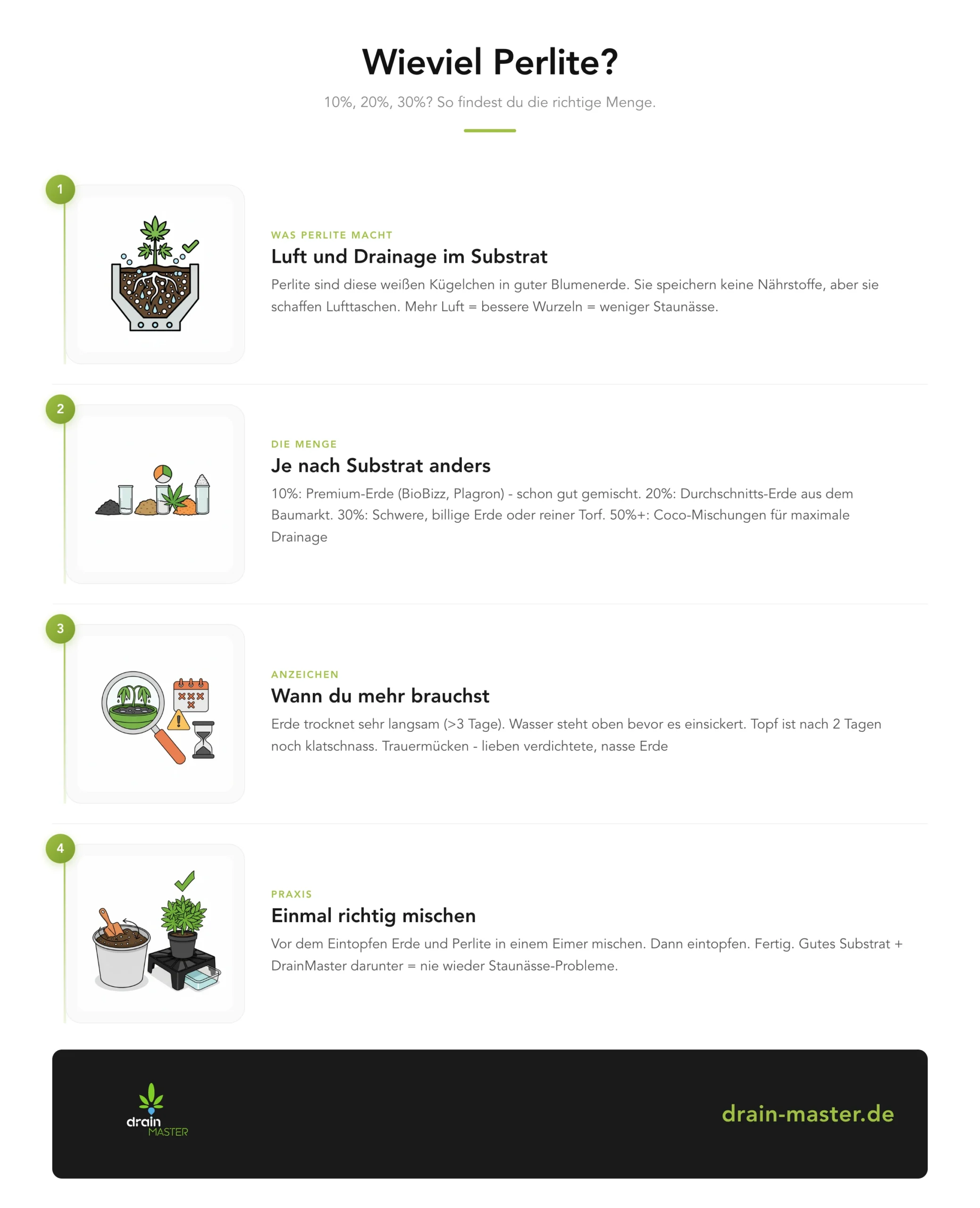
10%, 20%, 30%? How to find the right amount.
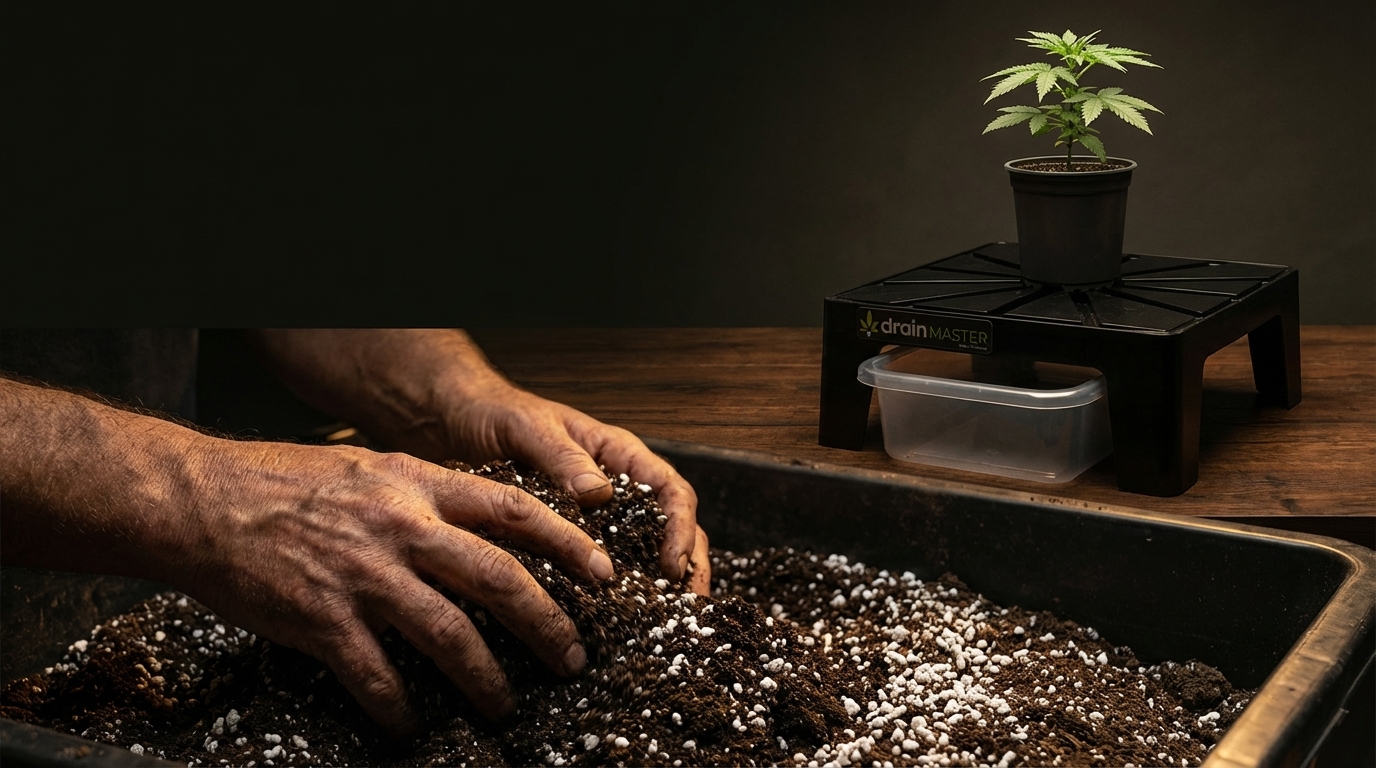
Proper perlite soil mixing is one of the fundamental pillars for the ambitious cannabis grower aiming for a successful indoor harvest. Many underestimate this crucial step, but this light, white volcanic rock is the key to healthy roots and vital plants. It’s a simple yet extremely effective method to optimize your substrate and avoid common watering mistakes. In this expert article, as an experienced grower, I’ll show you the best practices, common errors, and provide concrete practical tips on how to unleash your plants’ full potential with perfectly mixed soil.
Why Perlite is the Foundation for Healthy Cannabis Roots
Imagine your plant’s roots as its lungs and stomach. If they can’t breathe or drown in water, even the best genetics and most expensive fertilizer won’t help. This is where perlite comes in. This naturally occurring, pH-neutral rock is heated intensely, causing it to expand and develop an extremely porous, lightweight structure. Its main task in the substrate is to improve the physical properties of the soil.
The core functions are quickly explained:
- Improved Drainage: Perlite granules create countless small channels in the substrate. Excess water can drain quickly and unhindered. This is the most effective protection against waterlogging, the main cause of root rot.
- Optimal Aeration: Air pockets form between the perlite particles, supplying the root zone with vital oxygen. Healthy roots need oxygen for cellular respiration and efficient nutrient uptake. Without it, they literally suffocate.
- Prevention of Soil Compaction: Each watering presses the soil particles closer together. Over time, the substrate becomes hard and impermeable. Perlite acts like a permanent framework that keeps the soil loose and actively prevents compaction.
The direct correlation is simple: loose, oxygen-rich soil leads to explosive root growth. A strong root system, in turn, can absorb nutrients and water much more efficiently. The result is a healthier, more robust plant that is less susceptible to stress and diseases. This not only helps you avoid root rot but also creates the perfect basis for vigorous growth. So, if you’re experiencing problems with symptoms like overwatering and drooping leaves, optimizing your soil is the first step towards improvement.
Mixing Perlite with Soil: The Perfect Ratio for Your Substrate
The question every grower asks is: How much perlite is optimal? There’s no one-size-fits-all answer, as the ideal ratio depends heavily on your starting soil and the strain being grown. The art of mixing perlite with soil lies in proper adjustment.
The Rule of Thumb: From 10% to 50%
As a rough guide, you can use the following values. The percentages refer to the proportion of perlite in the total volume of the substrate:
- Premium Soils (Light-Mixes): These soils are often already quite airy and sometimes contain a small amount of perlite. Here, 10-20% additional perlite is sufficient to perfectly round off the structure.
- Standard Hardware Store Soil (All-Mixes): These soils are often denser and prone to compaction. A ratio of 20-30% perlite to 70-80% soil is the golden standard here and a safe bet for almost any project.
- Heavy or Reused Soil: If you want to recondition old soil or have very clayey, heavy soil, you can increase the proportion up to 40%. This breaks up the old structure and makes it ready for a new grow.
Special Cases: Coco Substrate and Autoflowers
Two cases require special attention. Coco substrate is inherently airier than soil but benefits enormously from perlite. Here, mixing ratios of 30-50% perlite are common to create a quasi-hydroponic environment that promotes extremely rapid root development. For autoflowers, an airy substrate is also crucial. Since they don’t have time to recover from stress like waterlogging in the delicate seedling phase, a perlite content of at least 25% is recommended. A small trick: a 2-3 cm thick layer of pure perlite at the bottom of the pot acts as an additional drainage layer and provides maximum security for young plants.
Adapted Management: Proper Watering and Fertilizing with Perlite
If you increase the perlite content, you must adjust your watering and fertilizing behavior. The substrate behaves differently, but this almost exclusively brings advantages. Mixing perlite with soil gives you more control.
New Watering Intervals and Weight Control
A substrate with a high perlite content dries out faster and more evenly. This means you will likely need to water more frequently, but with smaller amounts. The biggest danger for beginners, overwatering, is drastically reduced. Forget rigid watering schedules. Instead, learn to feel the weight of your pots. Lift a pot when it’s freshly watered, and then again when the soil is dry. This weight difference is the most reliable indicator for the perfect watering time. This new sense of balance is the key to properly watering your plants.
Keeping pH and EC Values in Check
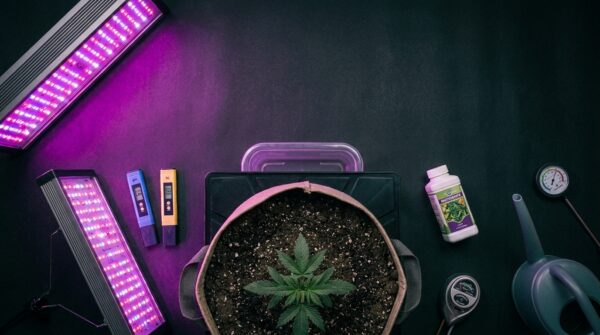
Perlite is pH-neutral and contains no nutrients. Therefore, it does not directly affect the chemistry of your substrate. Indirectly, however, it helps you enormously with management. Its high drainage capacity prevents the accumulation of nutrient salts (salinization). When watering, you should always ensure that about 10-20% of the water drains out the bottom. This drain flushes out old salts. If your pH or EC values in the root zone do get out of control, a perlite-rich substrate makes it very easy to flush the soil with pH-regulated water and correct the values. Keep an eye on the optimal pH range for soil of 6.2 to 6.8. EC values should be adjusted according to the phase, from 0.4 mS/cm (seedling) up to 2.0 mS/cm (peak flowering).
Avoiding Typical Mistakes and Finalizing Drainage
Even though mixing perlite with soil is simple, there are a few classic mistakes you should avoid:
- Overdosing: More than 50% perlite in a soil mix is rarely useful. The substrate loses its buffering capacity, retains hardly any water, and nutrients are flushed out too quickly.
- Inhaling Dust: Dry perlite is very dusty. This fine dust is not good for the lungs. Wear a simple dust mask when mixing larger quantities or moisten the perlite beforehand with a spray bottle. This effectively binds the dust.
- Blind Trust in Pre-mixed Soils: Just because “with perlite” is on the bag doesn’t mean the proportion is optimal. Feel the soil. If it feels heavy and dense, don’t hesitate to improve it yourself. Your intuition as a grower is crucial here.
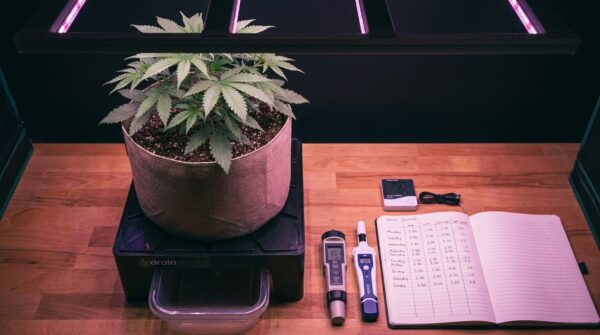
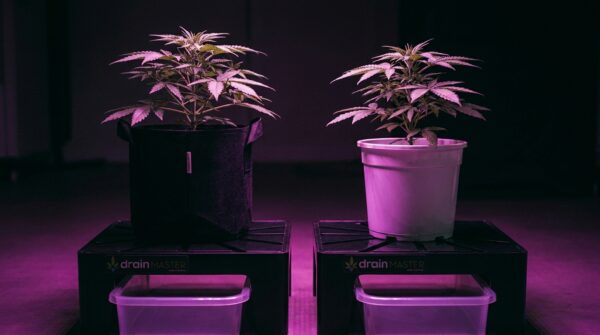
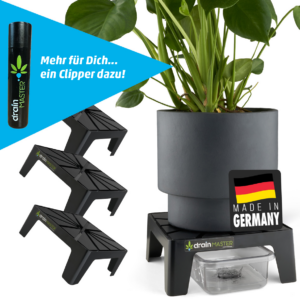
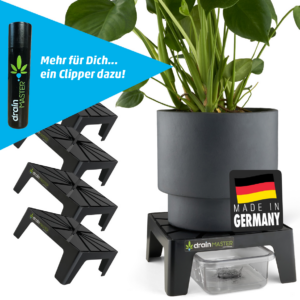
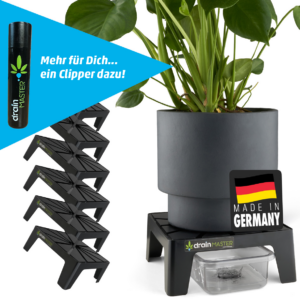
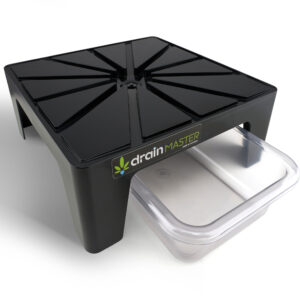
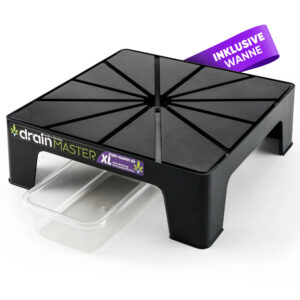
Finally, the most important point: the best substrate structure is useless if water cannot escape from the pot. Perlite provides internal drainage, but you need external drainage. So always make sure you use flower pots with drainage holes. Only then can the excess water, which quickly seeps down thanks to perlite, truly drain away. To perfect this process and definitively prevent waterlogging under the pot, a system like the DrainMaster saucer with drip function provides ultimate security. It cleanly collects the drain and allows you to easily monitor the pH and EC values of the runoff water.