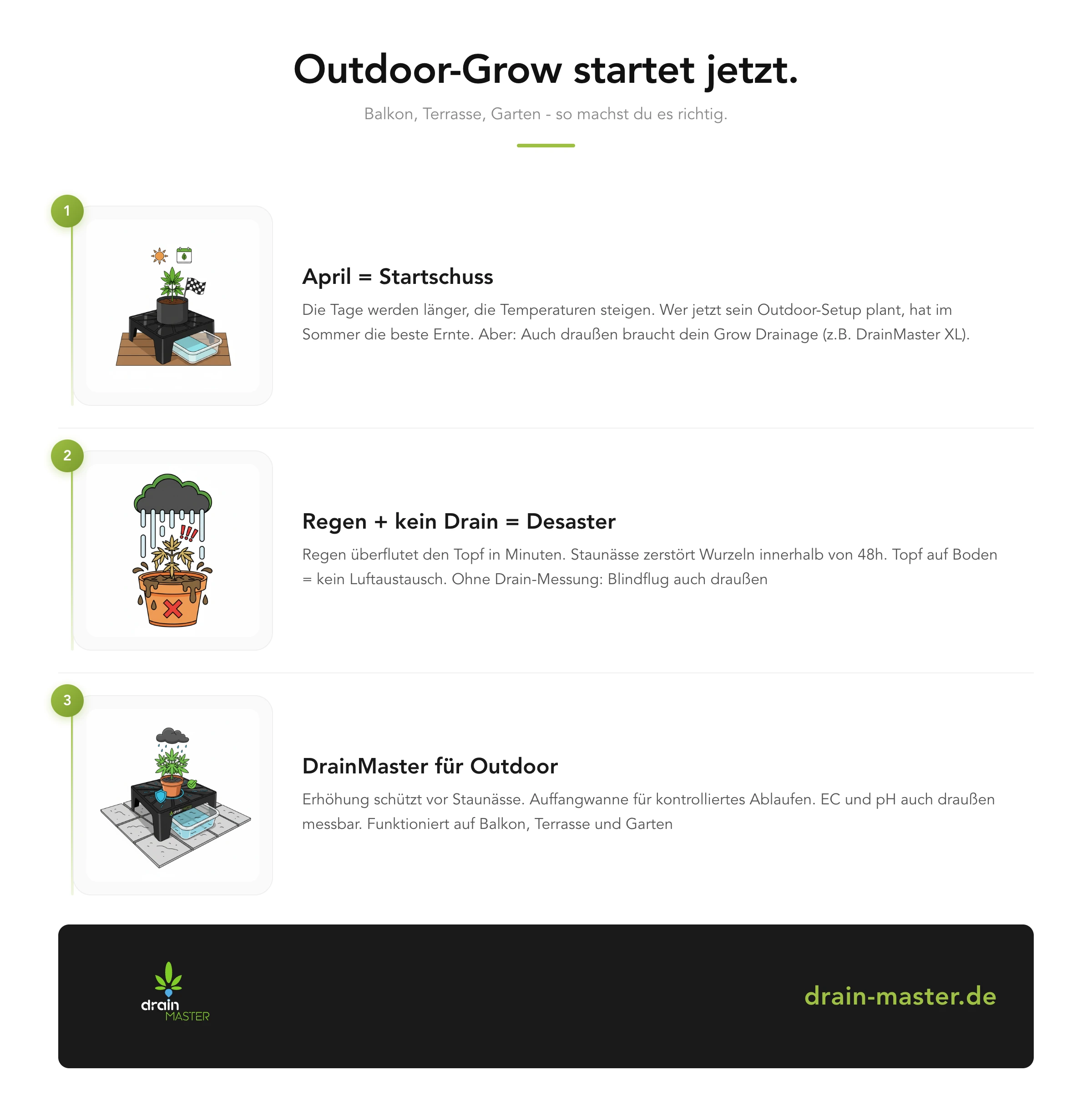
Balcony, patio, garden – how to do it right.
The foundation for success: choosing the right location and substrate
For many, starting an outdoor grow is a dream come true: fat buds kissed by real sunshine. But if you think you can just stick a seed into cheap garden-center soil and hope for the best, you’ll be disappointed fast. The success of your outdoor project is decided in the very first steps. Without a solid foundation, you’ll spend the whole season fighting problems instead of watching your plant thrive. Unlike a controlled tent setup, outdoors you leave a lot to nature – but not everything. Preparation is the key.
The right spot in the sun (and sheltered from the wind)
Cannabis is a light-hungry plant – no exaggeration. Your spot needs to provide at least 6–8 hours of direct, unfiltered sunlight per day, with midday sun being the most valuable. At the same time, choose a place with some protection from strong winds that can snap branches. And of course, discretion is crucial. A well-placed pot on a sunny balcony, a private patio, or in a sheltered corner of the garden is ideal. Watch how the sun moves over the course of a day before you decide.
The foundation: Why “living soil” is better than garden-center soil
Standard potting soil from the garden center is the first big mistake for your grow. After a few weeks of watering it compacts, stores water unevenly, and its pH is often unstable. The roots stop getting oxygen, which leads to root rot. Experienced growers use what’s known as “living soil” or “super soil” instead. It’s not sterile soil, but a living ecosystem full of microorganisms that feeds the plant organically and keeps the roots healthy.
The perfect mix for optimal drainage and aeration
Good drainage doesn’t start at the bottom of the pot – it starts right in your soil mix. A loose, airy structure is essential to prevent waterlogging in cannabis from the outset. Here’s a proven basic recipe for a professional mix:
- 1 part high-quality compost (as a nutrient base)
- 1 part coco coir (for aeration and water retention)
- 1 part perlite (at least 30% of total volume for perfect drainage)
- 1 part worm castings (provides valuable enzymes and microorganisms)
This mix ensures excess water drains quickly while enough moisture is retained for the plant. The roots always get enough oxygen – this is the basis for explosive growth.
Water management: watering correctly and preventing rain problems
Proper watering of cannabis is a completely different challenge outdoors than indoors. You’re not only dealing with your watering can, but also the sky. A heavy downpour can turn your pot into a swamp and undo all your work.
The biggest outdoor danger: waterlogging and root rot
Here’s the biggest risk when you want to start an outdoor grow: rain. A pot that sits directly on the ground or in a saucer can stand in water for days after a downpour. The roots literally drown because oxygen exchange is blocked. Within 48 hours, root rot can set in and kill the plant. This is the most common reason container grows fail on balconies or patios.
The art of watering properly: recognizing need instead of watering on a schedule
Forget rigid watering schedules. Your plant tells you when it’s thirsty. The two best methods are simple and effective. First: the finger test. Stick your finger 3–5 cm into the soil. If it’s dry down there, it’s time to water. Second: the lift test. Learn how heavy your pot feels when it’s dry and when it’s freshly watered. A light pot needs water. When watering cannabis, the rule is: water slowly and thoroughly until about 10–20% runs out of the bottom as runoff. This ensures the entire root ball is moistened and helps prevent salt buildup. This way you avoid both overwatering cannabis and underwatering cannabis.
Drainage is non-negotiable
To prevent root rot, excess water must always be able to drain away freely. Use fabric pots that allow side aeration, or make sure your plastic pots have sufficiently large drainage holes. A 3–5 cm layer of expanded clay at the bottom of the pot can also help prevent the holes from clogging with soil. Most important, though: the pot must never sit in a puddle.
The invisible parameters: keeping pH and EC under control outdoors, too
Just because you’re growing outdoors doesn’t mean you should skip professional control of the most important water values. If you’re flying blind here, you’re leaving your success to chance.
pH: the gateway to nutrient uptake
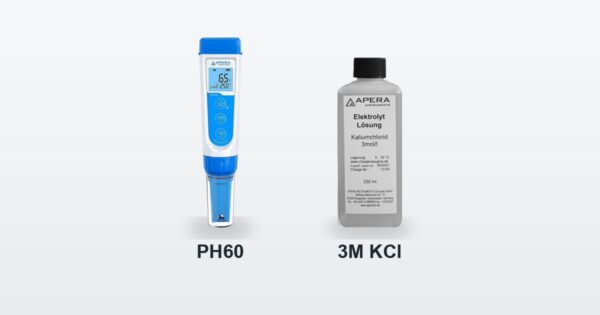
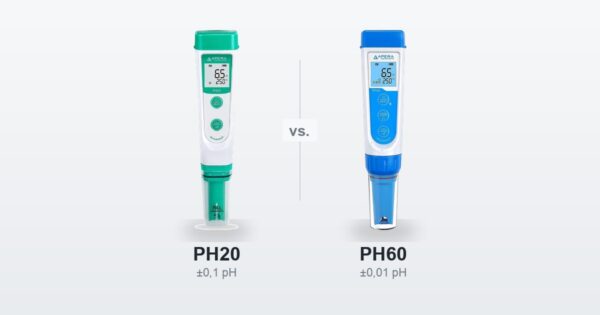
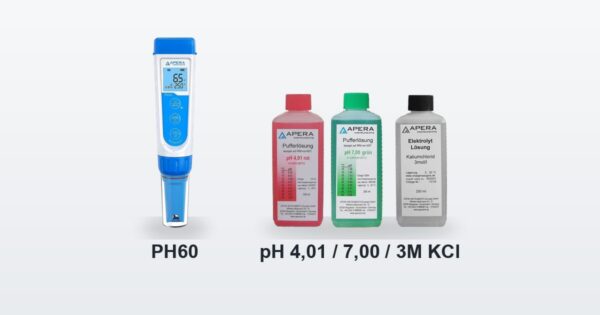
The pH of your irrigation water and your substrate determines whether your plant can absorb nutrients at all. If it’s outside the optimal range for soil (between 6.0 and 7.0), nutrient lockout occurs. That means you can fertilize as much as you want – the plant still starves and shows deficiency symptoms. You can find more on the chemical basics on the Wikipedia page on pH. So don’t just measure your irrigation water – measure the runoff water above all. Only that tells you the true pH in the root zone.
EC: preventing overfertilization with precision
EC measures the concentration of nutrient salts in your water. It’s your most important tool for preventing overfertilization. Watering blindly according to a feeding chart almost always leads to burnt leaf tips and blocked roots. Use these guideline values for the nutrient solution:
- Vegetative phase: 0.8–1.4 mS/cm
- Flowering phase: 1.5–2.2 mS/cm
Always start at the lower end of the range and watch how your plant responds. Here too, measuring the runoff is crucial to see whether salts are building up in the pot.
Why measuring runoff is your most important control tool
In short: runoff is your window into the root ball. Measuring the pH and EC of the water that drains out is the only way to know for sure what’s happening in the pot. You’ll spot pH shifts and salt buildup before they become a visible problem. That’s the difference between an amateur grow and a controlled, professional process.
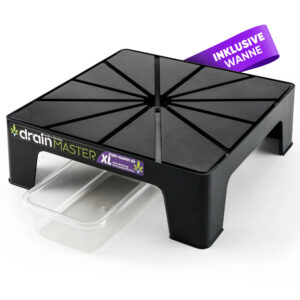
DrainMaster Drip Stand – Sustainability meets Design
Stress-free measurement: pH and EC values without raising the plant pot!
From chance to control: your professional plan for starting an outdoor grow
A successful outdoor grow is the result of good planning and control over the key factors. If you know the most common mistakes, you can avoid them and look forward to a bountiful harvest.
The most common mistakes at a glance
The core problems are almost always the same: compacted, low-oxygen soil; waterlogging from rain and blocked drainage holes; and completely skipping pH and EC control in the root zone. These mistakes inevitably lead to sick plants and disappointing yields.
The solution for drainage and measurability: DrainMaster
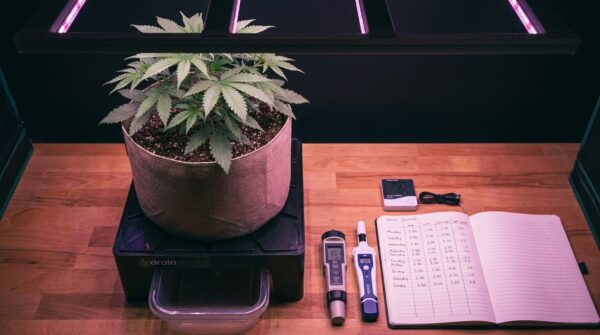
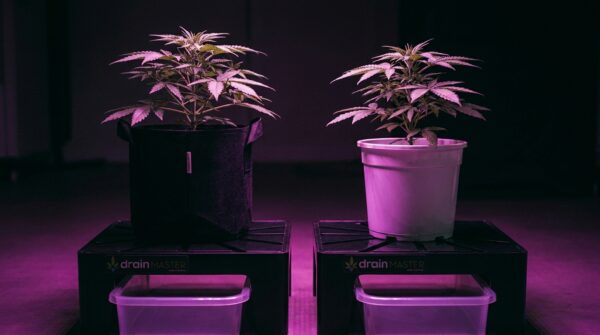
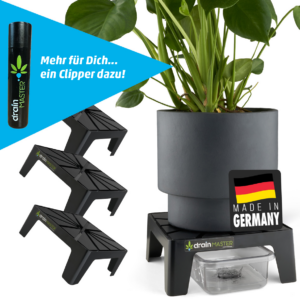
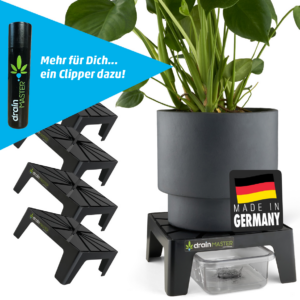
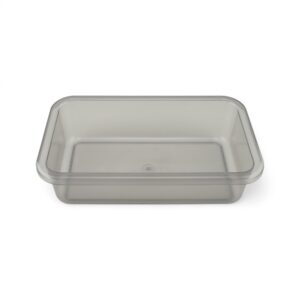
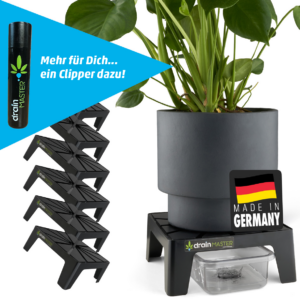
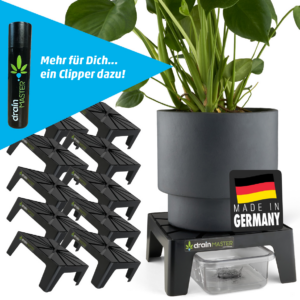
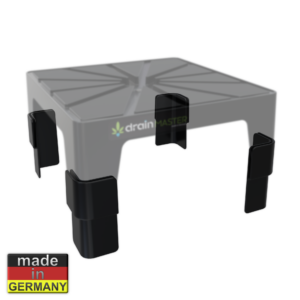
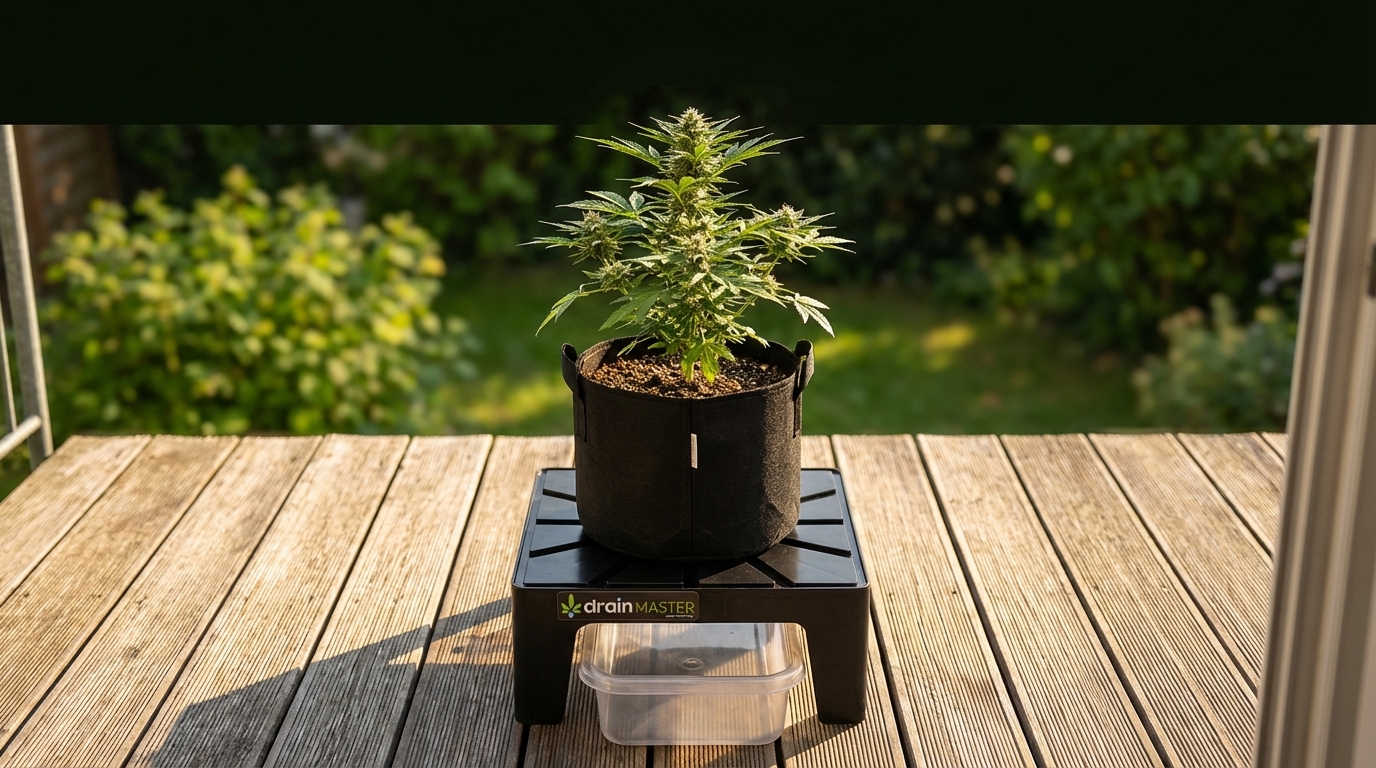
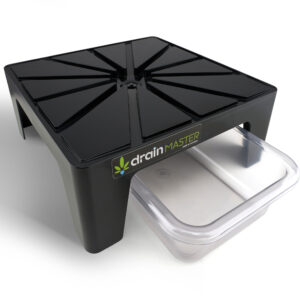
The problems described so far have a logical consequence: you need a system that guarantees drainage and makes measuring easy. That’s exactly where DrainMaster comes in. It raises your pot so it never sits in water – even after the heaviest downpour. Excess water drains in a controlled way into a drip tray. This not only puts an end to waterlogging, it also lets you easily collect the all-important runoff and measure its pH and EC. That turns your grow from a gamble into a controlled process.
Start the outdoor season now (CTA)
Spring is the perfect time to start your outdoor grow. With the right knowledge and suitable equipment, nothing stands in the way of a successful season. Leave nothing to chance and ensure optimal conditions from the start. With code EASTER10, you’ll receive a 10% discount during the Easter promotion (2026-04-04 to 2026-04-07) on your order and lay the groundwork for a harvest that will make you proud.