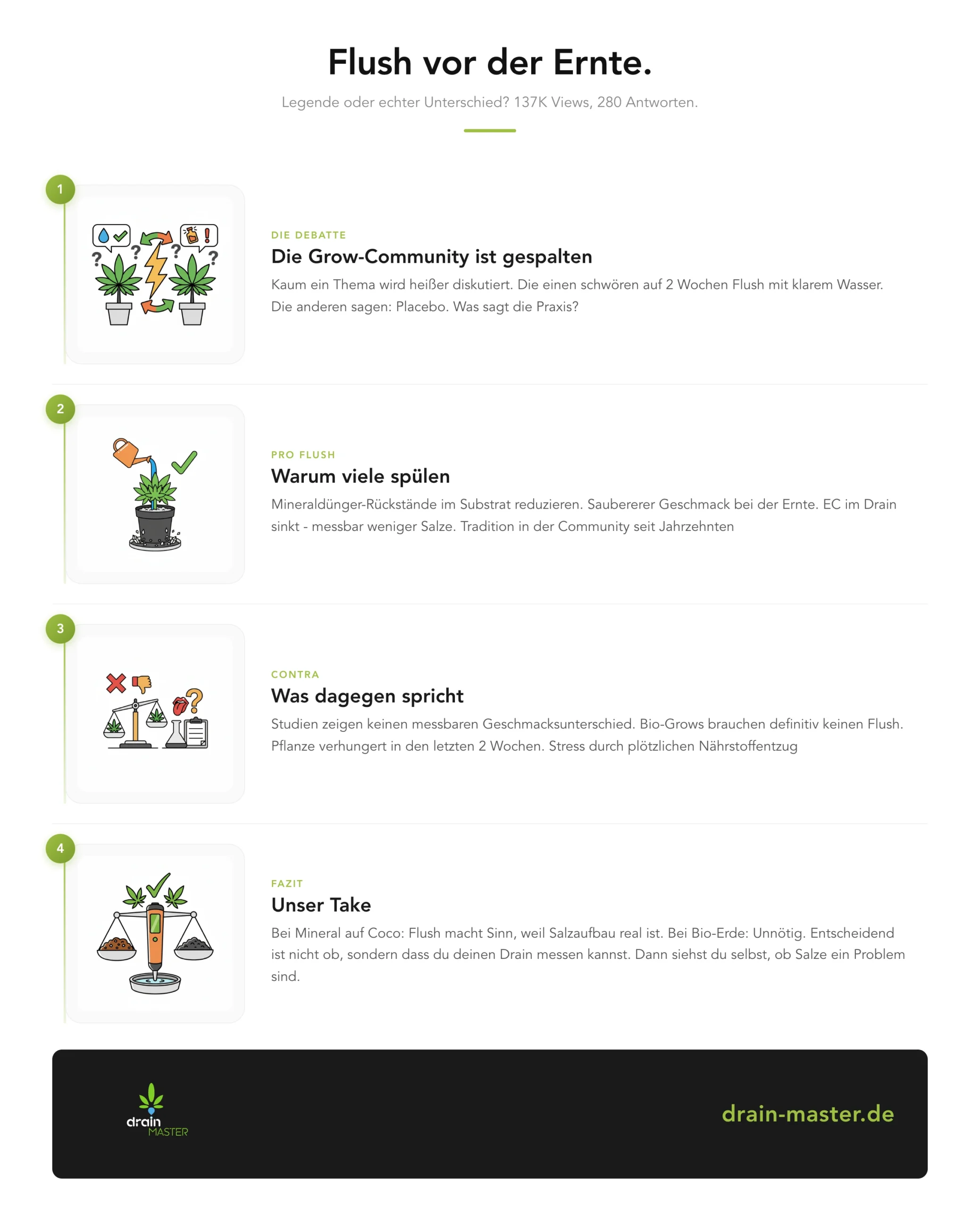
Legend or real difference? 137K views, 280 replies.
Flush or not flush? The big debate about flushing cannabis before harvest
Flushing cannabis before harvest is one of the most debated techniques among indoor growers, and the community is deeply divided. On one side are the convinced supporters. Their argument: flushing removes excess mineral salts and nutrients from the medium and the plant. The result is said to be a noticeably cleaner aroma, smoother smoke, and clean, white ash. Anyone who’s ever smoked buds that crackle as they burn or leave a harsh, chemical aftertaste knows what they mean. They see flushing as the final quality step that makes the difference between a good and an excellent harvest.
On the other side are the skeptics who consider flushing a myth – an outdated placebo effect. Their main argument is that a plant doesn’t simply “flush out” its nutrients. The nutrients are already bound within the plant’s structures. Withholding nutrients in the final weeks is unnecessary stress that weakens the plant and, in the worst case, can even reduce yield. Some point to studies that found no significant difference in taste or chemical composition between flushed and non-flushed plants. The truth, as so often, lies somewhere in the middle and depends heavily on your growing style.
The principle of flushing: why and when timing is crucial
When we talk about flushing cannabis before harvest, we don’t mean washing nutrients out of the leaves and flowers. That’s biologically impossible. The real goal is to clear the medium of all externally supplied nutrients. This forces the plant to draw on its internally stored nutrient reserves. It starts pulling mobile nutrients like nitrogen from older leaves (fan leaves) to put energy into flower production. This process, called senescence, is a natural part of the plant life cycle and leads to the typical yellowing of leaves at the end of flowering. A correctly performed flush speeds up this process in a targeted way.
Timing is absolutely critical here. Getting it wrong can undo all your work. The ideal duration depends directly on your medium:
- Soil: Soil acts as a buffer and stores nutrients for quite a while. Plan a flushing phase of 10 to 14 days.
- Coco coir: Coco stores less. A flush of 5 to 7 days is usually enough.
- Hydroponic systems: In DWC, NFT, or inert media like rockwool, nutrients are gone immediately. Often 2–4 days is enough.
The best visual indicator for when to start flushing is checking the trichomes under a microscope. As soon as the first trichome heads start shifting from clear to milky/cloudy, it’s the perfect moment to cut nutrients and begin flushing.
The art of flushing correctly: a practical guide
Just pouring plain water into the pots isn’t the whole story. Successful flushing is a technical process where you need to keep an eye on a few key parameters to avoid mistakes like root rot.
EC value as your compass
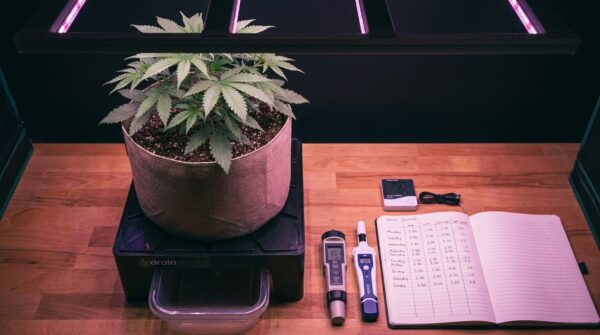
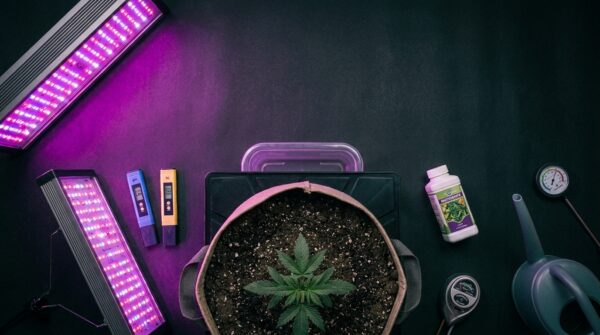
EC (electrical conductivity) is your most important tool. It measures the concentration of salts in the water and shows you objectively whether your flush is working. The goal is to reduce the salt level in the substrate. At the start of flushing, the EC of the runoff water (drain) will still be clearly higher than the input. The goal isn’t “close to zero,” but a drain EC that is at most 0.3–0.5 mS/cm above your usual input (on coco up to around 0.8). Flush with pH-adjusted water whose EC is 0.3–0.5 mS/cm below your input, and check the drain EC regularly. Without a reliable EC meter for monitoring, you’re working in the dark. If you measure regularly and find that your drain EC is too high, that’s a clear sign that salts have built up and that flushing makes perfect sense.
Keep pH stable
A fatal mistake many growers make: ignoring pH during flushing. Even if you’re no longer feeding nutrients, you must adjust the flush water to the correct pH. A sudden pH shock stresses the roots and can impair their ability to absorb water. Stick to these proven ranges:
- Soil: Keep pH stable between 6.0 and 6.5.
- Coco & hydro: Aim for a pH range of 5.5 to 6.0.
Stable roots are crucial for harvest quality even in the final phase. Proper flushing cannabis before harvest protects the plant instead of harming it.
The right watering technique and common mistakes
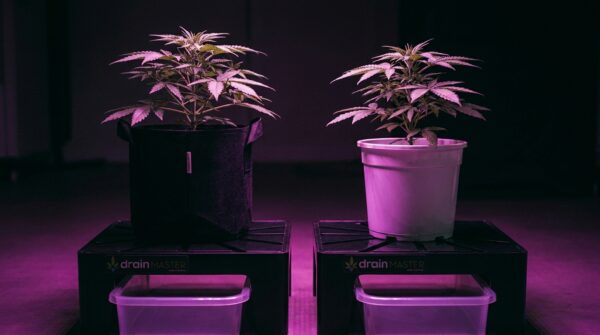
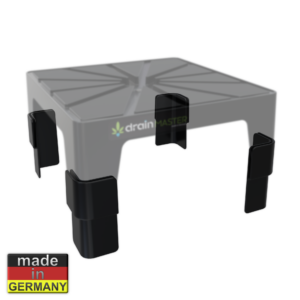
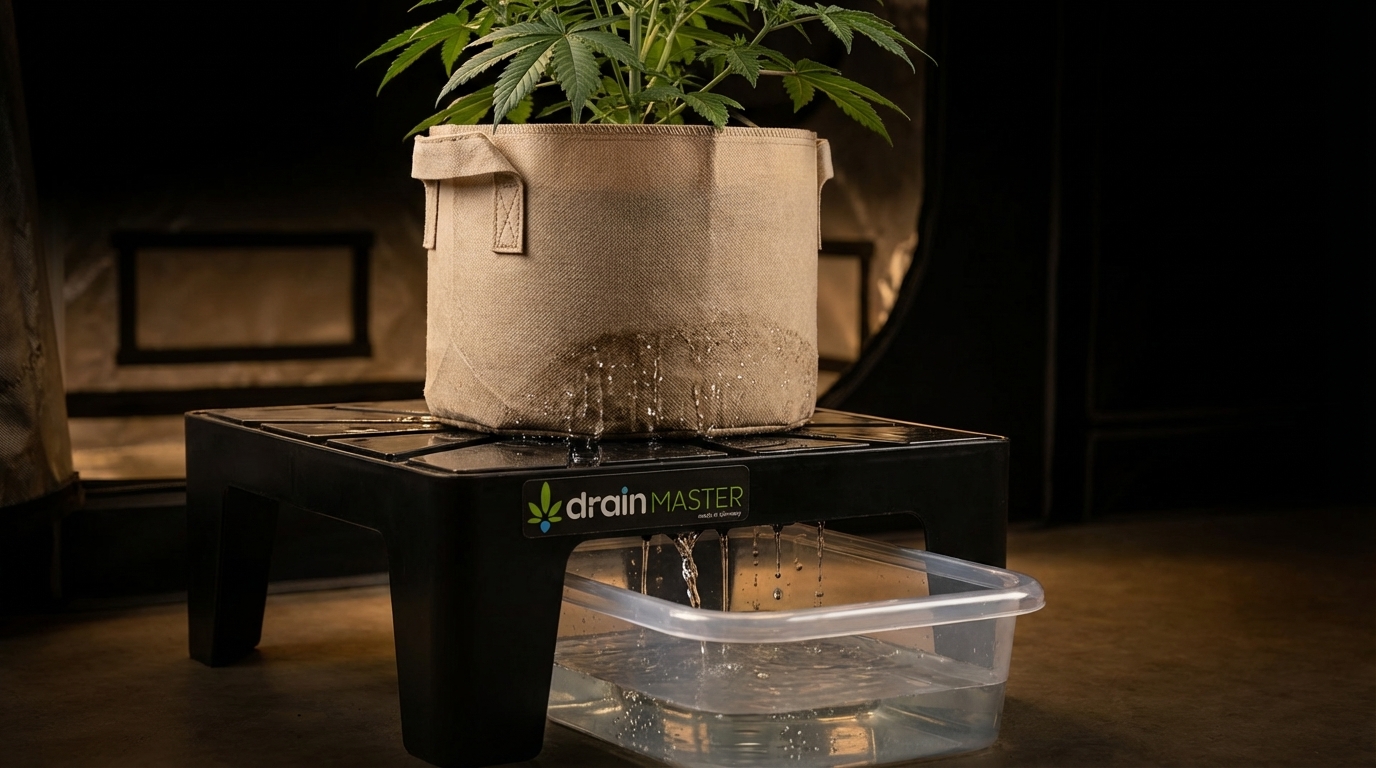
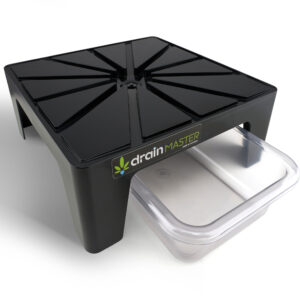
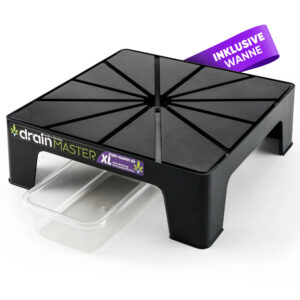
Flushing is about thoroughly saturating the medium. That means normal watering cannabis isn’t enough. A good rule of thumb: use two to three times the pot volume of water per flush. For an 11-liter pot, that’s 22 to 33 liters of water. Water slowly and in intervals so the water penetrates the entire medium evenly. The most important thing is perfect drainage. Excess water must be able to run off freely, otherwise you risk dreaded waterlogging in cannabis. Overwatering cannabis this late in the cycle can quickly lead to root rot and ruin the harvest. To catch the large amounts of runoff cleanly and take a sample for EC measurement, a DrainMaster Drip Stand incl. Tub are invaluable. It prevents your pots from sitting in their own runoff and makes handling incredibly easy. Some growers, especially on coco, also use special flushing additives such as Athena Fade, which contain no nitrogen and help the plant mobilize its last reserves.
Conclusion: when flushing is really worth it – and how to decide for yourself
So, flush or not? The answer is nuanced: it depends on your growing method. If you use mineral nutrients – especially in coco or hydroponic systems – flushing cannabis before harvest is almost always a good idea. Salt buildup is inevitable here and can negatively affect taste. The proof is in the drain: measure the EC. If it’s high, you should flush.
If, on the other hand, you’re growing purely organically in living soil, flushing is often unnecessary and can even be counterproductive. The complex soil life of bacteria and fungi buffers nutrients and makes them available to the plant as needed. Aggressive flushing would disrupt this sensitive ecosystem. In this case, it’s better to simply give plain water in the final weeks without fully washing through the medium.
At the end of the day, your decision should be guided by measuring – not belief. A high drain EC is a fact, not a myth. It shows you there are excess salts in the pot. Whether and how you remove them before harvest is a decision you should make based on facts. Tools like DrainMaster help you determine those facts easily and cleanly – so you can take your harvest quality to the next level.