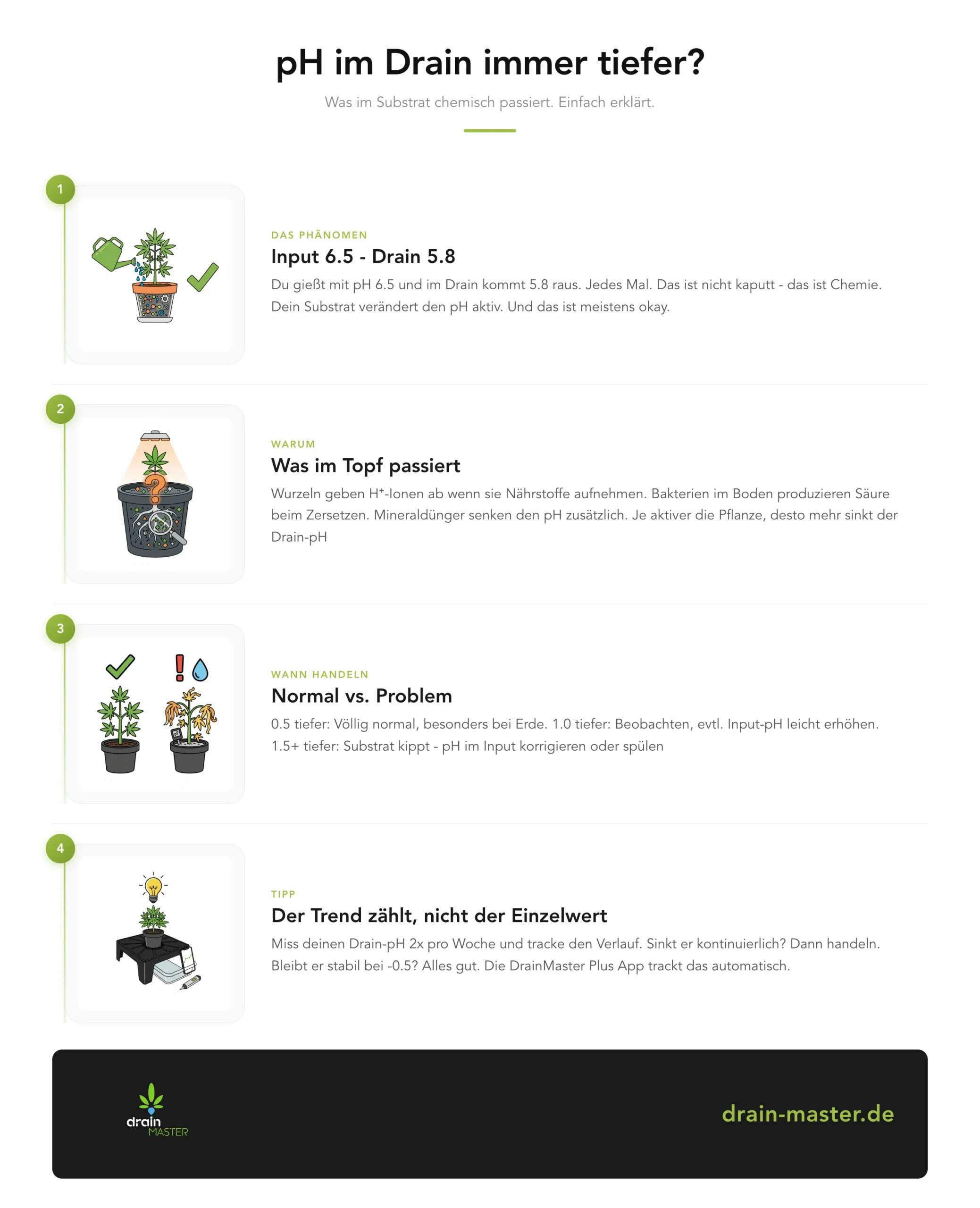
What 80% of growers misread about runoff.
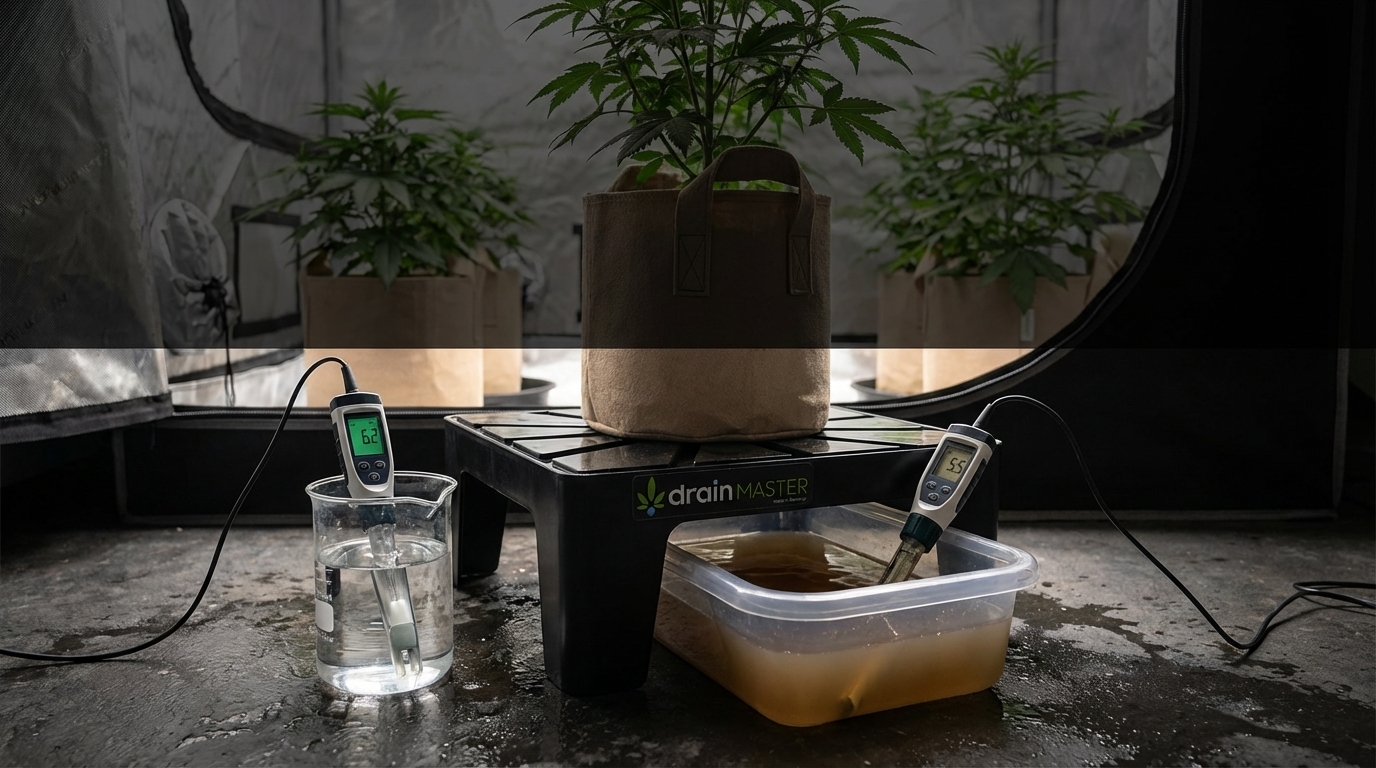
A Low Drain pH is the classic warning sign that many growers overlook until leaves turn yellow and growth stagnates. You water with a perfectly adjusted pH of 6.5, but what comes out of the pot at the bottom only has a pH of 5.8 or even lower. This is not a measurement error, but a clear sign that your root zone is acidifying. If you ignore this problem, you risk massive nutrient problems and, in the worst case, ruin your entire harvest. In this guide, I’ll show you why this happens and how to get it under control like a pro.
From Irrigation Water to Drain: Why pH Actively Drops
The fact that the pH in the drain is almost always lower than in the irrigation water is no reason to panic. It is the result of completely normal biological and chemical processes in the substrate. Think of it this way: your pot is not a passive container, but a living ecosystem. If you know the causes, you can control them.
The Phenomenon Explained
The specific example – input 6.5, drain 5.8 – shows a drop of 0.7 points. A slight deviation of 0.2 to 0.5 is often normal and harmless. It becomes problematic when the difference increases or the drain value continuously drops further. This indicates an imbalance that must be actively corrected before visible damage occurs to the plant.
The Invisible Workers in the Substrate
Three main factors are responsible for acidification in the root zone:
- H⁺-ion release by roots: To absorb nutrients like potassium (K⁺), calcium (Ca²⁺), and magnesium (Mg²⁺), the plant performs what is called cation exchange. It releases positively charged hydrogen ions (H⁺) into the substrate to absorb positively charged nutrient ions in return. These H⁺ ions are, by definition, acid and directly lower the pH at the roots.
- Microbial activity: A healthy substrate is full of microorganisms. These decompose organic material (e.g., root residues, organic fertilizer components) and produce organic acids as a byproduct. This process also contributes to gradual acidification.
- The acidifying effect of fertilizers: Many mineral fertilizers, especially those with a high proportion of ammonium nitrogen (NH₄⁺), have a strong acidifying effect. When the plant absorbs ammonium, it also releases H⁺ ions, which further lowers the pH in the substrate. Excessive use quickly leads to salt buildup in the substrate, which exacerbates the problem.
Nutrient Lockout: The Consequences of an Overly Acidic Root Environment
Soil that is too acidic is like a full refrigerator with a stuck door for your plant. The nutrients are there, but the plant can no longer access them. This phenomenon is called nutrient lockout and is the direct consequence when your drain pH is too low. A stable and optimal pH for cannabis is therefore not an option, but a necessity.
When the Plant Starves Despite Fertilizer
The core problem of lockout is that pH changes the chemical form of nutrients in the soil. Below a pH of about 6.0, essential macronutrients become increasingly unavailable to the plant. Many growers misinterpret deficiency symptoms, add more fertilizer, and only make things worse. They increase the EC value in the substrate, which further stresses the roots without solving the actual availability problem.
Blocked Nutrients and Toxic Metals
A persistently acidic root zone has concrete and devastating effects:
- Deficiency symptoms: Classic symptoms of cannabis nutrient deficiency caused by low pH include deficiencies in calcium (rusty brown spots), magnesium (yellowing between leaf veins), and phosphorus (slower growth, purple stems).
- Risk of toxicity: While important nutrients are blocked, the availability of heavy metals like manganese and aluminum increases sharply. In excessively high concentrations, these are toxic, directly damage the roots, and lead to small, necrotic spots on the leaves.
- Long-term root damage: An acidic environment attacks the fine root hairs responsible for nutrient uptake. The root system is weakened, the plant becomes more susceptible to diseases, and overall metabolism slows down.
Act Instead of React: Solutions for a Low Drain pH
The key to success lies in prevention. Those who set up their system stably from the start will less often need emergency measures later. But even if the problem has already occurred, there are clear steps for correction.
Preventive Measures for a Stable Substrate
To prevent a drain pH that’s too low from the start, ensure a solid foundation:
- Substrate choice and buffering: Use high-quality soil and preventively mix 1-2 grams of dolomite lime per liter of substrate. Dolomite lime acts as a natural pH buffer, counteracting acidification and simultaneously providing calcium and magnesium.
- Water quality and watering behavior: Know the carbonate hardness (KH) of your water. Soft water has low buffering capacity and is more prone to pH fluctuations. Here, adding Cal-Mag products like Athena Balance can help stabilize the pH. Always water so that 10-20% of the irrigation volume runs out as drain. This “runoff measurement” flushes out excess salts and prevents accumulation.
When and How to Correct
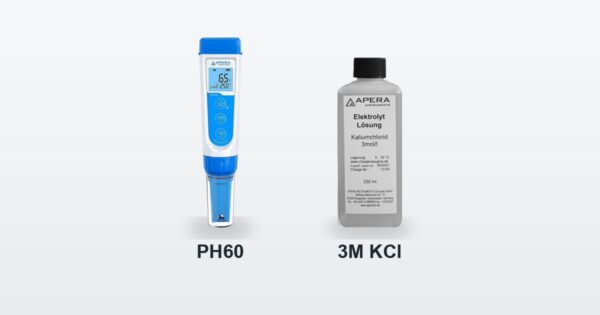
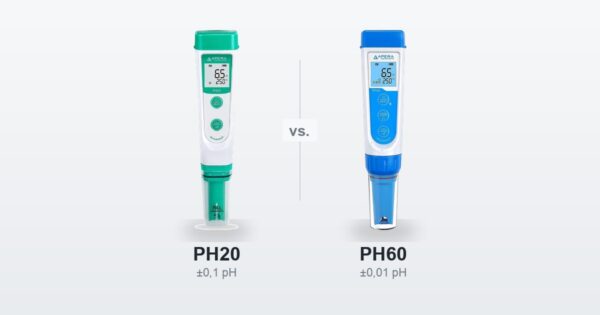
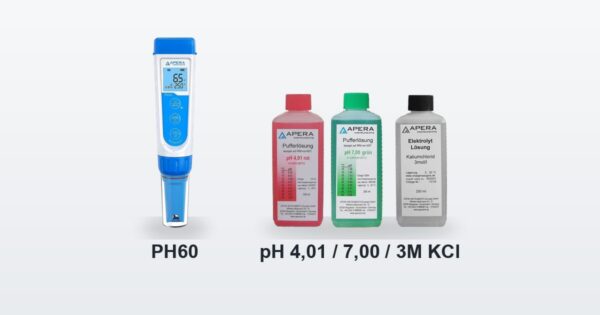
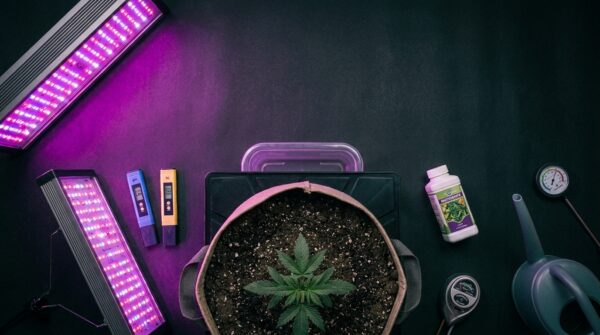
Accurate diagnosis is the first step to recovery. For this, you need a reliable measuring device like the Apera PH60 Premium pH Pocket Tester, which you regularly adjust with a pH Calibration Solution Set.
- The “0.5 / 1.0 / 1.5+” Rule:
- Deviation < 0.5: Observe. This is often still within the normal range.
- Deviation 0.5 – 1.0: Act. Slightly increase the pH of your irrigation water next time (e.g., to 6.7-6.8) to gently counteract.
- Deviation > 1.0: Emergency. Flushing is required here.
- The flushing method: If the drain pH is too low and the situation is acute, flush the pot with two to three times the pot volume of pH-corrected water (pH approx. 6.5). Measure the pH of the drain periodically to see how it normalizes. Since flushing also removes nutrients, the next watering should contain a light nutrient solution.
Keeping an Eye on the Trend: Smart pH Control for Healthy Plants
Experienced growers don’t chase every single measurement. They understand that the trend is crucial. A single outlier is less concerning than a consistently falling pH over several waterings. If your drain pH is too low but remains stable at 5.9, it’s often easier to manage than a value that drops from 6.2 to 5.9 and then to 5.7.
Single Value vs. Trend
A stable, albeit slightly lower, value indicates that the system has found a balance. A continuously falling trend, however, is a clear alarm signal that the buffering capacity of the substrate is exhausted and acidification is occurring. Here you must intervene before deficiency symptoms become visible. Regular monitoring of EC value cannabis and pH value cannabis in the drain is essential to recognize these trends.
Systematic Measurement and Control
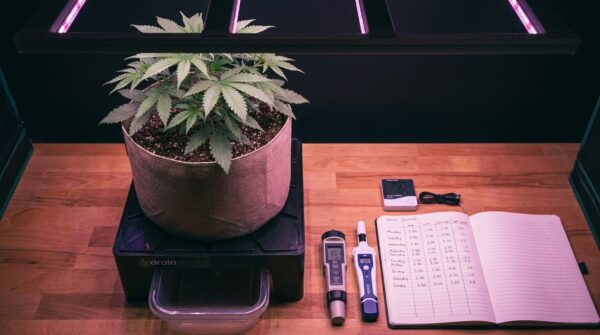
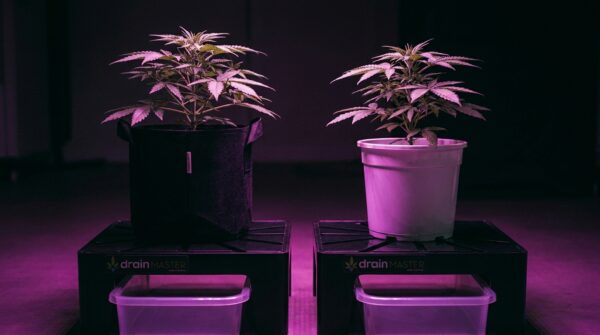
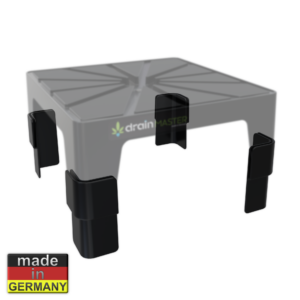
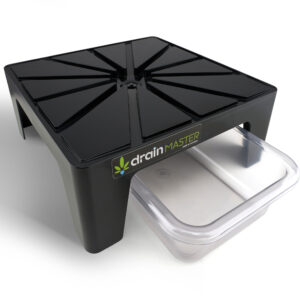
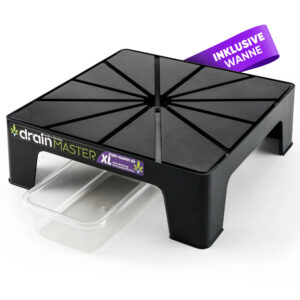
Make it a habit to measure the drain EC value and the pH value at least twice a week. The practical implementation of how to measure pH and EC values stress-free is crucial for consistency. Keep a logbook or use digital assistants. Instead of laboriously maintaining tables, the DrainMaster – a mini drainage table made of ASA plastic like that used in the automotive industry, made in Germany with 100% green electricity and its own PV system – can cleanly collect the drain in a transparent 1.5 L tray under the pot. You place your pH meter directly into the tray without lifting the pot and read the value in seconds. In combination with the free DrainMaster Plus App (iOS and Android, no subscription), the entire process is automated: the app visualizes the trends of your drain pH and EC values, so you can see at a glance whether your substrate is stable or if you need to take counter-measures. This is how you transform reactive problem-solving into proactive plant management.