Combining temperature + humidity correctly.
VPD: The Engine of Plant Growth and Optimal Target Values
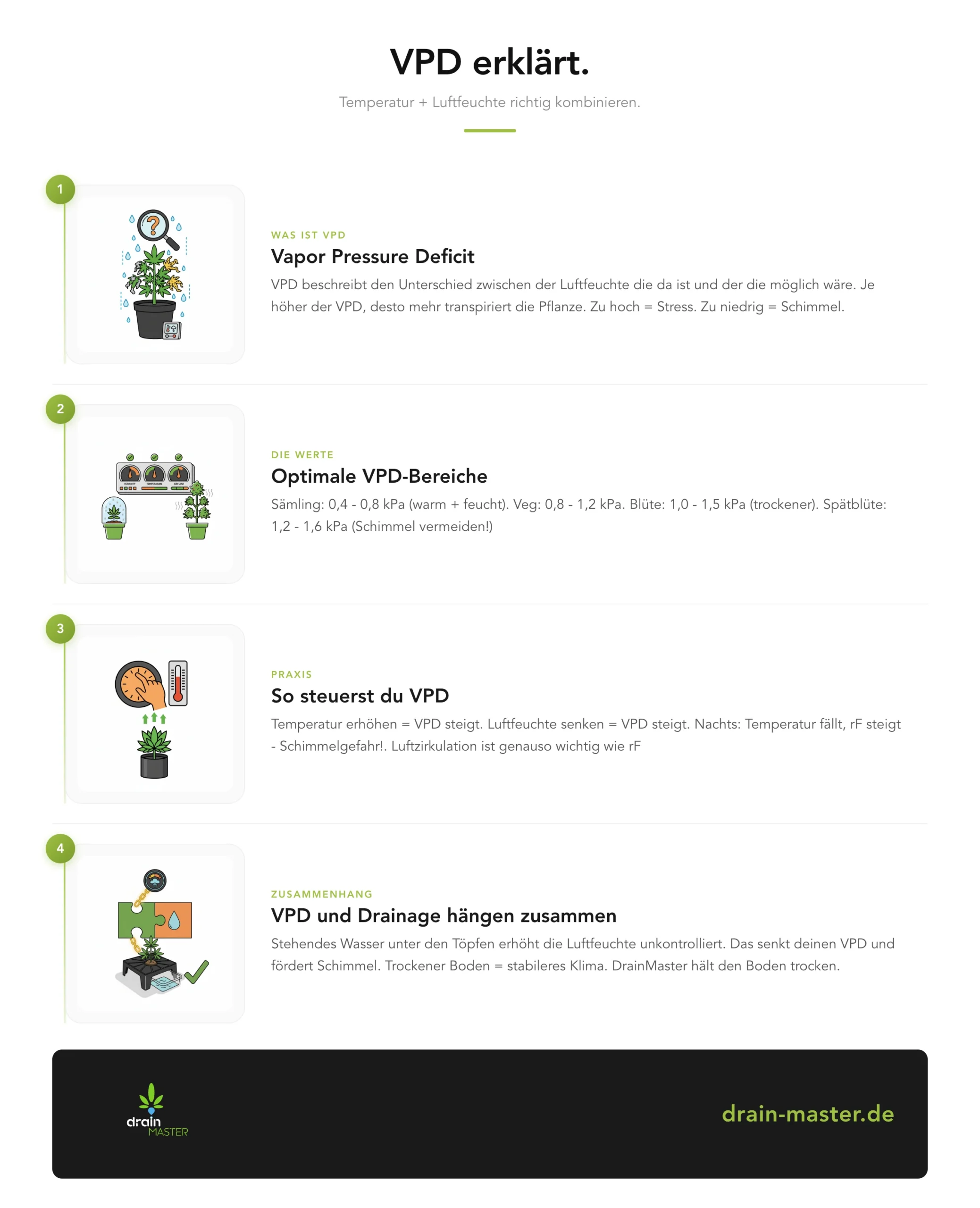
The optimal VPD cannabis value is the crucial, yet often overlooked, lever for explosive growth and maximum yields. Forget rigid feeding schedules and complex light cycles for a moment – if your VPD isn’t right, your plant can never reach its full potential. Vapor pressure deficit is the direct engine that controls your plants’ nutrient uptake and should be at the center of your climate control.
What Is Vapor Pressure Deficit (VPD) Really?
Think of VPD as the “thirst” of the air. It’s the difference between the current water vapor content in your grow tent and the maximum amount the air could hold at that temperature. Measured in kilopascals (kPa), this “thirst” creates suction at your plant’s leaves. To balance this suction, the plant opens its stomata and releases water vapor – a process called transpiration. This transpiration is the engine that pulls water and nutrients up from the roots. A perfect VPD cannabis value means a perfect transpiration rate and therefore optimal nutrient supply.
VPD Target Values for Every Phase of Your Grow
Your plant’s needs change, and so does the ideal VPD value. A one-size-fits-all setting throughout the entire grow is a classic beginner mistake. Stick to these phase-specific target values to get the maximum results:
- Seedlings & Clones (0.4–0.8 kPa): Young plants have a weak root system. A low VPD (high humidity) reduces transpiration stress and protects them from drying out while they establish themselves.
- Vegetative Phase (0.8–1.2 kPa): Now you want to boost growth. A medium VPD promotes vigorous transpiration, leading to rapid nutrient uptake and explosive vegetative growth.
- Early Flowering (1.0–1.4 kPa): The plant begins to form flowers and its demand for water and nutrients increases. VPD is slightly raised to meet this demand without excessively increasing the risk of mold.
- Late Flowering (1.2–1.6 kPa): During this phase, humidity control is critical. A higher VPD (drier air) minimizes the risk of bud rot (Botrytis) and encourages the plant to produce more resin and terpenes as a protective mechanism.
The Interplay: How VPD Cannabis Directly Affects Your Root Zone
A professional grower knows that the climate above the leaves is inseparably linked to the health below ground. The transpiration rate controlled by VPD dictates how your plant interacts with the substrate.
VPD and EC Value: The Inverse Relationship
The most important rule is: VPD and EC value (the concentration of nutrient salts) are inversely proportional. A high VPD forces the plant to take up a lot of water. If your EC value is too high, it absorbs a toxic amount of nutrients, leading to burnt leaf tips. Conversely, a low VPD results in low water uptake. If your EC value is too low, the plant suffers from deficiencies. An incorrect VPD is often the true cause of seemingly unsolvable nutrient problems.
VPD, pH Value, and Watering: A Dynamic Unit
The speed of water uptake also affects the stability of the pH value in your root zone. With high VPD and rapid uptake, the pH value in the substrate can drift faster. This requires closer monitoring of your runoff water. To work precisely here, a reliable measuring device like the Apera PC60-Z Smart Multi-Parameter Meter is essential. Your watering strategy must also adapt. A high VPD requires more frequent cannabis watering, especially in substrates like coco, to prevent drying out and salt buildup. Poor management quickly leads to stress, recognizable by symptoms like cannabis drooping leaves.
VPD in Practice: The Levers for Precise Climate Control
The theory is clear, but how do you implement it? Controlling VPD is a constant balancing act between two main factors.
The Controls: Temperature and Relative Humidity
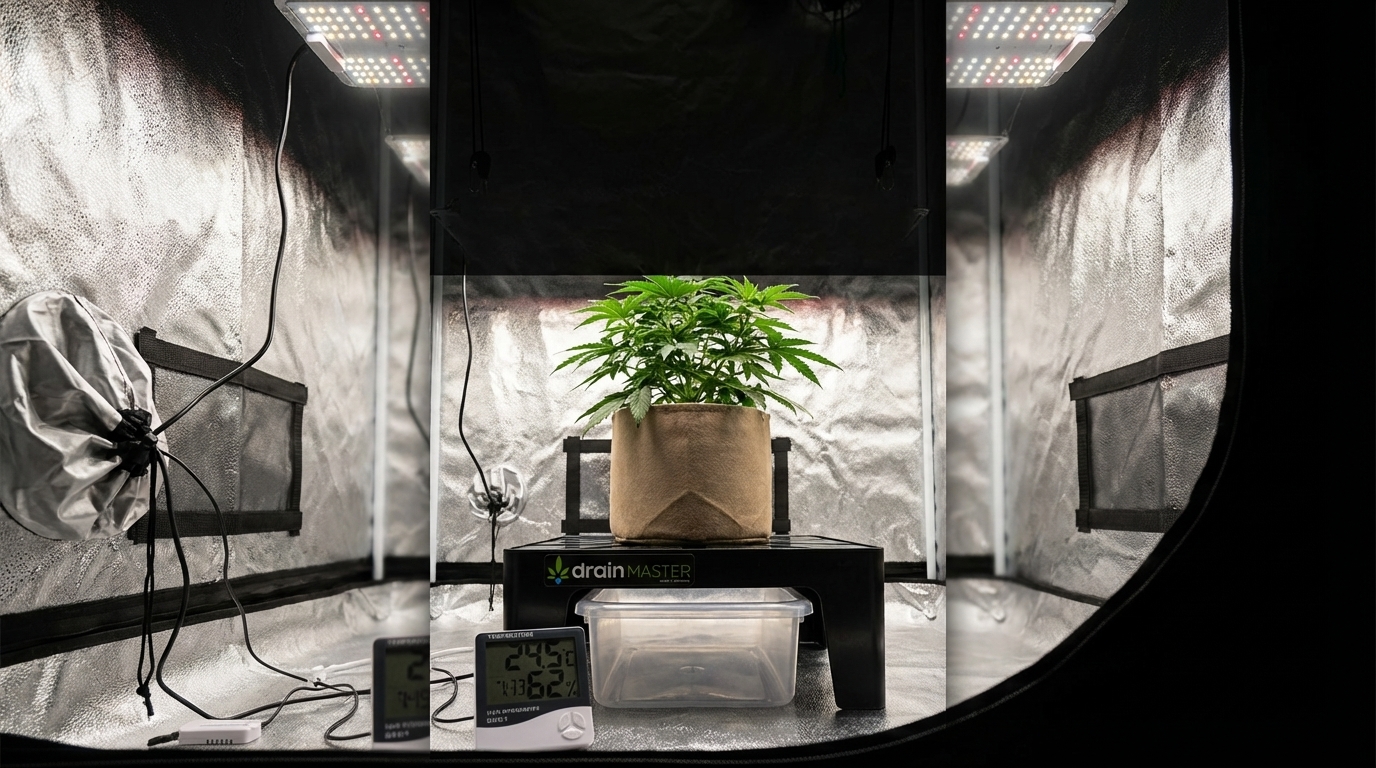
You control VPD by adjusting temperature and relative humidity (RH). To lower VPD (e.g., for seedlings), increase humidity with a humidifier or slightly lower the temperature. To raise VPD (e.g., in late flowering), lower humidity with a dehumidifier or increase the temperature.
VPD Calculator
Calculate the Vapor Pressure Deficit for optimal transpiration.
Optimal Values:
• 25.0°C ↔ 60% rLF
• 25.0°C ↔ 60% rLF
Value Ranges (Vegetative Phase):
VPD is like the "thirst" of the air. At 1.0 kPa, most plants have ideal conditions for breathing and absorbing nutrients.
Consistency Beats Perfection: Avoiding Common Mistakes
Your goal should be a stable VPD value during the light phase. Constant, large fluctuations stress your plant more than a consistent value that’s slightly outside the ideal range. The most common mistake is excessive temperature differences between day and night. A sudden temperature drop when lights go off causes humidity to spike and VPD to collapse, creating an ideal environment for mold.
Stabilizing the Foundation: Why Clean Drainage Is Critical
You can have the most expensive climate equipment, but if your foundation isn’t right, you’ll always be struggling. Clean, controlled drainage is the basis for a stable climate.
The Hidden Danger: How Standing Water Sabotages Your Climate
Water that remains in saucers after watering is a climate killer. This uncontrolled evaporation drives humidity in your tent unpredictably upward. Your dehumidifier runs at full capacity, but VPD still keeps collapsing. These humid, unstable conditions are not only bad for transpiration, they also create a breeding ground for pests and massively increase the risk of root rot in cannabis.
The Solution for a Stable System and Predictable VPD
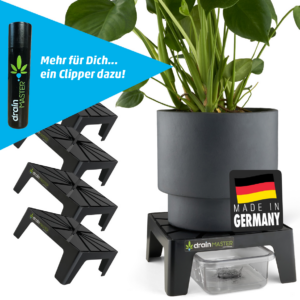
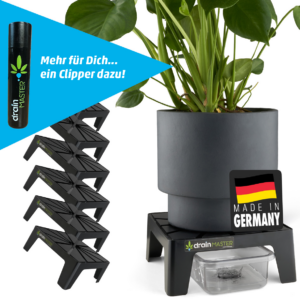
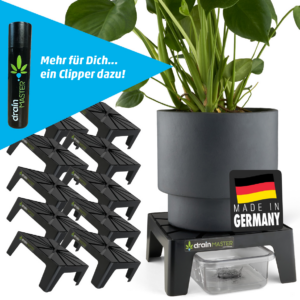
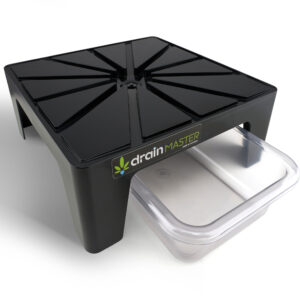
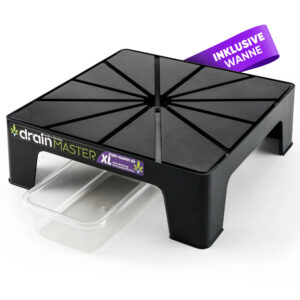
A stable climate starts with a dry tent floor. An intelligent drainage system like the DrainMaster dripper stand system catches excess water and drains it directly out of the tent. This eliminates uncontrolled evaporation and gives you full control over your humidity. Your climate becomes stable, the VPD cannabis value becomes reliably predictable, and your plants can finally reach their full potential. To keep your values perfectly in view, you can use the integrated VPD calculator in the free DrainMaster Plus app.