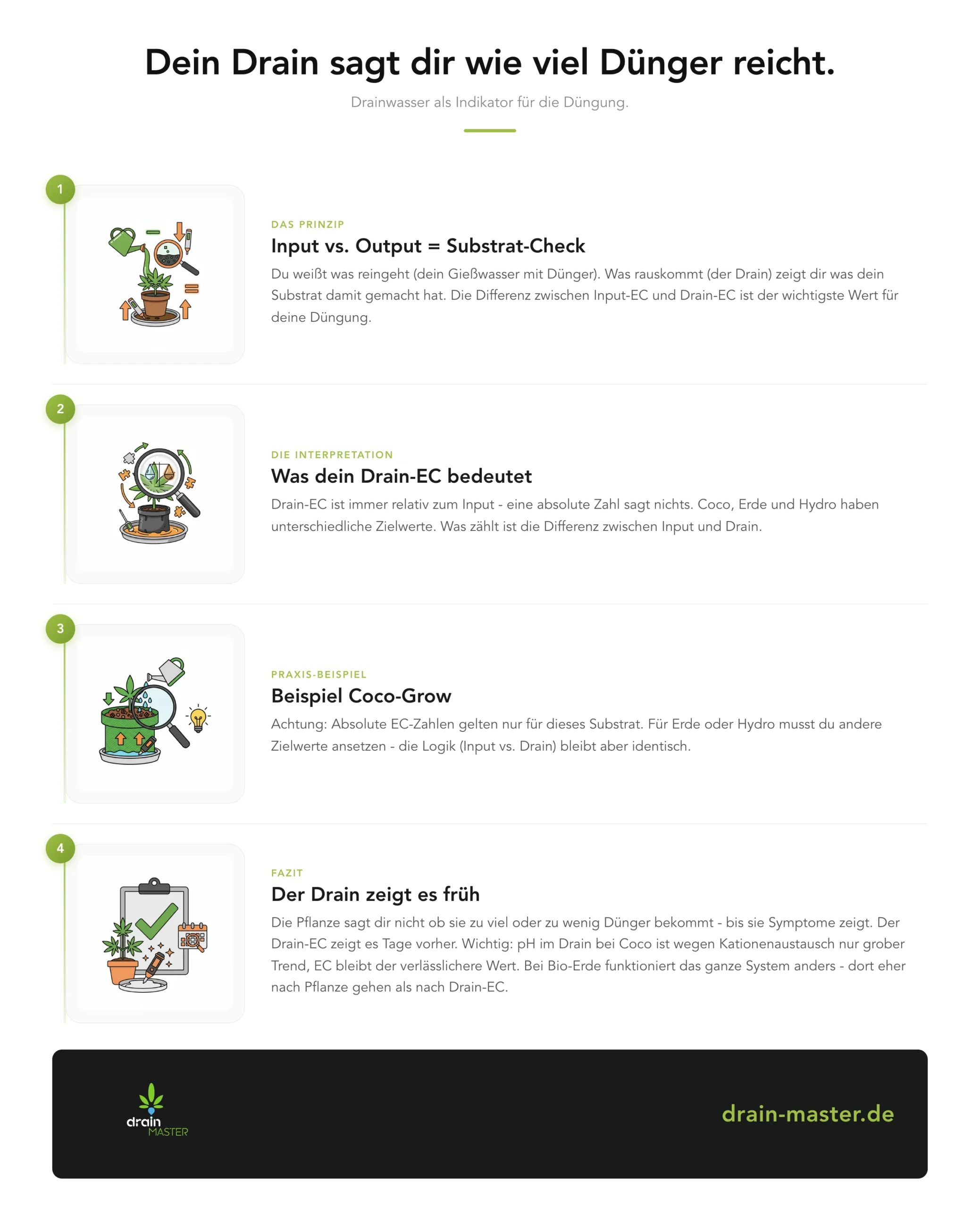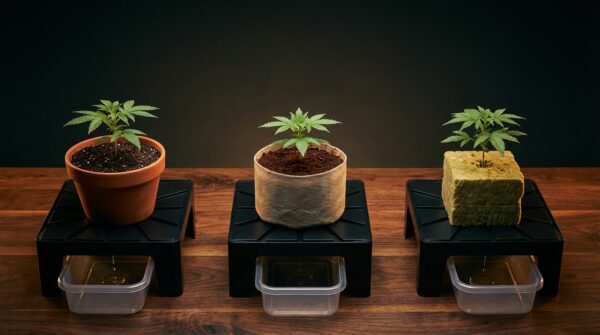
Drain water as an indicator for fertilization.
The crucial measurements: What pH and EC values really mean
Fertilizing cannabis correctly is less a matter of a green thumb and more of a data-based craft. If you really want to understand your plants and exploit their full potential, you can’t get around two measurements: the pH value and the EC value. These two numbers are your cockpit, your most direct line of communication to the root zone. They tell you exactly what your plant needs and what is currently happening in the substrate, long before you see it on the leaves. Forget the guesswork and the vague feeding schedules from manufacturers. From now on, we’re steering our nutrient delivery with precision.
pH: the gateway to nutrient uptake
Think of the pH value as the bouncer at your plant’s roots. If he’s in a bad mood (i.e., in the wrong range), he simply won’t let certain nutrients in. Even if you pour the most expensive fertilizer into the irrigation water, your plant will starve in front of full pots. This phenomenon is called nutrient lockout. The result is deficiency symptoms, even though there would actually be enough food available. To avoid this, you must set the optimal pH value for cannabis in your nutrient solution before every watering. Depending on the growing medium, different rules apply here:
- Soil: Here, the comfort zone is between 6.0 and 7.0. Pros often aim for a narrower corridor of 6.2 to 6.8. Soil has a natural buffering effect and forgives minor fluctuations, making it more beginner-friendly.
- Coco/Hydro: In these inert substrates, we need a more acidic range of 5.5 to 6.5. The sweet spot that most experienced growers aim for is 5.8 to 6.2. There is no buffer here; the pH value must be spot on with every feeding.
The EC value: The concentration of nutrients in the irrigation water
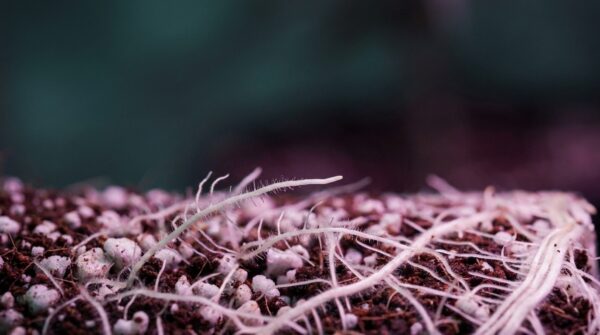
The EC value (Electrical Conductivity) is nothing more than a measure of the amount of salts dissolved in the water, i.e., the concentration of your fertilizer. A high EC value means a lot of fertilizer, a low EC value means little fertilizer. Both can become a problem. An EC value that is too high leads to nutrient burn, which you can recognize by burnt, “crispy” leaf tips. An EC value that is too low leaves your plant hungry and leads to pale leaves and slow growth. Manufacturers’ feeding schedules are often far too aggressive. An unshakeable practical tip is therefore: always start with 50-70% of the recommended dose. From there, you slowly work your way up, always keeping an eye on your plant’s reaction and, even more importantly, on the measurements in the drain.
The drain check: How your substrate communicates with you
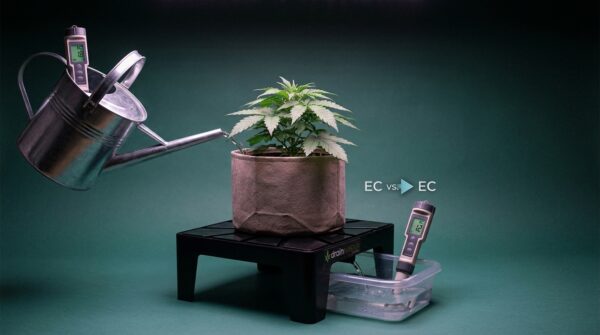
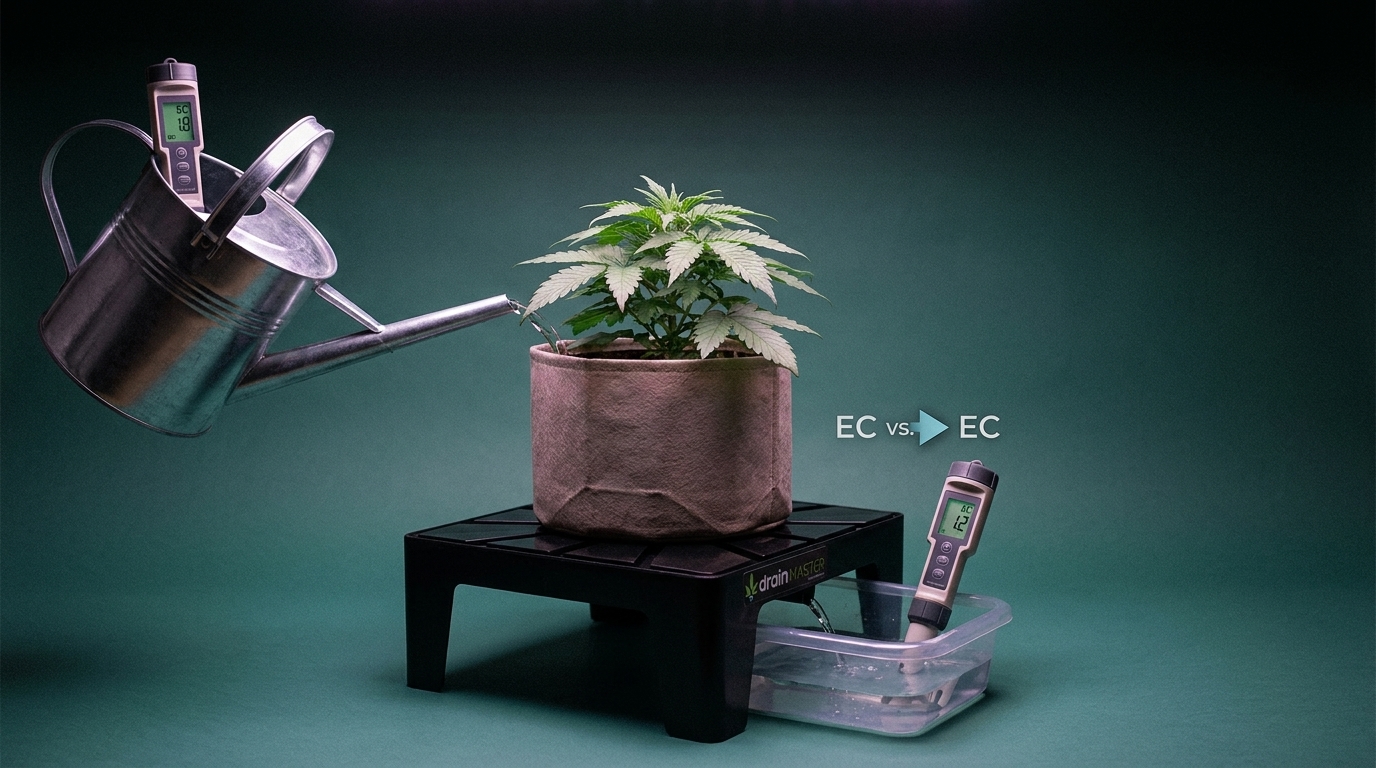
Probably the most powerful trick to mastering fertilization is analyzing the runoff water, also called drain or runoff. By comparing the values of your irrigation water (input) with those of the drain (output), you get an exact picture of what is going on in the root zone. This is your early warning system that helps you identify problems before they become visible.
The principle: Input vs. Output as an early warning system
The logic behind it is simple: the difference between the EC value of your input and that of the output tells you whether your plant is currently consuming more or fewer nutrients than you are giving it. Collect the drain and measure the EC value. This isn’t about a single laboratory value that has to be accurate to the decimal point, but about the trend over several watering cycles. You want to know: is the EC value in the substrate rising or falling? The answer to this question is the key to being able to fertilize cannabis correctly.
The interpretation: What the EC difference tells you
When you measure the EC value in the drain, three scenarios can occur that tell you exactly what to do:
- Drain EC ≈ Input EC: Perfect! Your plant is taking up exactly the amount of nutrients you are giving it. The system is in balance. Maintain the current fertilizer concentration.
- Drain EC < Input EC: Usually a good sign—your plant is absorbing nutrients efficiently. But be careful with premature re-fertilizing: only when the low trend persists over several watering cycles and you see the first signs of hunger (pale, light green leaves, slow growth), should you cautiously increase the input EC by 0.1-0.2. An important exception is fresh, unbuffered coco: a permanently low drain there can also mean that the substrate is still binding calcium and magnesium to its exchange sites—in that case, consistent Cal-Mag helps, not more full-spectrum fertilizer.
- Drain EC > Input EC: Watch out, salts are accumulating in the substrate here! The plant isn’t consuming everything you’re giving it. A slight increase is normal and even desirable to have a buffer. For coco, we aim for a drain EC that is about +0.2 to +0.4 above the input. In soil, the buffer can be slightly larger at +0.3 to +0.5. But if the value rises beyond that, you must act.
The coco drain zones in detail
If you want to be precise, don’t read the difference as a rough rule of thumb, but in graduated zones. These guidelines apply to coco and always refer to the EC difference (drain minus input):
- up to +0.2 (around +100 ppm on the 500 scale): Ideal. The buffer is set, just let it keep running.
- +0.2 to +0.3: Acceptable. Keep an eye on it, no action needed.
- +0.3 to +0.4: Yellow zone. Now slightly increase watering frequency and volume before it tips over.
- from +0.4 (around +200 ppm): Red zone, real salt buildup. First increase frequency and volume; flushing remains the last option.
An important professional principle is: “Don’t chase the runoff.” React to the trend, not to a single outlier, and correct first via watering—not via wild jumps in fertilizer concentration. Also, pay attention to the scale of your measuring device: one EC point corresponds to 500 ppm (500 scale) or 700 ppm (700 scale) depending on the conversion. Never compare ppm values from devices with different scales.
Implementation in practice: Watering, measuring, and reacting correctly
Theory is good, but what does it look like in everyday growing? The basis for meaningful measurements is correct watering behavior. Without a representative drain, your measurements are worthless.
Correct watering behavior as the basis for measurement
Incorrect cannabis watering is the number one source of error. Forget rigid schedules. Your plant tells you when it’s thirsty. The best indicator is the pot weight. Lift the pot when it’s freshly watered, and then again when it’s dry. Only water when it feels significantly lighter. When watering itself, the 20% rule applies: slowly add enough water until about 10-20% of the watering volume runs out the bottom as drain. For a 10-liter pot, this means watering with about 2-3 liters. This drain flushes out old salts, moistens the entire substrate evenly, and prevents dangerous accumulation. Never let the pot sit in the runoff water to avoid waterlogging in cannabis and the dreaded root rot. So always empty the saucer after 15 minutes.
EC guidelines by growth phase (coco, mineral)
The correct input concentration is not a fixed value but grows with the plant. These guidelines refer to the pure fertilizer EC and have proven effective in coco with mineral fertilization:
- Cutting / Seedling: EC 0.4 to 0.8—the delicate roots burn quickly.
- Early Veg: EC 0.9 to 1.2.
- Vegetative Phase: EC 1.3 to 1.8.
- Flowering: EC 1.8 to 2.2, depending on the strain and feeding, even slightly higher.
- Late Bloom / Ripening: Gradually reduce EC, the plant eats less.
These are starting points, not laws: start at the lower end, observe the drain trend, and work your way up. For soil, the values tend to be lower; for hydro, they are similar or higher depending on the system.
A practical example for coco and the right reaction
Let’s imagine a scenario: you are in the vegetative phase on coco. Your target EC for the input is 1.4. You water and measure a drain EC of 1.6. Perfect, you are exactly in the target buffer of +0.2. So you just keep going.
A few days later, you measure again. Your input is still 1.4, but the drain now shows an EC of 2.0. The difference has risen to +0.6. This is a clear sign of beginning salt accumulation. The wrong reaction now would be to immediately flush with clear water. That stresses the roots. The correct, gentler method is to increase the irrigation frequency and volume. Give the plant a bit more water at the next watering to gently wash out the excess salts. If the drain EC drops back into the target range at the following watering, everything is fine. Only if the value continues to rise anyway is a controlled flush the last option—and specifically with a light, pH-adjusted nutrient solution (about half strength, approx. 0.6 EC), not with pure water. Clear water in coco strips away the calcium and magnesium ions bound to the exchange sites and can thus actually trigger a deficiency or lockout. So flush with nutrients until a clean drain in the target range comes out at the bottom.
Special case: Systems without runoff (wick, AutoPot, Blumat)
The entire input-vs-output logic assumes that you can catch a drain at all. Those who irrigate from below—via wick, AutoPot, Blumat, or other sub-irrigation systems—don’t have that. A few special rules apply here that are missing from most instructions.
Why the EC in the tank rises
A common misunderstanding: when the EC value in the reservoir tank slowly climbs, many think the roots are “releasing” salts. That’s not true. The reason is that the plant absorbs water faster than salts (selective uptake) and additionally, water evaporates. What remains becomes concentrated—the EC rises, without anything “coming back.” This is physically the same principle as in any recirculating hydro reservoir.
Salt accumulates at the top
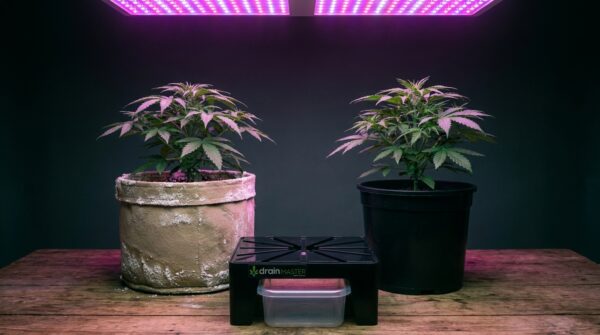
With bottom irrigation, the nutrient solution moves upwards via capillary action and evaporates at the substrate surface. The salts remain behind and accumulate at the top of the pot, often as a visible white crust—an effect that is even well-documented in horticultural research on sub-irrigation. That’s why you shouldn’t casually moisten a wick system from above: you would flush the concentrated salt layer right into the root zone. If you flush from above, do it right—with plenty of volume until real drain comes out the bottom, and with diluted nutrient solution instead of pure water.
The right strategy without runoff
- Start lower: Without leaching, everything accumulates. Run the input EC deliberately lower than in a top-feed grow with runoff and preferably start noticeably below the manufacturer’s schedule.
- Tank EC as a substitute indicator: Set the tank to a known EC and observe how quickly it creeps up. A fast, steep rise means: lower the input further.
- Dilute with water, don’t re-fertilize: If the tank EC rises, top up with clear (ideally reverse osmosis) water to the target value—not with fresh full-fertilizer solution, as that only drives the value up further.
- Regularly set up completely fresh: Even with a seemingly stable EC, the composition drifts because sodium and sulfates accumulate. Empty the tank completely every few weeks and set it up fresh.
From reacting to acting: Your path to precise plant nutrition
The data-based method fundamentally changes your approach. You no longer react to deficiency symptoms but act proactively to prevent them from occurring in the first place. That is exactly what it means to be able to fertilize cannabis correctly.
The advantage: Identifying problems before the plant shows them
Measuring the drain EC is your look into the future. You recognize over-fertilization days before the first leaf tip turns brown. You see when your plant gets hungrier in the flowering phase and needs more food before the leaves start turning yellow. You turn guesswork into knowledge. This method works best with mineral fertilizers in coco or hydro systems. In organic cultivation on bio-soil, EC measurement is less meaningful because organic nutrients are not salts and hardly affect conductivity. Also, the pH value in the coco drain is only a rough indicator due to so-called cation exchange and should be interpreted with caution.
Fertilization by data – Your setup for success
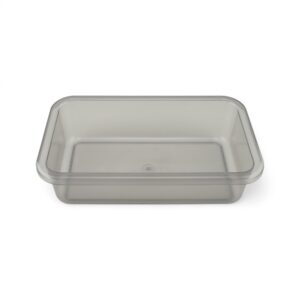
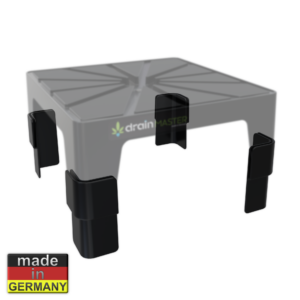
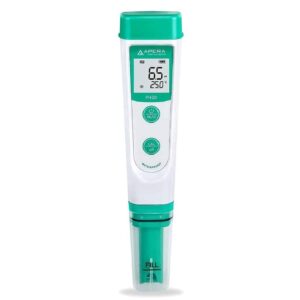
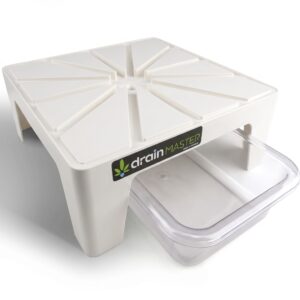
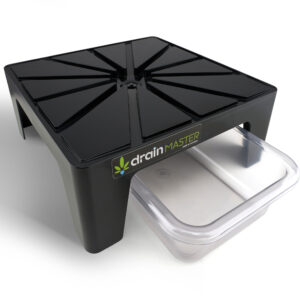
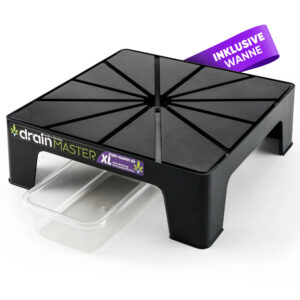
Don’t leave your plants’ nutrition to chance. Investing in a good measuring device like the Apera PC60-Z Smart Multi-Parameter Meter, which reliably measures both pH and EC values, is the first step to becoming a pro grower. Combined with a complete, coordinated nutrient line like the Athena Bundle Complete, you create the ideal conditions for precise control. To make the tedious task of catching and measuring the drain clean and easy, systems like the DrainMaster allow the measuring device to be placed directly in the collection tray. This way, you get immediate, accurate results without spilling and can adjust your fertilization strategy based on hard facts.