A pH meter is not a device you unpack once and forget about. It is a sensor that drifts, and it can feed you wrong numbers for months without anything looking broken.
Why a pH meter drifts in the first place
At the heart of every pH meter sits a thin glass membrane. It builds up a tiny electrical voltage that the device converts into a pH value. That membrane changes over time: the glass surface ages, deposits from nutrient solution and runoff settle on it, and the electrolyte inside slowly depletes.
The tricky part is that none of this announces itself. The display keeps showing a clean number with a decimal place. It is simply the wrong number. Deviations of half a pH point and more are perfectly normal on a neglected electrode, and half a point decides whether your plant can take up iron and manganese or slides into lockout. For the values you should be aiming at, see our guide to the optimal pH range in soil, coco and hydro.
What you need for calibration
Calibrating means showing the device two known points and letting it redraw its line through them. That takes buffer solutions, liquids with a guaranteed stable pH value.
- pH 7.00 sets the offset. Every calibration needs it, no exceptions.
- pH 4.01 sets the slope on the acidic side. This is the buffer for anyone measuring nutrient solution, runoff or tap water.
- pH 10.01 is only needed if you regularly measure in the alkaline range. For growing it is redundant.
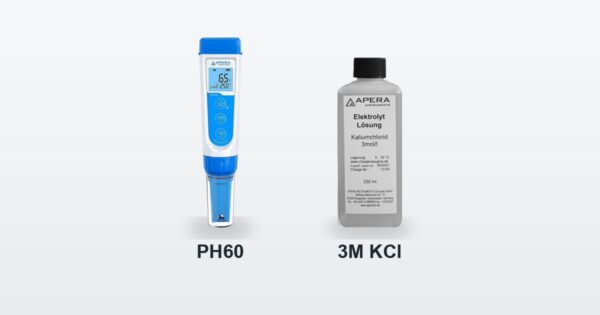
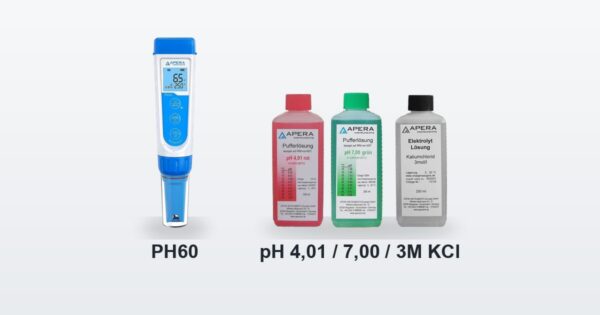
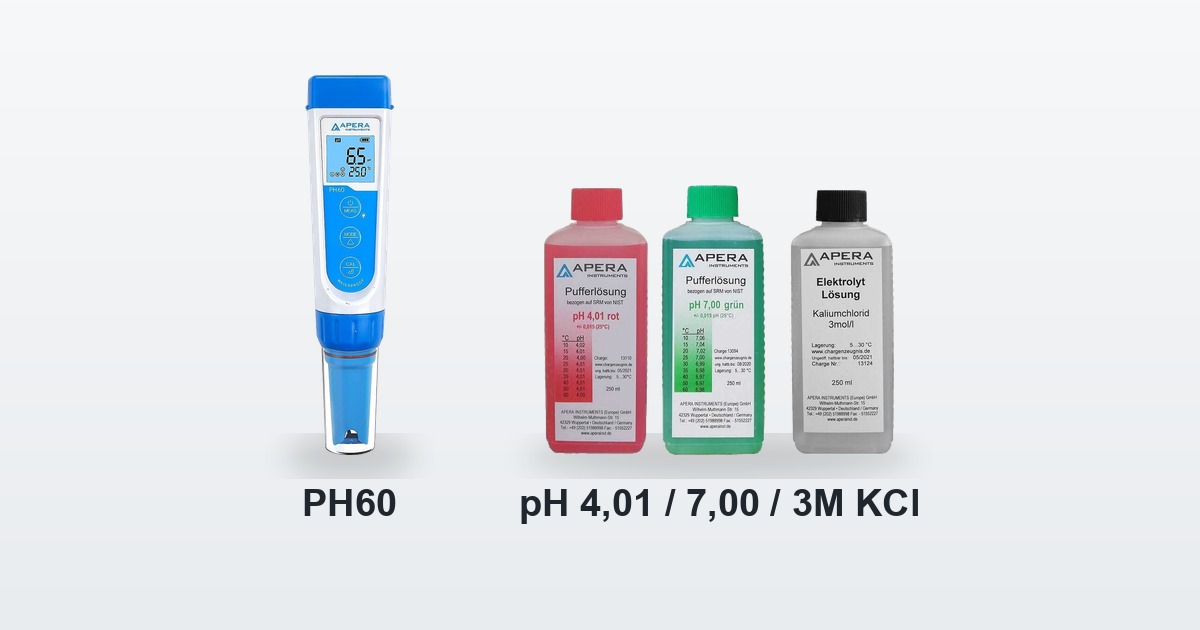
Add distilled water for rinsing and a soft, lint free cloth. If you only measure occasionally, the Apera pH calibration solution set covers everything: 4.01, 7.00 and the KCl storage solution in one package.
-

Calibration Solutions, pH & EC Meters
Original price was: 37,10 €.33,40 €Current price is: 33,40 €.
Includes 19% MwSt.plus shippingAdd to cart
One, two or three point calibration?
| Method | What it corrects | When it makes sense |
|---|---|---|
| One point (7.00 only) | offset only | a quick check when the last full calibration was only days ago |
| Two point (7.00 + 4.01) | offset and slope | the standard for growing, aquariums and ponds, which is where you belong |
| Three point (plus 10.01) | offset and slope across the full range | lab work, when you measure both acidic and alkaline samples |
For growing, two point calibration is the right answer. It costs you two minutes and separates a measurement from a guess.
Calibration in 6 steps
- Pour fresh buffer. Decant a small amount of pH 7.00 and pH 4.01 into two clean cups. Never calibrate straight from the stock bottle and never pour used buffer back: a single drop of return flow ruins the whole bottle.
- Rinse the electrode. Rinse with distilled water, then dab it carefully. Do not rub. Rubbing scratches the glass membrane and builds a static charge that makes the reading wander for minutes.
- Start with pH 7.00. Submerge the electrode until the junction, the small light coloured ring on the shaft, is fully covered. Stir briefly, then hold still and wait for the value to settle. Start calibration mode and confirm.
- Rinse again in between. Distilled water again, dab again. Skip this and you carry buffer 7 into buffer 4, calibrating the device to a value it will never see again.
- Repeat with pH 4.01. Same procedure, same patience. Only confirm once the display has held steady for several seconds.
- Finish and verify. Save the calibration, rinse the electrode and dip it back into buffer 7. If the device now reads 7.0 (or 7.00), everything worked. If it deviates, either a buffer was old or the electrode needs care.
Do not forget temperature
Buffer solutions carry their stated value at 25 °C. If the bottle sits in a cold basement and the sample in a warm tent, you are measuring two different worlds. Every Apera device in the 20 and 60 series has automatic temperature compensation that corrects for this. Even so, buffer and sample should be at roughly the same temperature before you calibrate.
How often do you need to calibrate?
There is no fixed number, but there is a usable rule of thumb:
- Daily use: a full calibration once a week, plus a quick check in buffer 7 before the working day.
- Measuring once or twice a week: every two to four weeks.
- Always immediately: after a long break, after replacing an electrode, after measuring heavily loaded samples, and whenever a reading surprises you.
That last point matters most. When your runoff suddenly shows a value that does not fit your substrate, the first question is never “what is my plant doing?” but “when did I last calibrate?”. Only then is it worth hunting for causes, for example in our article on what to do when your runoff pH is too low.
The five most common mistakes
- ✅ Old buffer solution. Opened bottles absorb CO₂ from the air, which pushes the value down. Buffer 7 and 10 age fastest. Write the date on the bottle and replace after roughly six months, or sooner if you see cloudiness or flakes.
- ✅ Not rinsing. The single most common mistake, and the one with the biggest effect. Rinse between every step, not just at the start.
- ✅ Confirming too early. An aged electrode can take up to a minute to truly settle. Hitting OK after five seconds calibrates the device to an intermediate value.
- ✅ Rinsing with tap water. Tap water carries dissolved salts and a pH value of its own. It drags in exactly what you were trying to wash away. Distilled or demineralised water is mandatory.
- ✅ A dry stored electrode. A dried out glass membrane often cannot be calibrated cleanly at all. Our article on storing and caring for a pH electrode shows how to avoid that.
When calibration no longer works
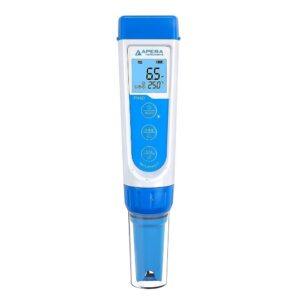
If your device refuses to calibrate, or the reading lands somewhere different after every attempt, the cause is almost never the meter. It is the electrode. On models with a built in electrode such as the Apera PH20 Value pH pocket meter, that eventually means a new device. On the 60 series the electrode is a wear part you swap yourself in minutes: the Apera pH replacement electrode for PH60 (PH60-E) costs a fraction of a new meter.
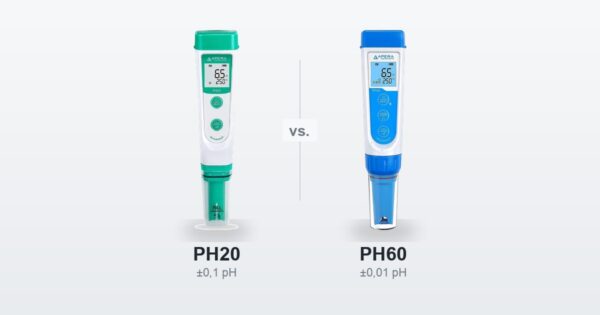
That is one reason the step up to the premium class pays off for heavy users. We worked through which device suits you in our comparison of the PH20 and the PH60.
-
Original price was: 124,95 €.112,95 €Current price is: 112,95 €.
Includes 19% MwSt.Free delivery to Germany for this product!Add to cart
Calibration alone is not enough
A perfectly calibrated device still produces nonsense if the sample is no good. Measuring pH from water that sat around and evaporated means measuring concentrated salts and last week’s deposits, not the state of the root zone.
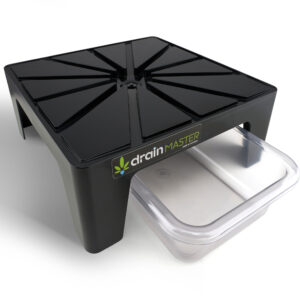
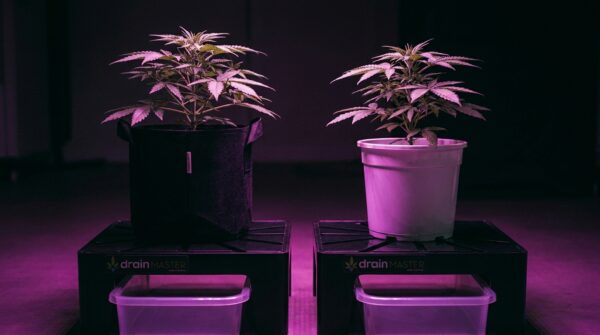
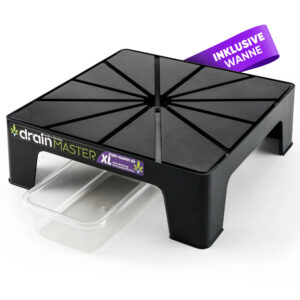
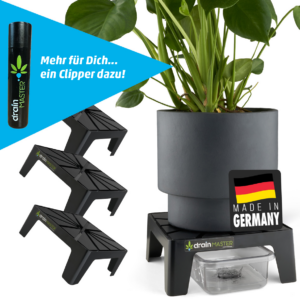
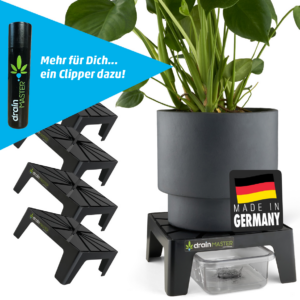
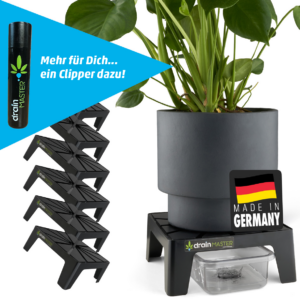
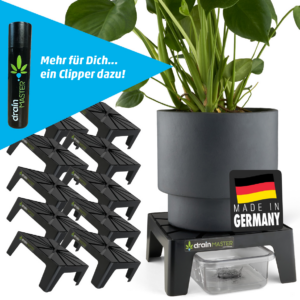
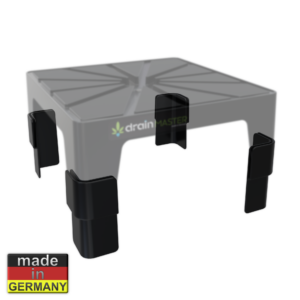
A sample worth trusting is fresh, comes straight from the pot and has touched nothing else. That is exactly what the DrainMaster is built for: it collects runoff cleanly so you can take a sample without lifting heavy pots. Our article on measuring pH and EC without lifting the pot shows what that looks like day to day.